1 hr 30 min
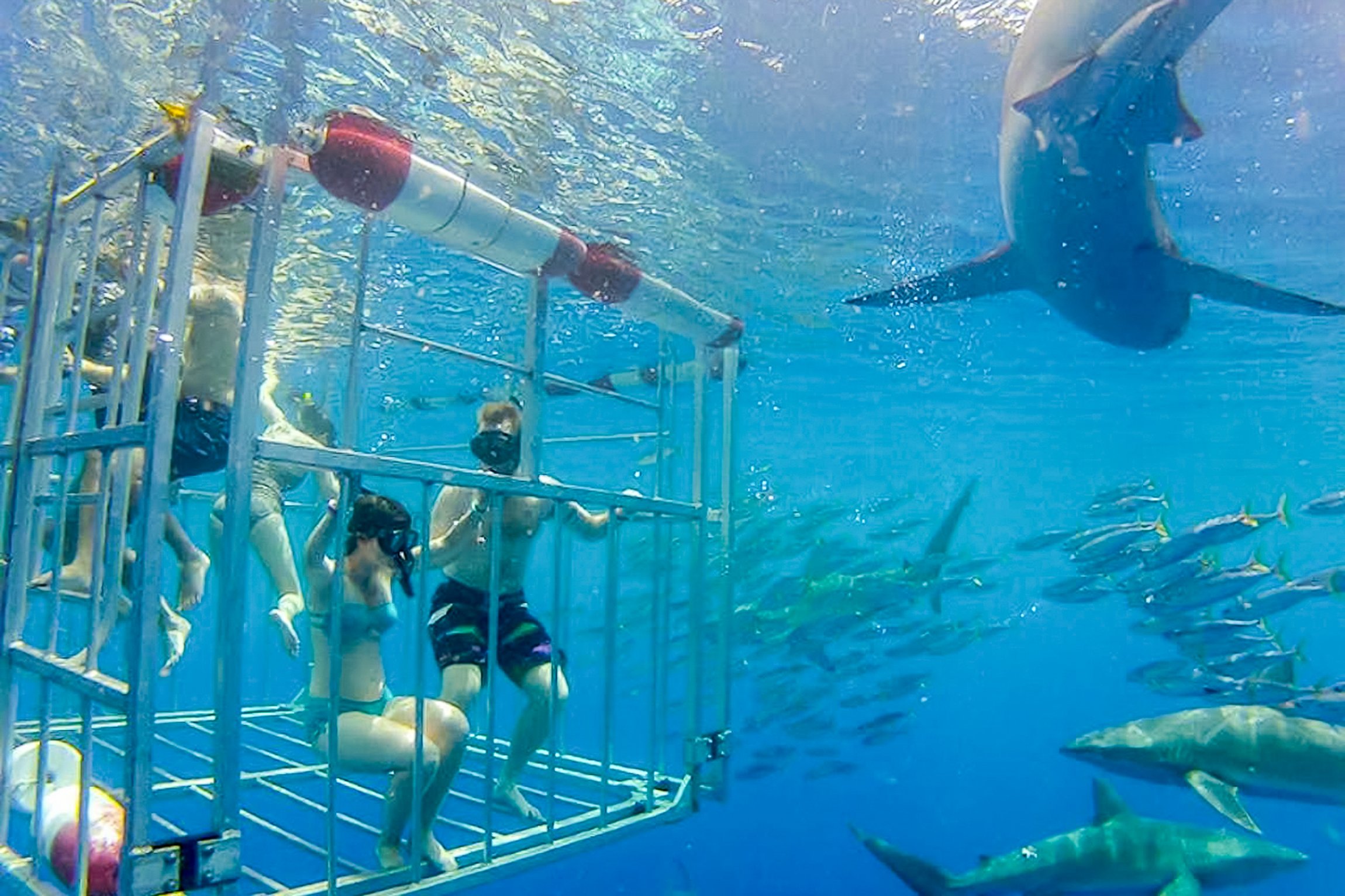
North Shore Shark Cage Diving Experience
- Entry ticket
- Mobile voucher
- Valid same day
- Free cancellation
Snorkeling Tours on Oahu — Guided Reef & Turtle Excursions
Turquoise water and reef systems minutes from shore, five curated boat tours reviewed
Compare fares, pick the fit — all bookings are mobile-voucher and eligible for free cancellation where shown.
1 hr 30 min
1 hr 30 min
2 hr
Snorkeling tours on Oahu span a few distinct product types, not just competing brands, and picking the right family matters more than picking a company. First-timers generally choose between a Waikiki/Turtle Canyon boat snorkel trip, a catamaran cruise snorkel, a calmer beginner lagoon outing, or a North Shore shark-diving add-on for a bigger thrill.
|
Top pick Turtle Canyon Boat Snorkel Speedboat, small groups |
Catamaran Cruise Snorkel Sail-style, larger groups | North Shore Shark Dive Add-on Cage or open-water shark viewing | |
|---|---|---|---|
| Tour type | Boat snorkel excursion to turtle habitat | Sailing catamaran with snorkel stop | Guided shark encounter add-on |
| Typical duration | 2–3 hours | 2–3 hours | 2–4 hours including transfer |
| Who it suits | First-timers wanting reef and turtles | Groups wanting a relaxed sail vibe | Thrill-seekers, confident swimmers |
| Wildlife focus | Green sea turtles, reef fish | Reef fish, occasional turtles | Sandbar and Galapagos sharks |
| Boat vs shore-based | Boat-based, offshore reef | Boat-based, offshore sail route | Boat-based, North Shore waters |
| Experience level needed | Beginner-friendly, gear and vests provided | Beginner-friendly, most casual option | Comfortable in open ocean, no cage swim option varies |
| See tickets & prices |
Verdict: Choose the Turtle Canyon boat snorkel for classic wildlife viewing, the catamaran for a more social sail-and-snorkel outing, and the North Shore shark add-on only if open-water shark encounters are the goal rather than a standard snorkeling tours on Oahu experience.
Worth it for guided access and gear convenience
Snorkeling tours on Oahu deliver solid value when you weigh what you're actually paying for. The water itself is free — Oahu's reefs and turtle habitats are public — but guided boat excursions handle transport to prime spots like Turtle Canyon, provide quality snorkel gear, and position you where marine life congregates. Most tours range from compact 90-minute sails to half-day adventures with optional shark cage diving. For visitors unfamiliar with Oahu's coastlines or without their own equipment, the convenience and local expertise justify the cost. You skip the guesswork on conditions, current safety, and reef etiquette. DIY snorkeling from shore works if you know the breaks and own gear, but boat access reaches deeper reefs and clearer waters that shore entries rarely match. The Waikiki departure options simplify logistics for hotel-based travelers. Bottom line: tours are worth it if you value curated marine encounters and hassle-free setup over the savings of a self-guided beach snorkel.
Bottom line: Snorkeling tours on Oahu tickets pay off when guided access and quality gear outweigh the cost of going solo from the beach.
Most visitors choose boat-based snorkeling tours on Oahu for turtle encounters and open water, while Hanauma Bay suits those who want a cheaper, shore-entry option without a boat ride.
|
Top pick Oahu Snorkeling Boat Tours |
Hanauma Bay Nature Preserve | |
|---|---|---|
| Access | Boat departs from Waianae or Kewalo Basin harbor | Shore entry, walk down from parking lot |
| What you see | Sea turtles, reef fish, open-ocean visibility | Reef fish, coral, calmer shallow lagoon |
| Typical duration | 2–4 hours round trip | 2–3 hours on-site (no travel included) |
| Price | From operator tour grid (varies by boat/route) | 25 USD entry (non-resident), plus parking |
| Booking constraints | Advance reservation required, limited boat capacity | Timed entry reservation, capped daily visitors |
| Best for | Travelers wanting turtles and boat access to open reefs | Budget visitors wanting easy shore snorkeling |
| Weather sensitivity | Trips can be rescheduled for high surf or wind | Closed in high surf due to shore break |
| Crowd levels | Smaller guided groups on boat | High foot traffic, reservation caps crowds |
| Closures | Rare, weather-dependent only | Closed Mondays and Tuesdays for reef rest |
| See tickets & prices |
Verdict: Choose the boat tour for turtles and open-water reefs, and choose Hanauma Bay if you want a lower-cost, shore-entry snorkel without booking a boat.
Hand-picked experiences loved by thousands of travelers
2 hours
Free Cancellation
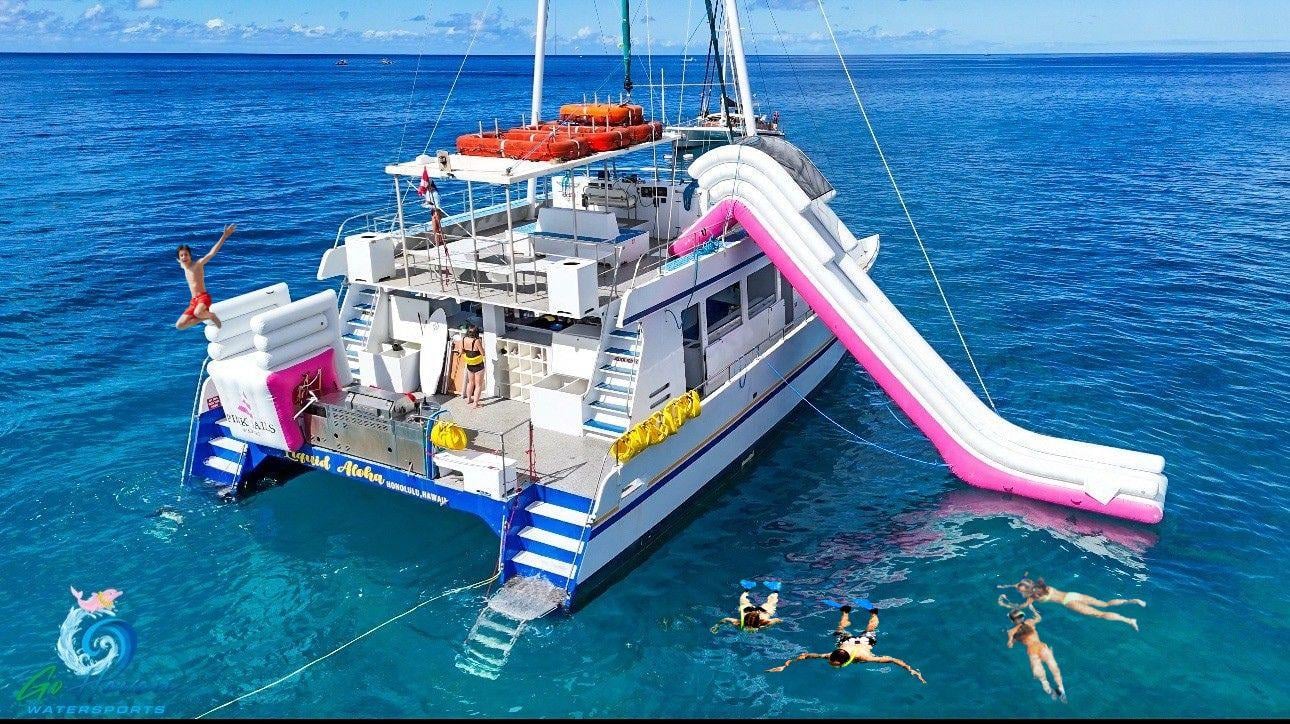
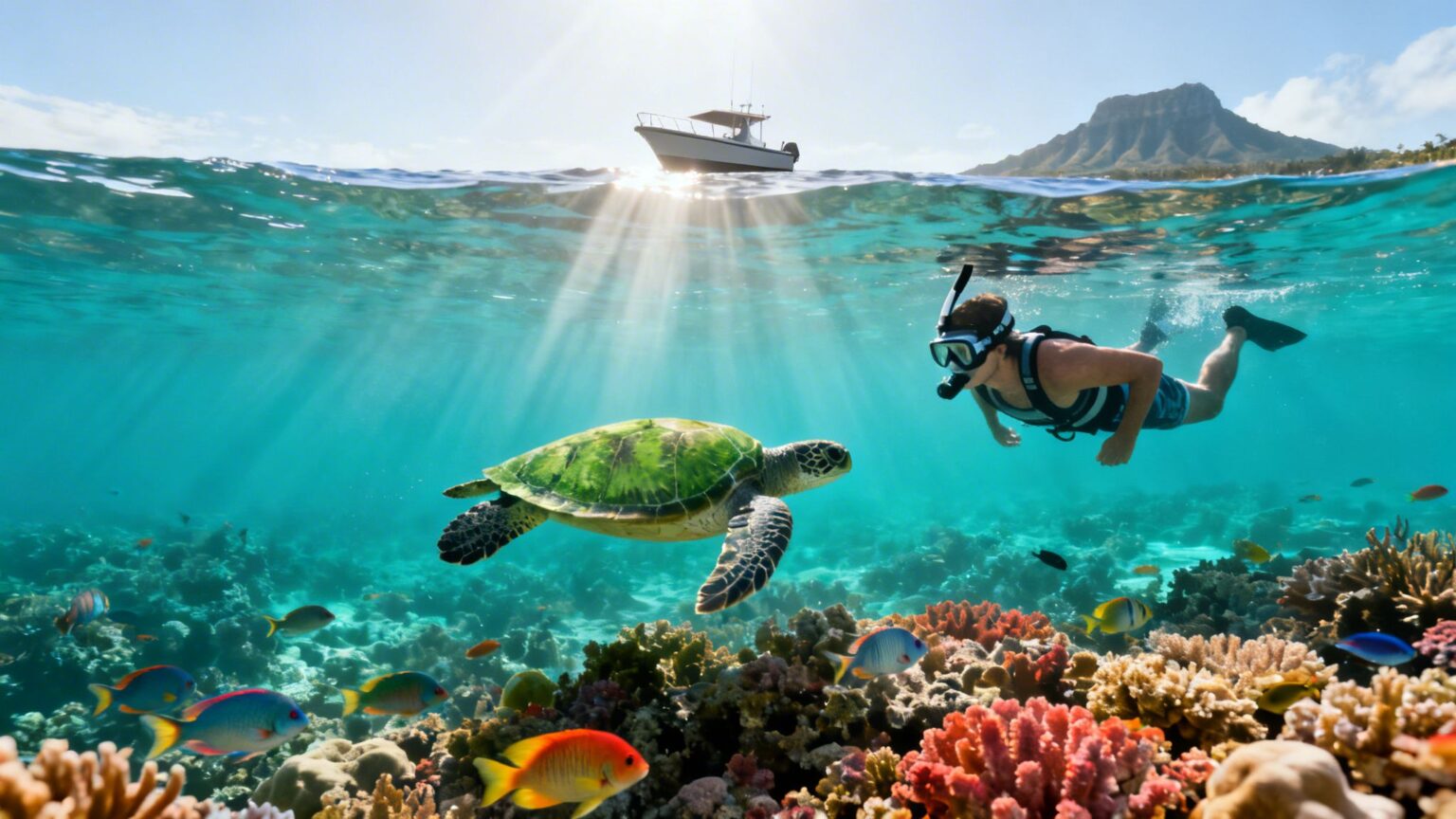
Sail a pink-sailed catamaran along Oahu's coast and snorkel with Hawaiian green sea turtles
2 hours
Free Cancellation
Two-hour catamaran cruise with waterslide, snorkeling, marine viewing room, and refreshments
2 hours
Free Cancellation
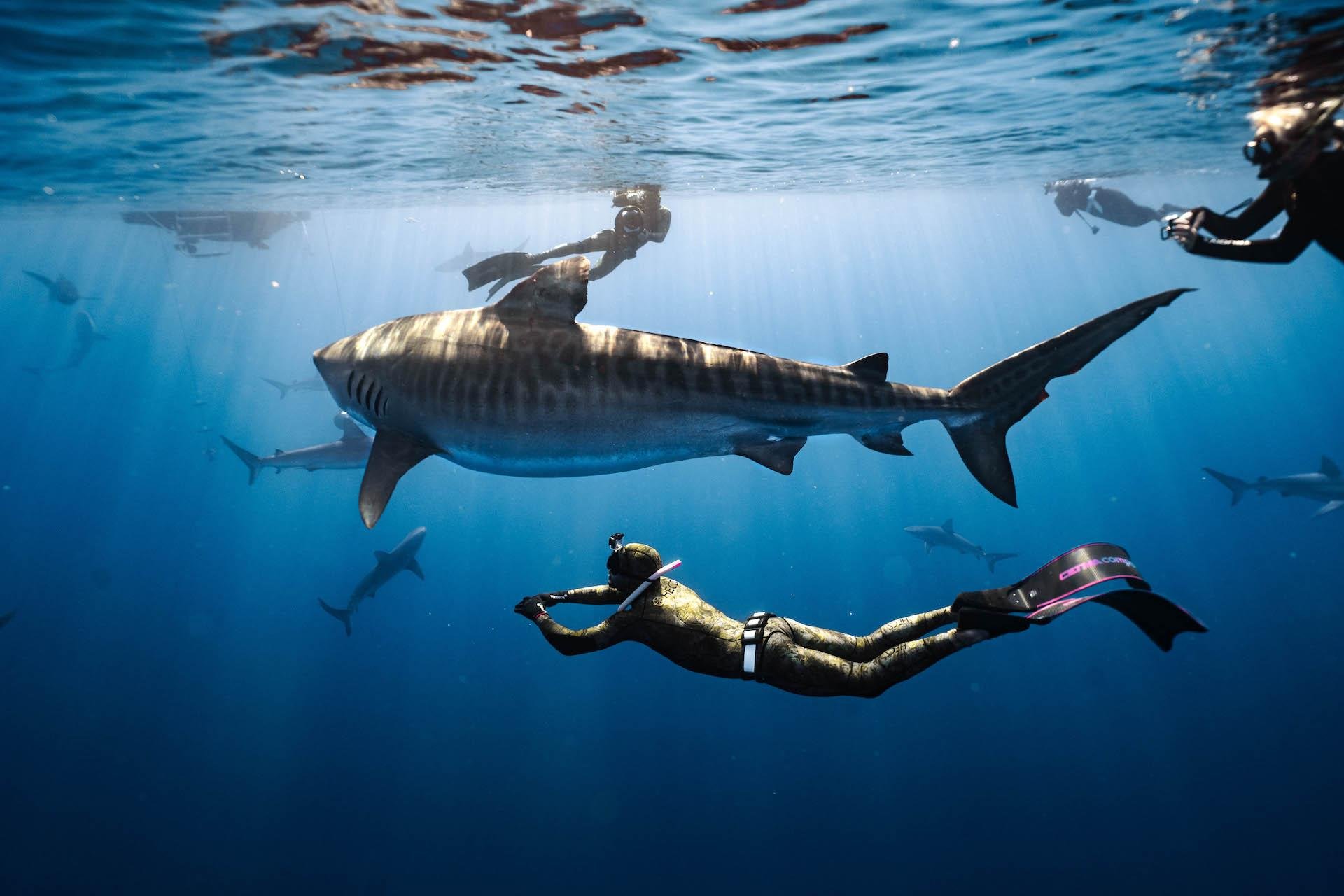
Snorkel with Galapagos, sandbar, and tiger sharks in open water with expert safety divers guiding you.
1.5 hours
Free Cancellation
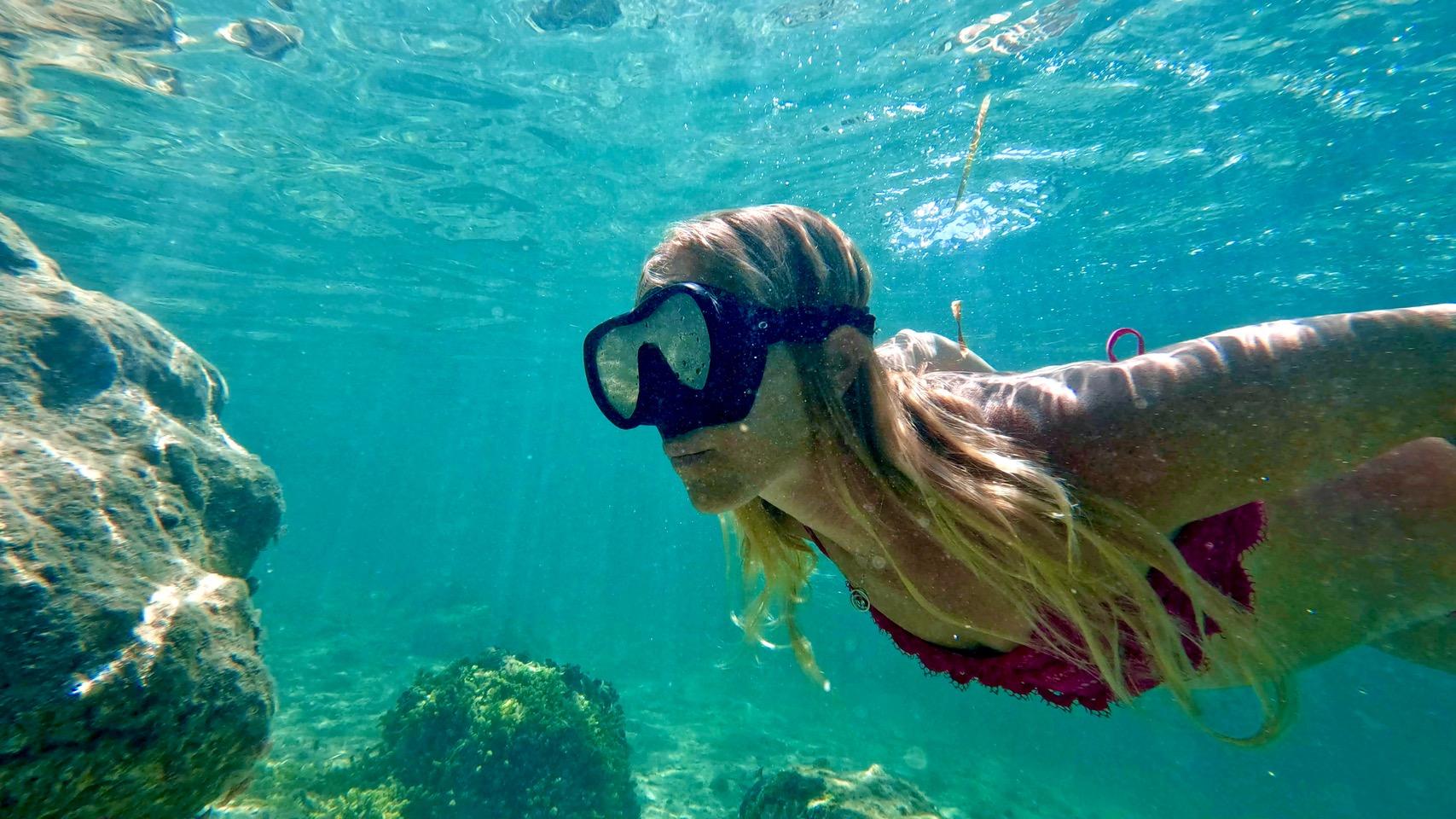
Guided shallow-water snorkel session with equipment, instruction, and underwater video clips sent to your device
2 hours
Free Cancellation
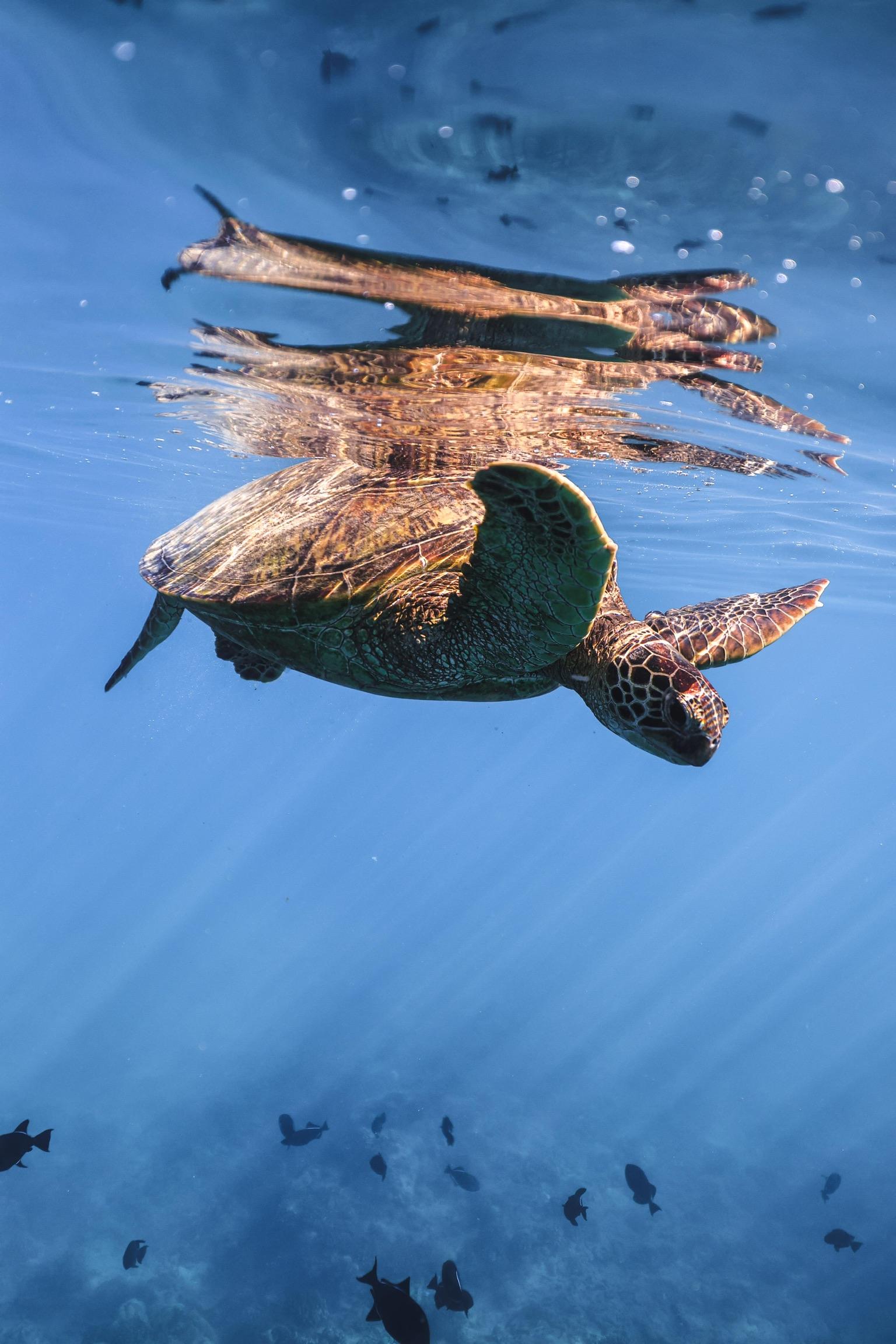
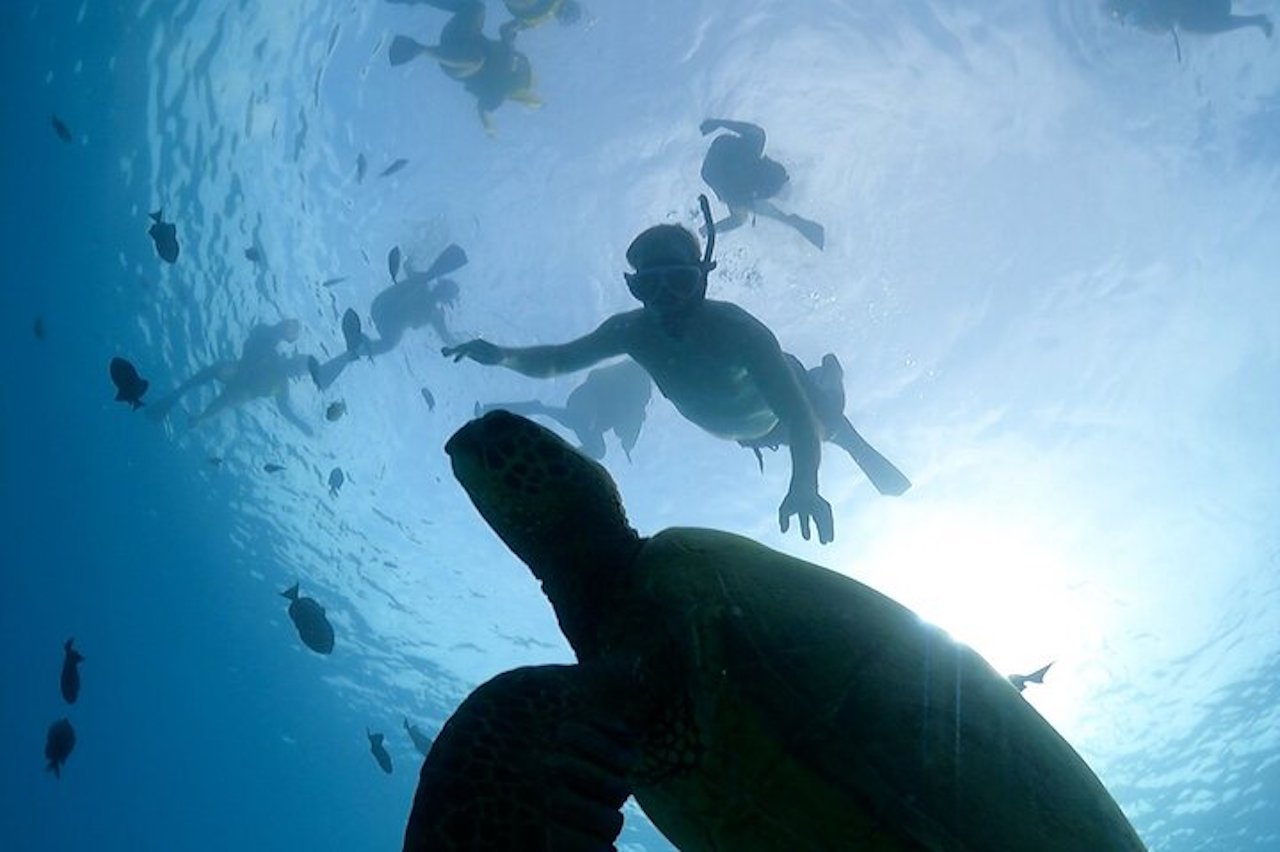
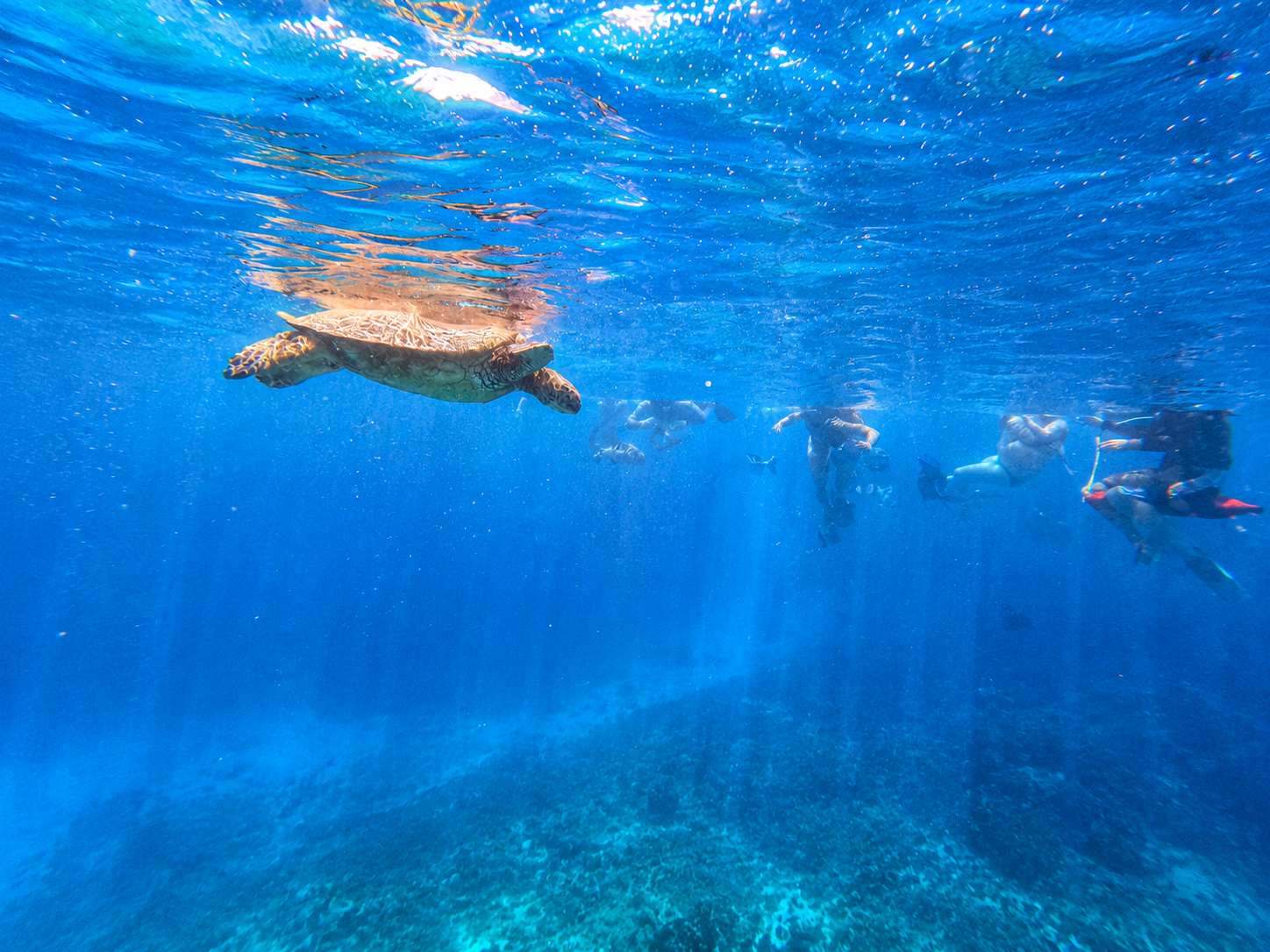
Swim alongside Hawaiian green sea turtles at Oahu's premier snorkel site with expert guides
3 hours
Free Cancellation
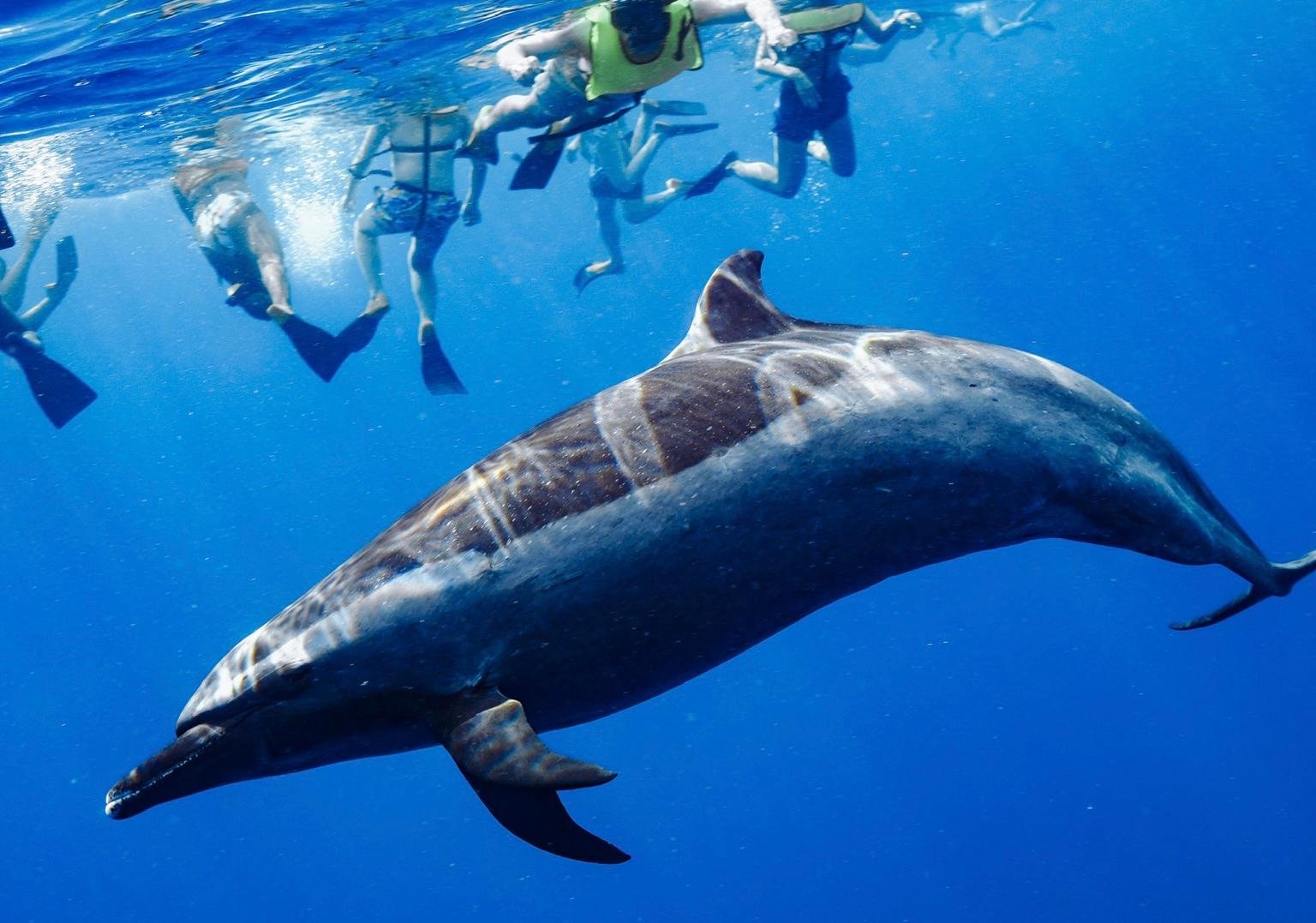
Three-hour marine adventure combining wild dolphin observation, reef snorkeling, and onboard Hawaiian entertainment
3 hours 30 minutes
Free Cancellation
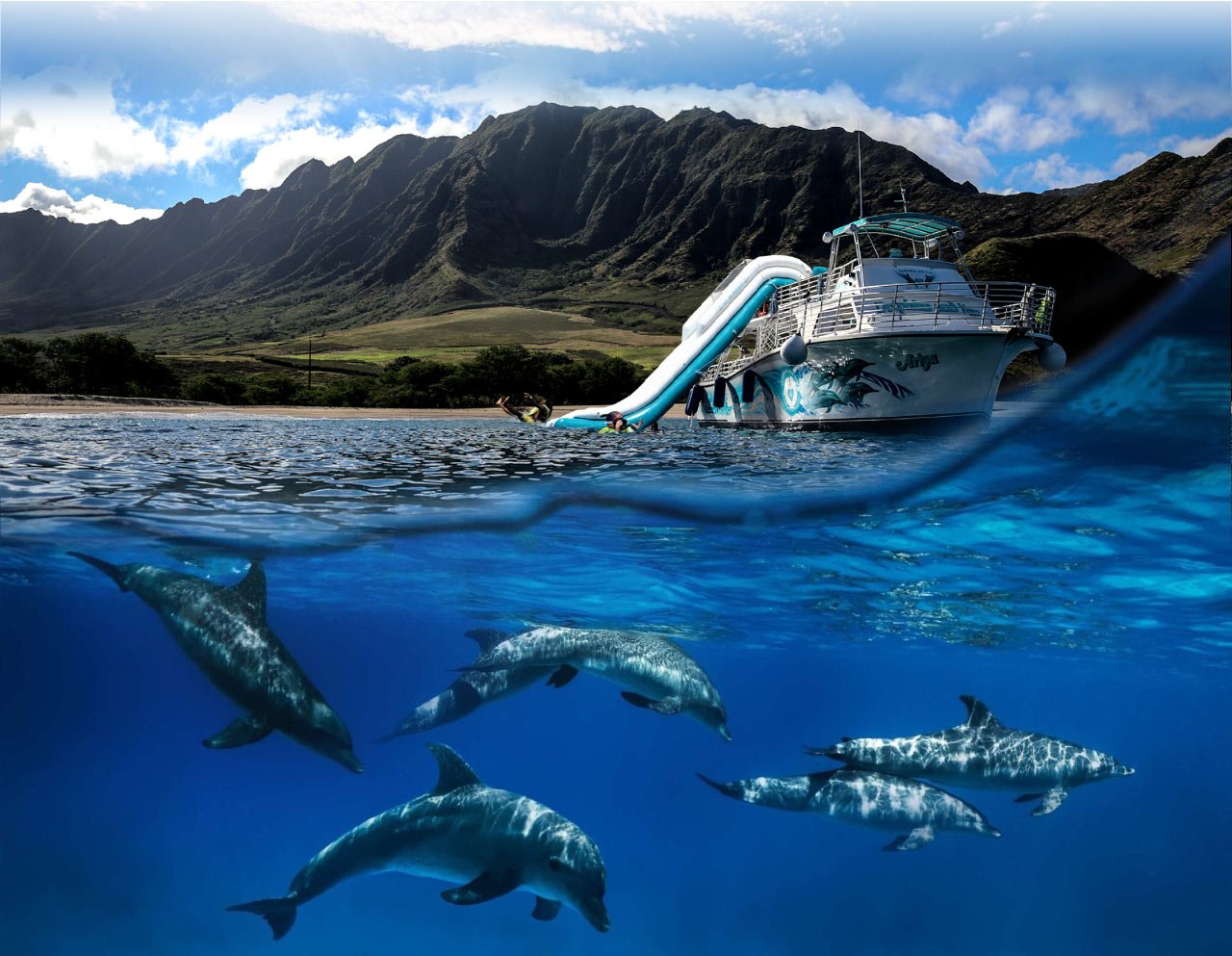
Swim alongside dolphins, snorkel with sea turtles, and enjoy onboard waterslide fun off Oahu's coast
8 hours
Free Cancellation
Design your perfect day exploring Oahu with a flexible itinerary tailored to your group's interests
A shallow reef site off Waikiki known for regular sightings of Hawaiian green sea turtles resting on volcanic rock formations roughly 30-45 feet down. It's one of the most frequently visited stops for South Shore boat trips due to its calm, current-light waters.
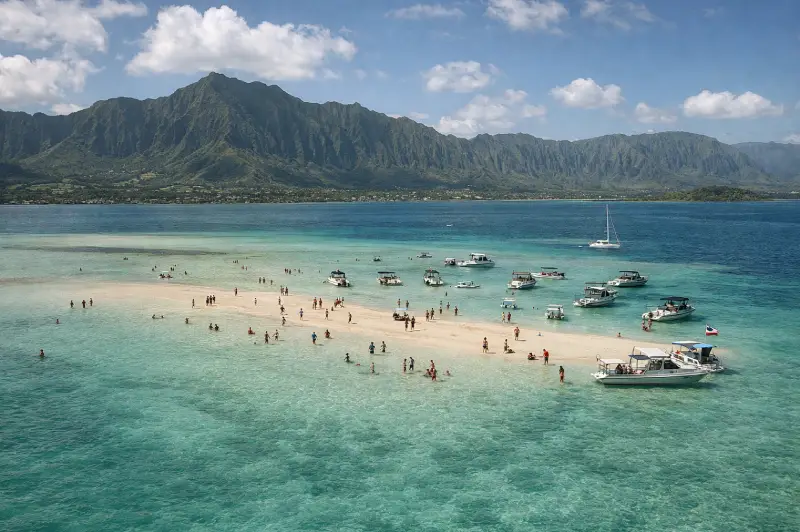
A shallow sandbar in the middle of Kaneohe Bay, sometimes called the 'Sandbar' or 'Hawaii's Ninth Island,' exposed at low tide and surrounded by turquoise, waist-deep water. It draws boat tours for both snorkeling and simply standing on the sand mid-ocean.
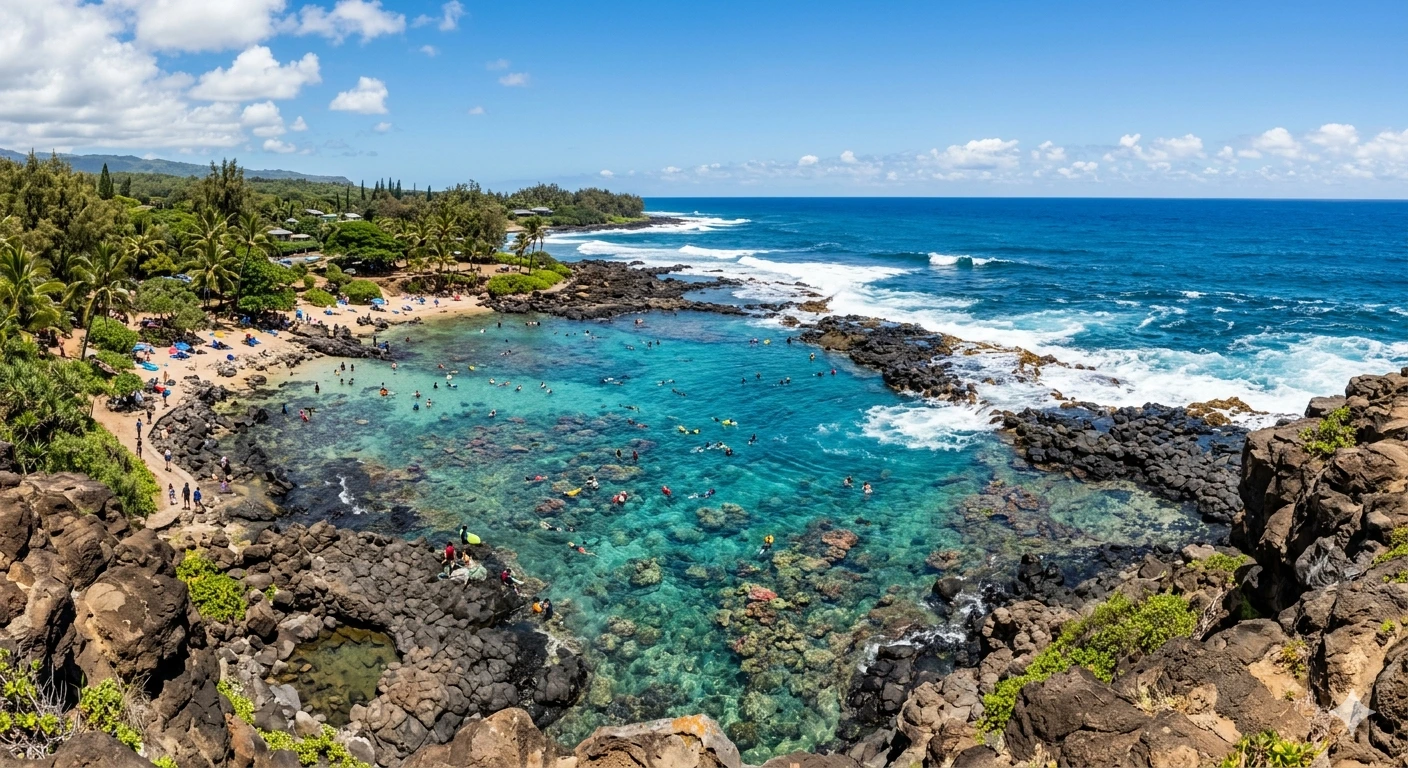
A North Shore lava rock cove near Haleiwa that transforms into a calm, clear snorkeling pool during summer months, though it becomes too rough for entry during winter swells. Despite its name, the site is known for tropical fish and tide pools rather than shark encounters.
Located near a power plant outflow on the Leeward coast, this site draws warm-water currents that attract spinner dolphins and occasional monk seals. The unusual name comes from the adjacent Kahe Point Power Plant, whose warm discharge water boosts marine activity nearby.
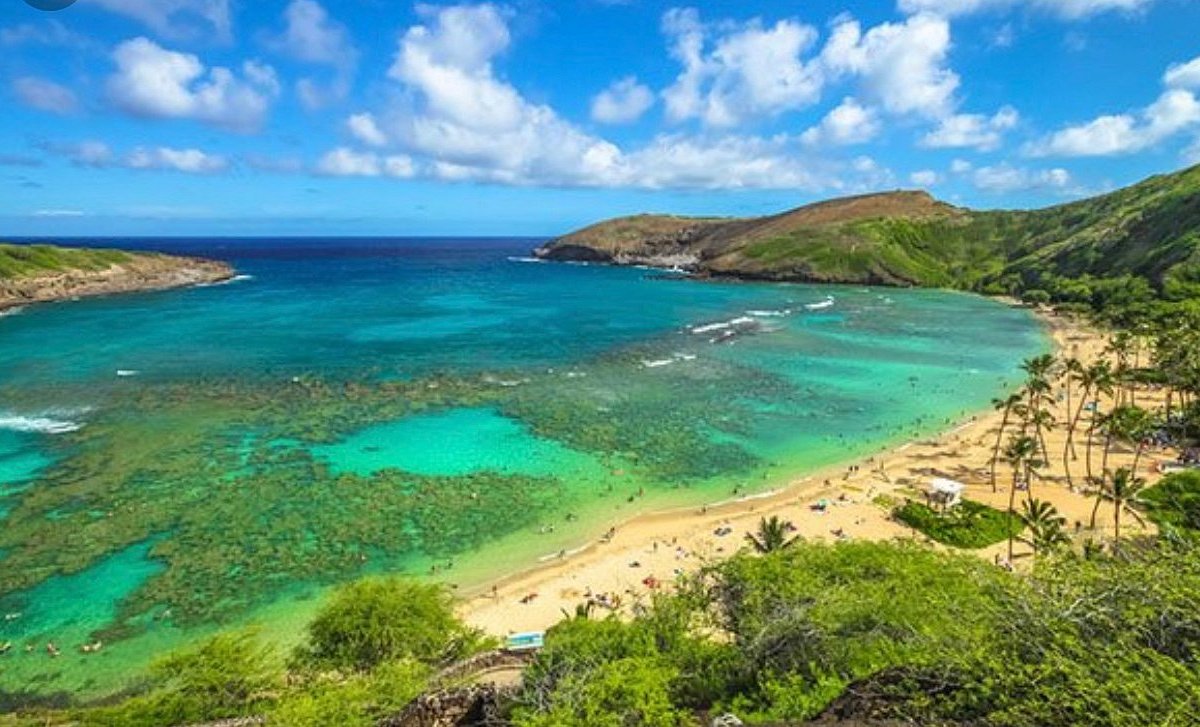
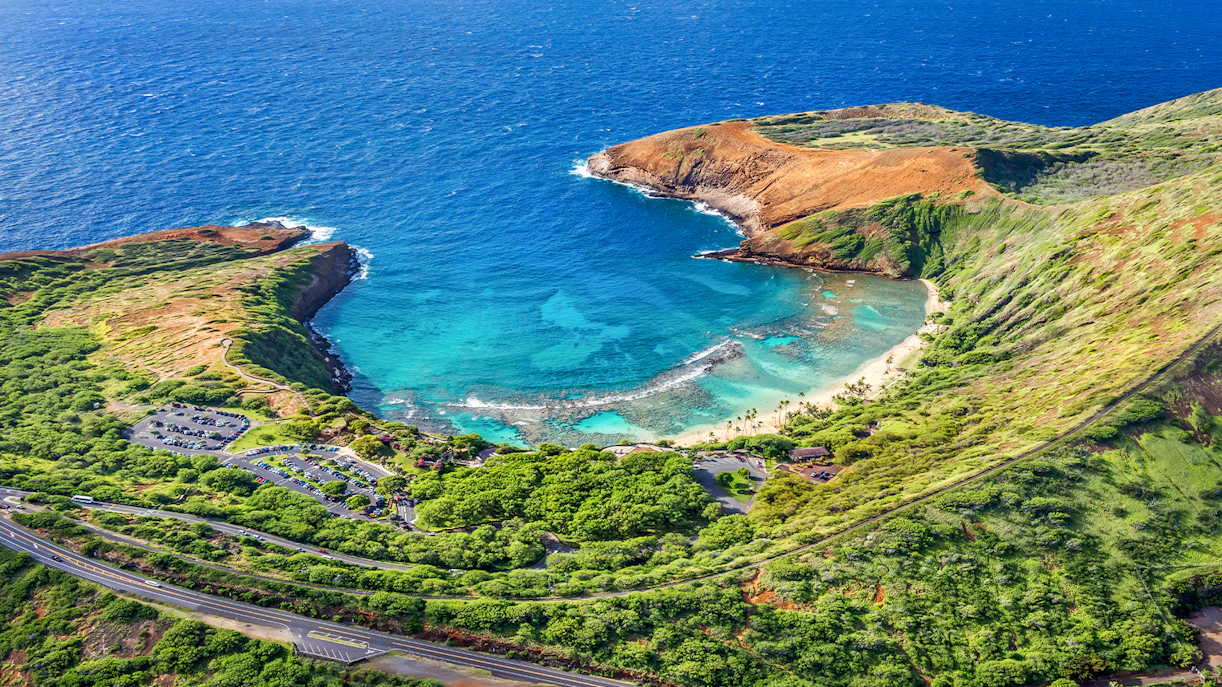
A protected volcanic crater bay on the southeast coast holding over 400 species of fish and coral within its curved reef, managed as a nature preserve with visitor caps to protect the ecosystem. Entry requires a separate reservation system distinct from open-ocean boat tours.
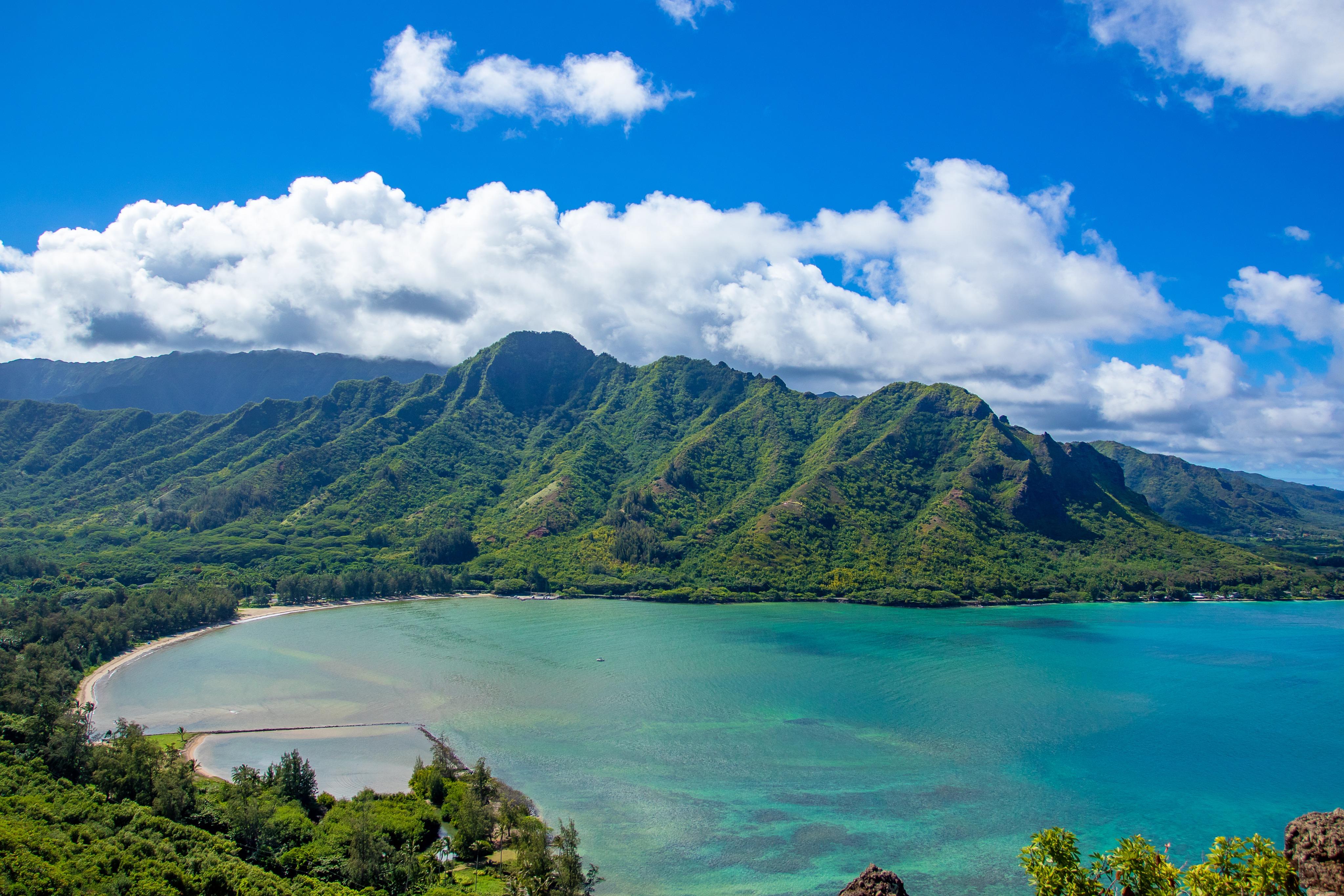
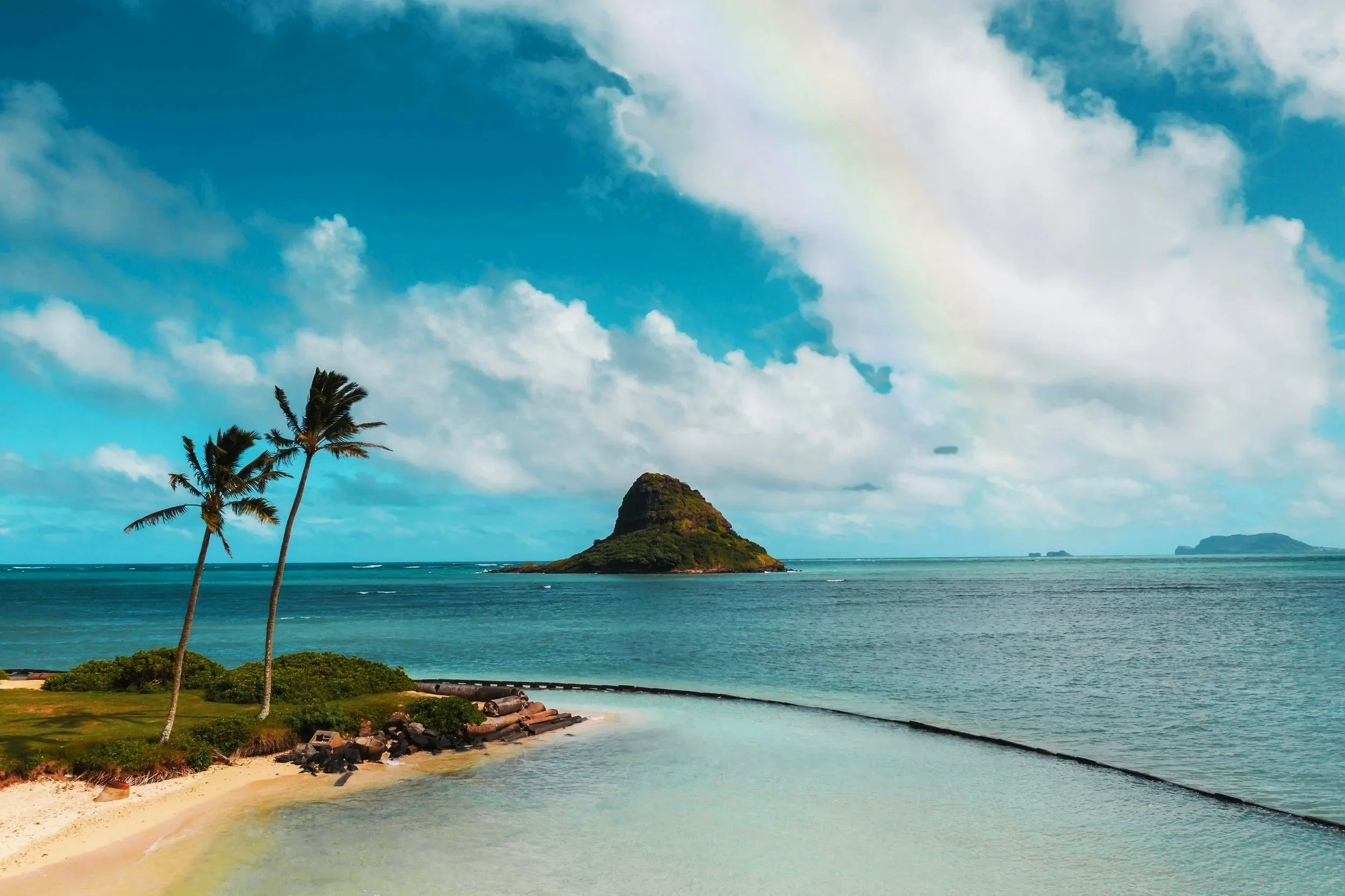
A small, distinctively cone-shaped islet off Kualoa Point on the Windward coast, formed from an eroded volcanic remnant and often visible as a backdrop during Kaneohe Bay snorkel trips. Its Hawaiian name, Mokoli'i, means 'little lizard,' referencing a legend about a slain reptilian creature.
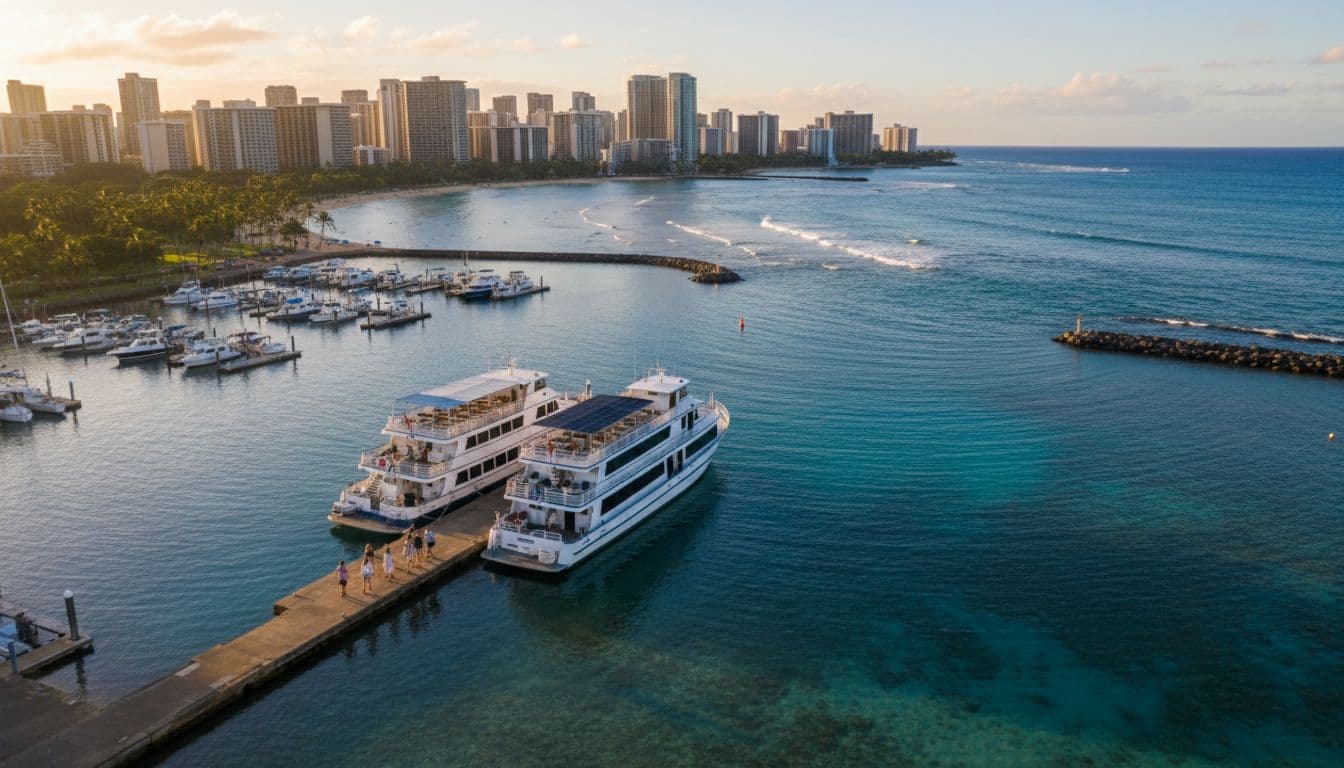
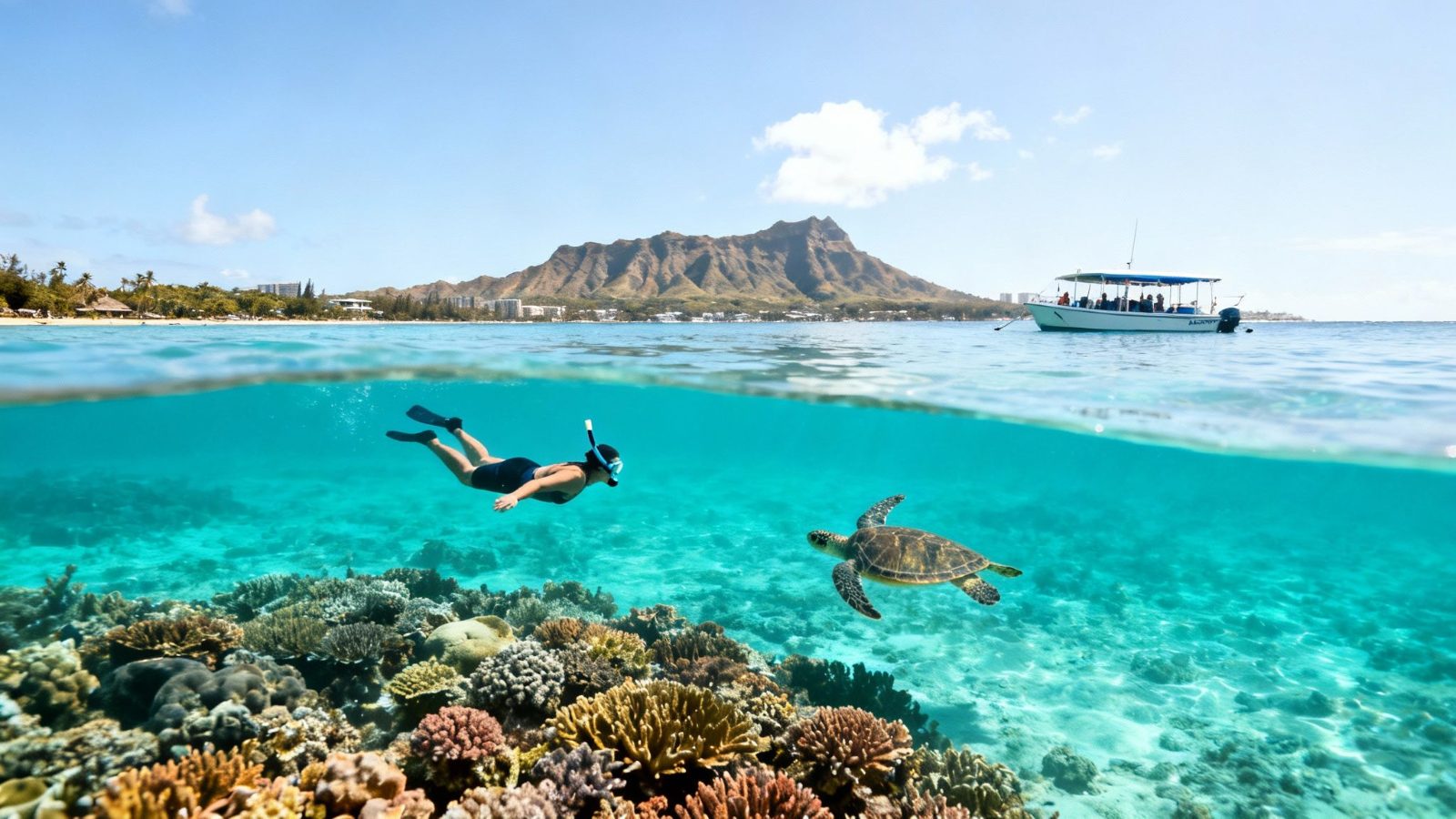
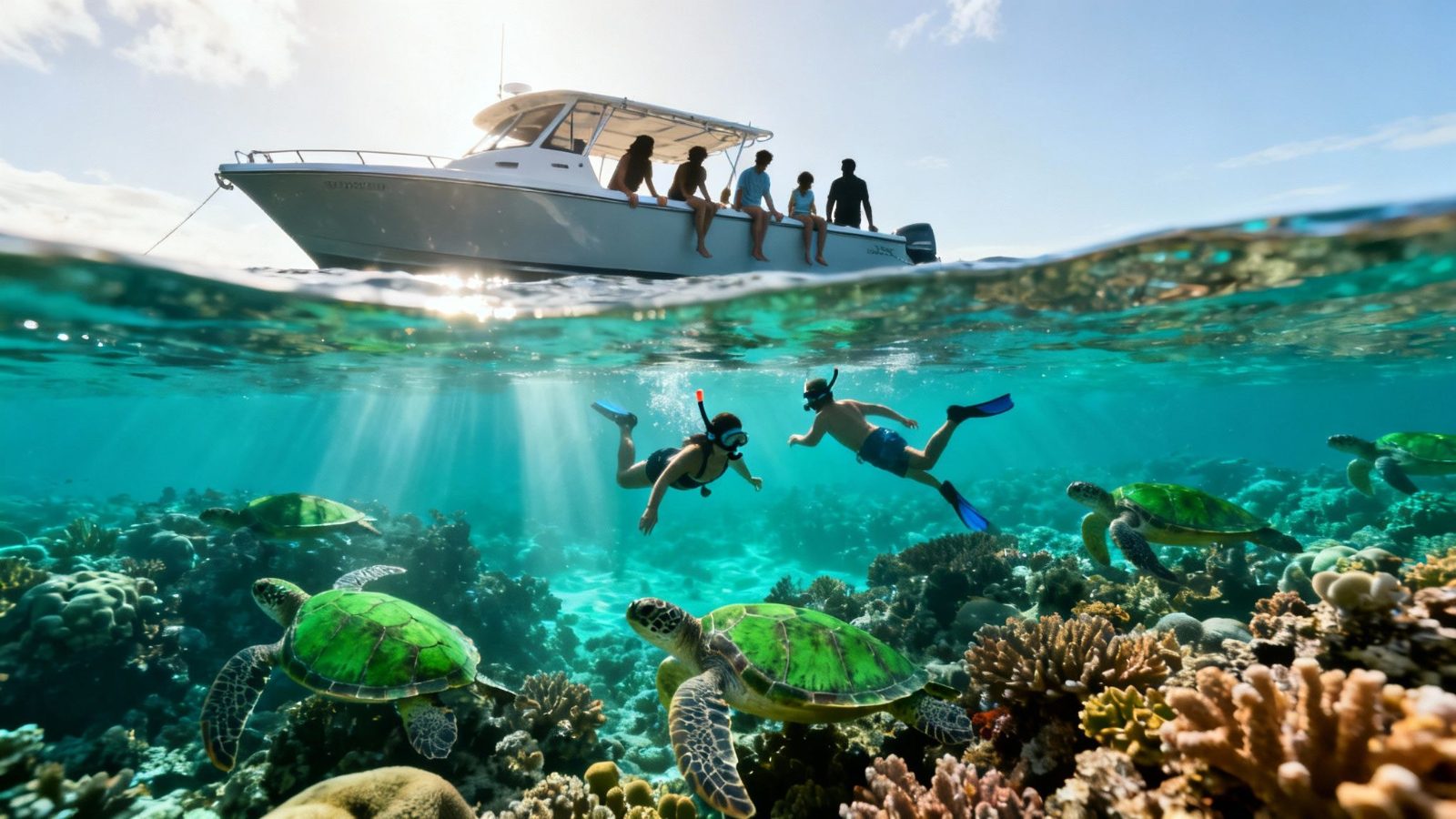
You board a catamaran at Kewalo Basin shortly after dawn, the deck still cool under bare feet, and motor southwest along the Waikiki coastline for twelve minutes.
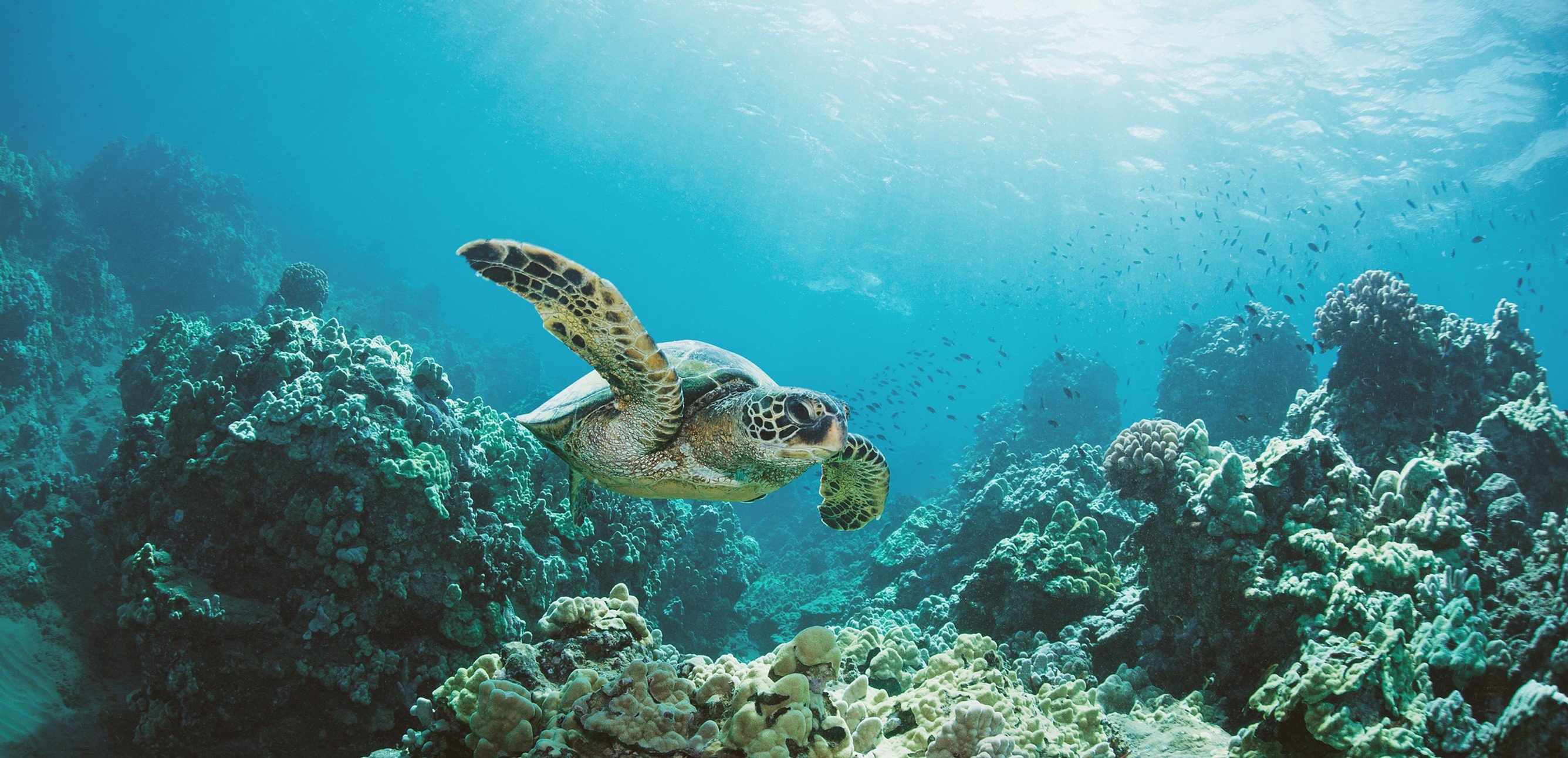
The crew distributes masks, fins, and short safety instructions—stay with the group, avoid touching coral, signal if you need help—and you step off the swim platform into water that measures 24 degrees Celsius. Visibility opens immediately: the sandy bottom at four metres, then the dark basalt shelf of Turtle Canyon rising to within two metres of the surface.
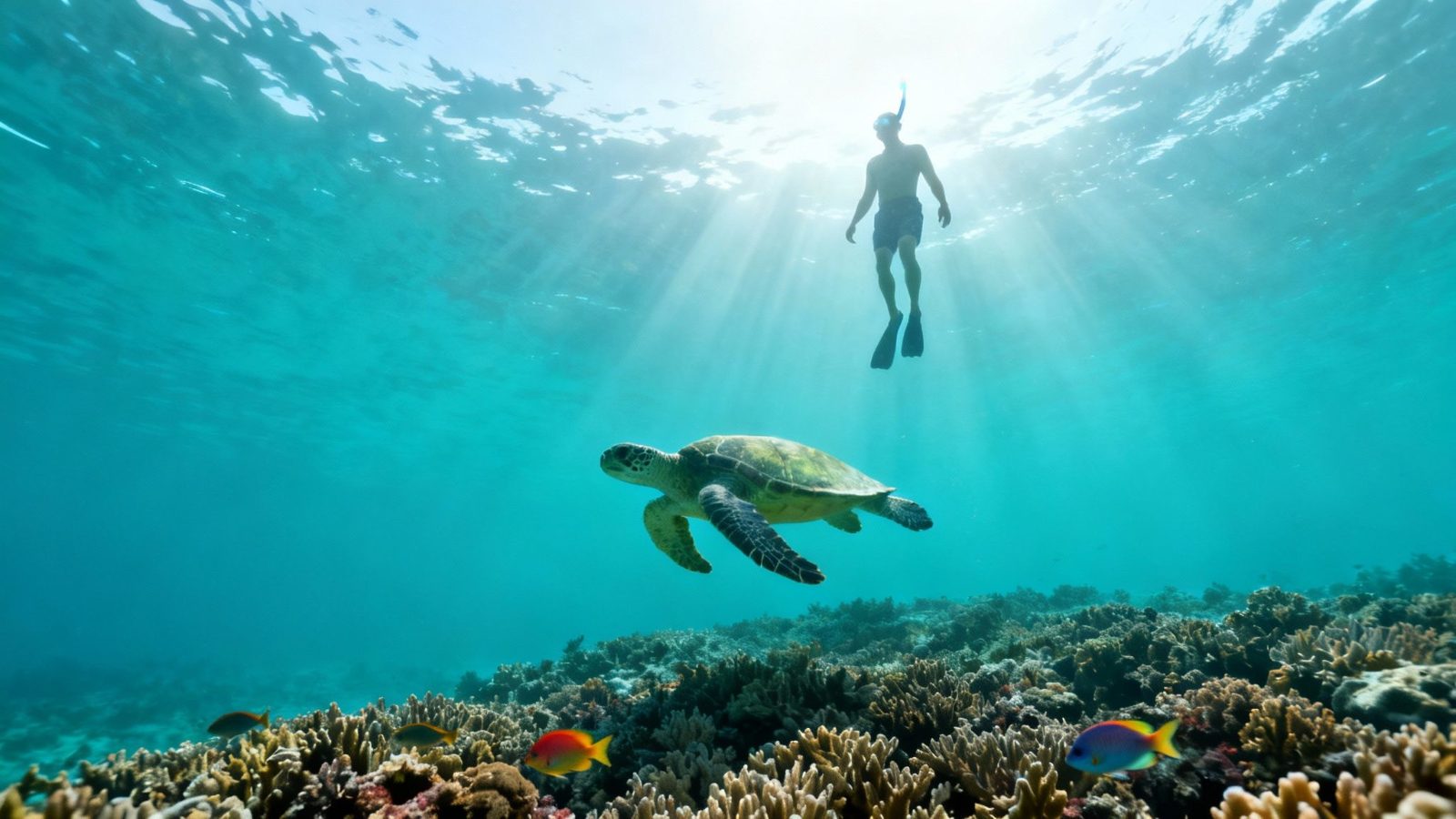
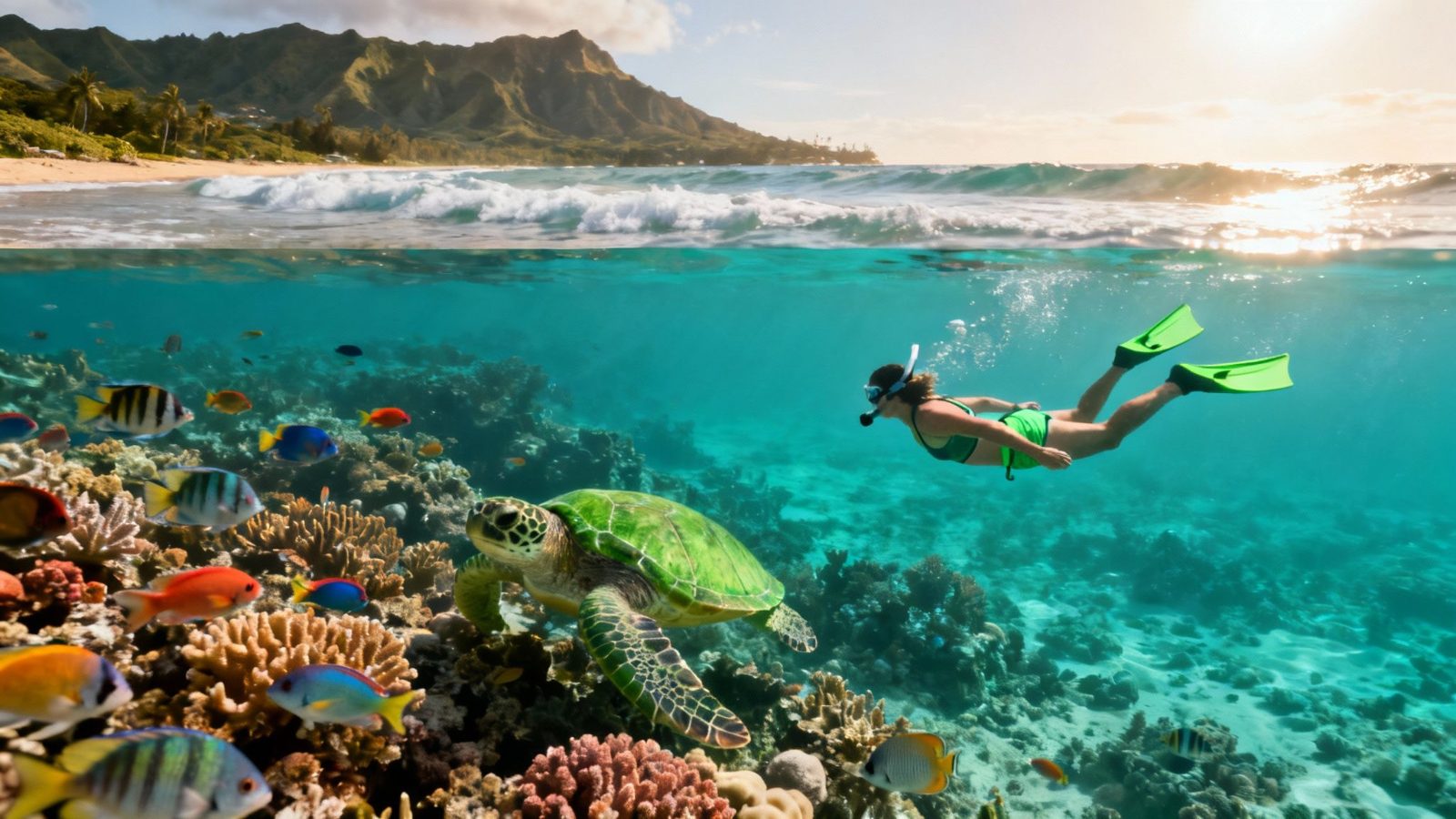
You drift above brain coral and cauliflower formations, watching yellow tangs move in tight schools and a lone parrotfish scrape algae from rock. A green sea turtle glides beneath you, its shell mottled brown and olive, and you hold your breath to descend half a metre for a closer view before buoyancy pulls you back up. The guide points toward a second turtle resting in a coral crevice, and you photograph it against the blue gradient of open water. After 40 minutes the boat horn signals return, and you climb the ladder with saltwater still in your hair, the cityscape of Honolulu now visible three miles to the east.
All the details about your upcoming adventure in one place
Oahu's underwater visibility averages 30 to 60 metres year-round, a clarity born from trade winds that push surface currents offshore and volcanic basalt that anchors coral formations close to populated coasts.
The island's 112-mile shoreline holds more than two dozen named snorkeling sites, but three dominate the guided-tour circuit: Turtle Canyon off Waikiki, Shark's Cove on the North Shore, and Hanauma Bay on the southeast flank. Each draws from the same biological engine—the Hawaiian archipelago sits 2,400 miles from the nearest continent, and 25 percent of reef fish here exist nowhere else on Earth.
Snorkeling tours on Oahu rose in parallel with the cruise industry in the 1970s, when catamarans began shuttling day-trippers from Waikiki piers to offshore reefs in 15-minute intervals. Today the infrastructure remains dense: operators launch from Kewalo Basin, Haleiwa Harbor, and the Waikiki beach front, with most excursions running two to three hours and departing before 9:00 to avoid afternoon wind chop. The green sea turtle, or honu, governs the marketing—nearly every tour promises sightings, and the promise holds because Turtle Canyon, a lava-rock shelf 800 metres offshore, hosts a resident population that feeds on algae blooms anchored to the reef. Federal law prohibits contact, but the animals show little wariness; encounters at arm's length are routine.
The North Shore offers a different register. Shark's Cove, a tide-pool complex inside Pupukea Marine Life Conservation District, requires no boat but rewards patience—visibility drops in summer when runoff clouds the shallows, and winter swells close the site entirely from November through March. Hanauma Bay, a volcanic crater breached by the Pacific 32,000 years ago, remains the island's most visited snorkeling destination despite a 25-dollar entry fee and a mandatory orientation video. The bay's inner reef sits in water shallow enough to stand, and its fish density—tangs, wrasses, parrotfish, and the occasional whitetip reef shark—reflects 50 years of no-fishing enforcement. Snorkeling tour operators on Oahu now bundle boat transport, reef-safe sunscreen, and flotation gear into single-purchase packages, a shift that mirrors the broader pivot toward turnkey eco-tourism. The water itself remains free, but access increasingly depends on the vessel that takes you there.
Twenty-five percent of reef fish in Hawaiian waters exist nowhere else on Earth.
Wear a swimsuit under light, quick-dry clothing since most snorkeling tours on Oahu depart directly from a harbor with minimal changing facilities. Rash guards are recommended for sun protection during the 2-4 hour boat trips typical of these excursions.
Boats used for snorkeling tours on Oahu have limited secure storage, so operators generally recommend a small dry bag rather than a large suitcase or backpack. Some harbors, including Kewalo Basin and Haleiwa Harbor, have a brief check-in counter but no formal security screening.
Photography is unrestricted on deck and encouraged at scenic points like Chinaman's Hat or the Waianae coastline, but most standard snorkeling tours on Oahu tickets do not include an underwater camera. Waterproof phone cases or rental GoPros are common add-ons offered by operators.
Many operators set a minimum age, often around 5-7 years old, for open-ocean snorkeling trips, and life vests are provided for children. Family logistics and age-specific tour picks are covered in the family guide section.
Boarding typically involves steps or a ladder from the dock, and getting into the water often means a backward roll or ladder descent, which can be difficult for guests with limited mobility. Guests should call the specific operator ahead of booking snorkeling tours on Oahu to confirm boarding assistance and whether a particular vessel suits their needs.
Snacks, water, and sometimes a light meal are included on most half-day and full-day snorkeling tours on Oahu, but outside alcohol is generally prohibited on the boat. Reusable water bottles are welcomed, while glass containers are not allowed on deck for safety reasons.
Beaches open all day, tours run set departure times
Best arrival
07:00–09:00 for calmer water and better visibility
Opening hours
00:00 – 23:59
Getting there
City-center access via metro and bus
Accessibility
Most experiences are wheelchair-friendly — check individual tours
What to bring
Comfortable shoes, water, phone for mobile voucher
Car · 20-40 minutes depending on harbor · Free-$15 parking
Driving is the most practical way to reach harbors like Kewalo Basin, Haleiwa, or Ko Olina, with free or paid lots available near most departure points. Rental cars are common among visitors combining a snorkel trip with other island stops.
Most snorkeling boat operators allow free cancellation or rescheduling up to 24-48 hours before departure, with full refunds inside that window; late cancellations or no-shows are often non-refundable. Entrance to the beaches and waters themselves remains free at 0 USD, since fees apply only to the guided boat tour or equipment rental, not to public shoreline access.
Recommended time
3-4 hours
A half day gives you room for a 1.5-2 hour snorkeling tour plus time to shower, rest, and enjoy the beach before or after. Booking the 07:00-09:00 window matters most: water visibility is best before wind picks up, and boat launches and parking lots are far less congested than midday. If you want to linger on the sand or grab a proper breakfast after, add another hour to your morning block. There's little queue reality to plan around for snorkeling tours on oahu since most operators check in groups quickly at the dock, though summer weekends can slow boarding by 10-15 minutes.
Crowd levels through the day
Weather · crowds · average price — dots go green to amber to red as each metric rises.
March through May brings milder trade winds and clearer water for snorkeling tours on Oahu, with fewer crowds than summer. Water temperatures hover around 75-78°F.
Smaller catamarans and rigid-hull inflatables reach reef sites faster and offer more personal attention than large party boats.
1125 Ala Moana Blvd, Honolulu, HI 96814
Common departure point for Waikiki-based snorkeling boats
Get directionsHawaiians swam Oahu's reefs for centuries before the first commercial snorkeling tours on Oahu emerged in the early 1950s, when post-war tourism began reshaping the island economy. In 1954, Duke Kahanamoku's brothers launched one of the earliest boat charters from Waikiki, guiding visitors to Hanauma Bay with rented glass-face masks and rubber fins imported from California dive shops. The 1961 opening of Hanauma Bay Nature Preserve as a designated marine sanctuary accelerated demand, and by 1965 a dozen operators ran daily departures to the crescent bay, though primitive equipment and minimal safety protocols led to scattered drowning incidents that prompted the first state licensing requirements in 1967. The 1970s brought fiberglass catamarans and neoprene wetsuits, transforming what had been rugged outings into accessible half-day excursions. Turtle Canyon off Waikiki became a signature site after green sea turtles returned in growing numbers under federal protection enacted in 1978. By 1982, operators began adding Shark's Cove and Three Tables on the North Shore to winter itineraries, though seasonal swells restricted access to calmer months. The 1990 closure of Hanauma Bay on Tuesdays for reef recovery forced tour companies to diversify routes, pushing exploration toward lesser-known sites like Electric Beach near the Kahe Power Plant, where warm outflow attracted manta rays and reef fish. The 2000s introduced underwater cameras, professional marine biologists as guides, and motorized rafts capable of reaching offshore pinnacles. Hurricane Iniki's 1992 damage to coral beds prompted stricter no-touch policies and reef-safe sunscreen mandates by 2018. Today's snorkeling tours on Oahu operate under state permits limiting daily visitor counts at protected sites, with real-time weather tracking and Coast Guard-certified crews standard across the industry. The shift from unregulated beach rentals to regulated snorkeling tour operators reflects both ecological awareness and the professionalization of Hawaii's marine tourism sector over seven decades.
Duke Kahanamoku's brothers launch early boat charters from Waikiki to Hanauma Bay with rented masks and fins.
Hanauma Bay Nature Preserve opens as a designated marine sanctuary, spurring commercial snorkeling demand.
State enacts first licensing requirements for tour operators after safety incidents and drownings.
Federal protection of green sea turtles leads to their return at Turtle Canyon, creating a new signature dive site.
Hanauma Bay closes Tuesdays for reef recovery, forcing operators to diversify routes and explore new locations.
Hawaii mandates reef-safe sunscreen and stricter no-touch policies to protect coral ecosystems from tourism impact.
Wide crater-and-cove view from the overlook just past the entrance road, showing the turquoise bay ringed by volcanic cliffs before you descend to the water. Stand at the railing near the visitor center for the classic postcard framing; the parking lot fills fast so arrivals within the best window of 07:00 to 09:00 catch calmer water and clearer light. Many snorkeling tours on oahu pass this bay as a stop, though independent visitors can also drive up on their own.
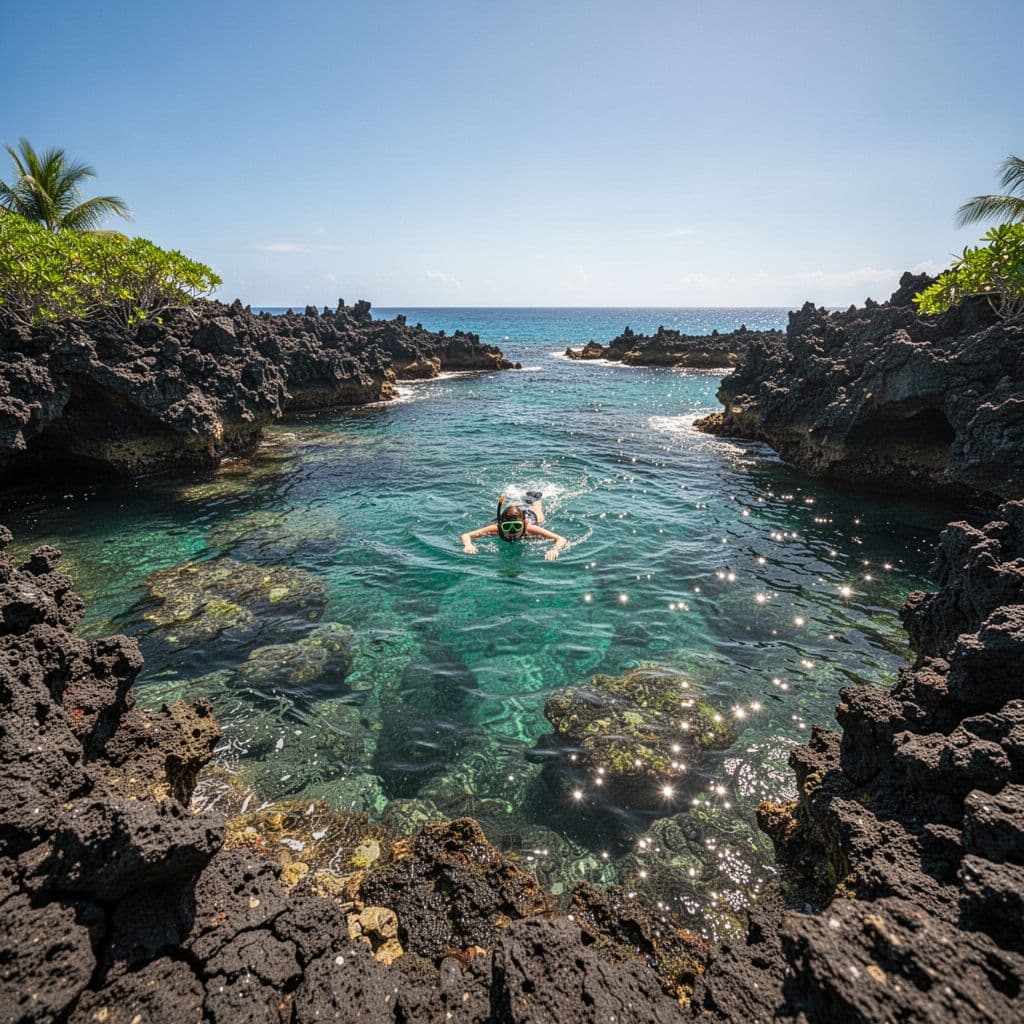
Flat lava rock shelf on the ocean side of the cove where photographers frame swimmers against dark rock pools and turquoise inlets. Access is a short walk down uneven lava rock from the roadside pullout on Kamehameha Highway, so sturdy footwear helps. Calm mornings before wind picks up give the sharpest reflections.
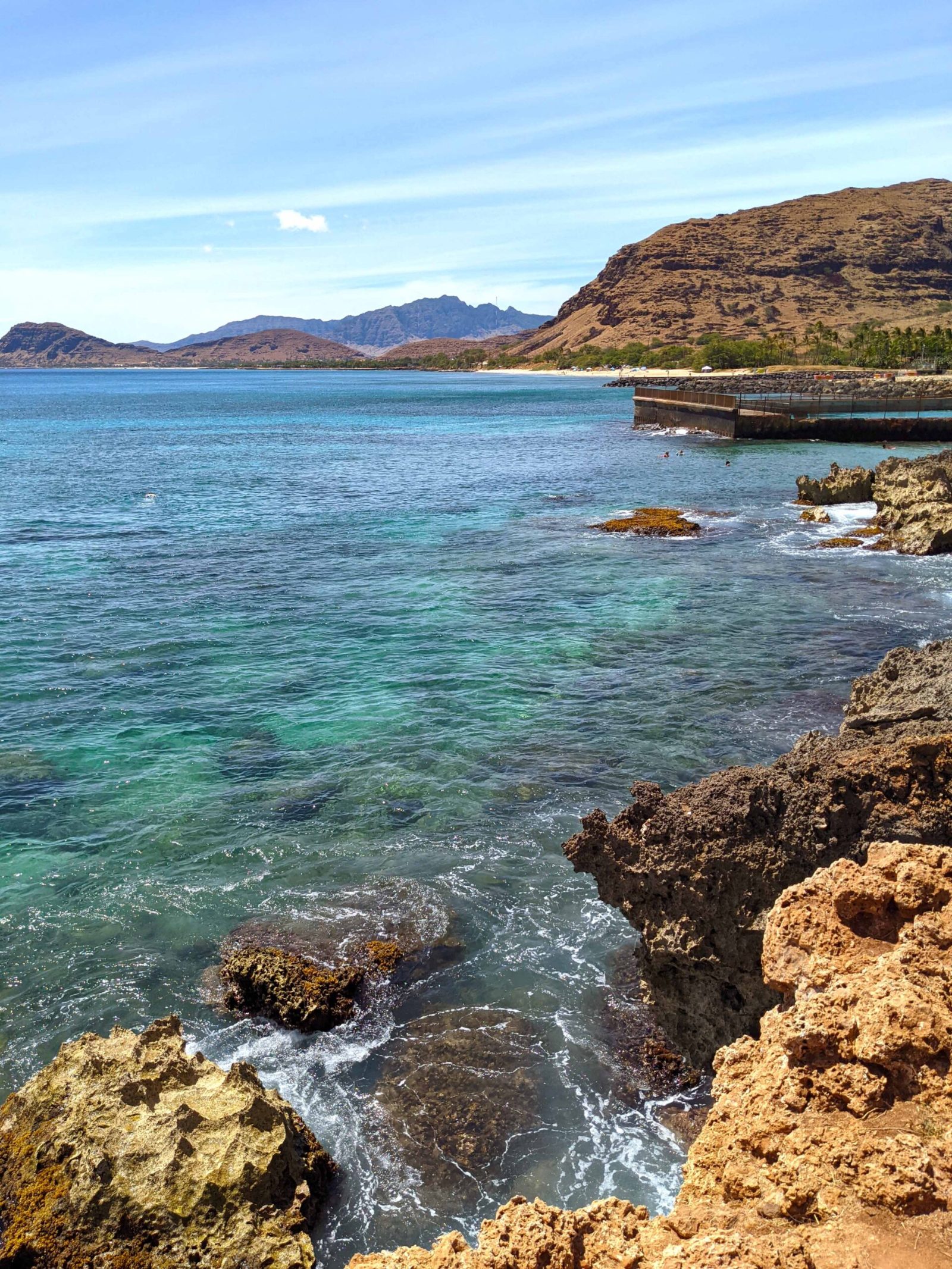
Rocky point beside the power plant outflow where warm water draws turtles close to shore, giving photographers a reliable foreground of dark rocks against bright blue water. Shoot from the low point just south of the parking area, keeping clear of the rocks when swell is up. Overcast midday can wash out the color, so earlier light works better.
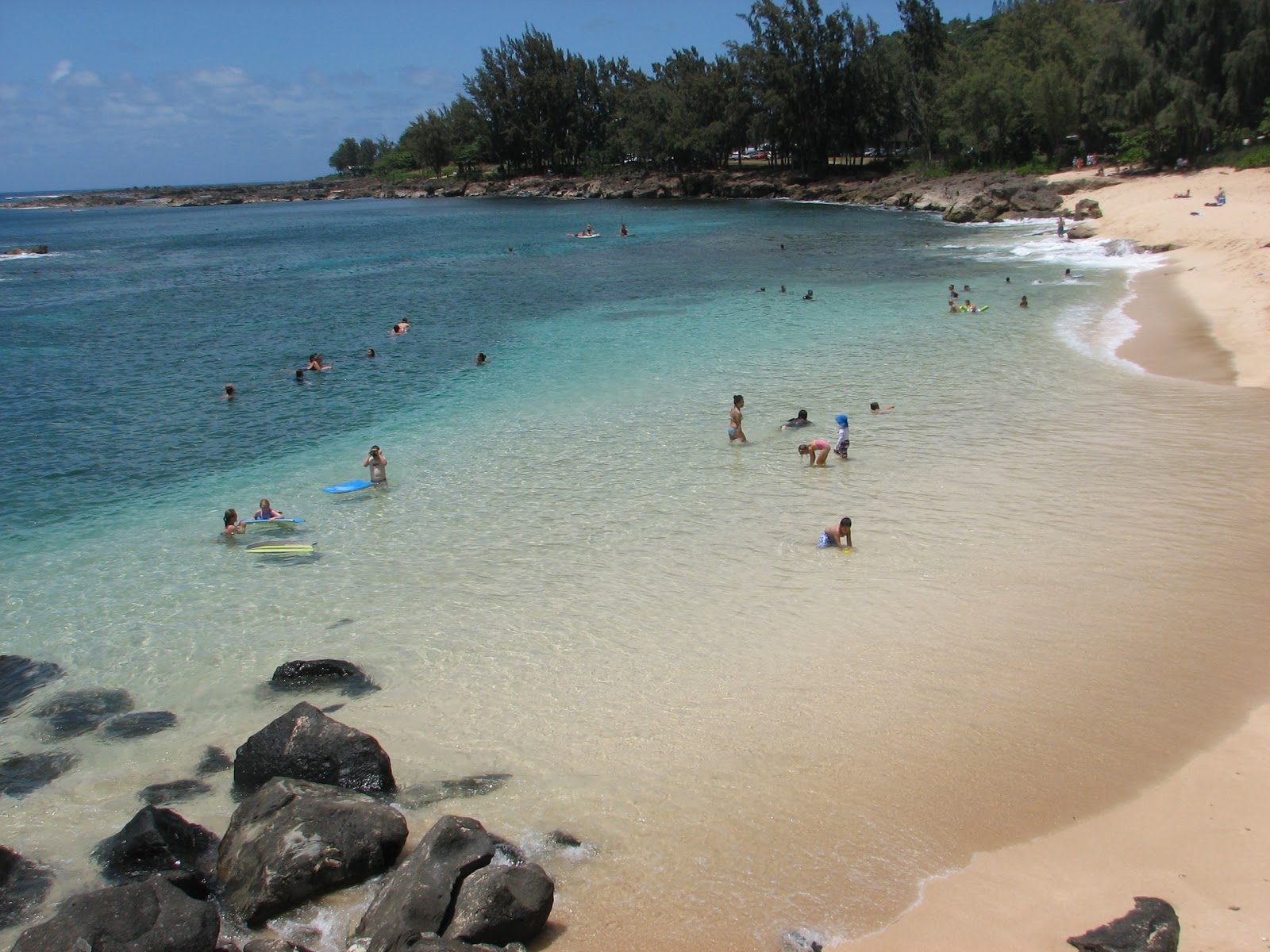
Elevated sandy rise above the three flat reef tables that give the spot its name, offering a clear top-down view of the shallow reef patterns and snorkelers weaving between them. Stand near the small dune just off the main beach path for the best angle. Low crowds early keep the water glassy for reflection shots.
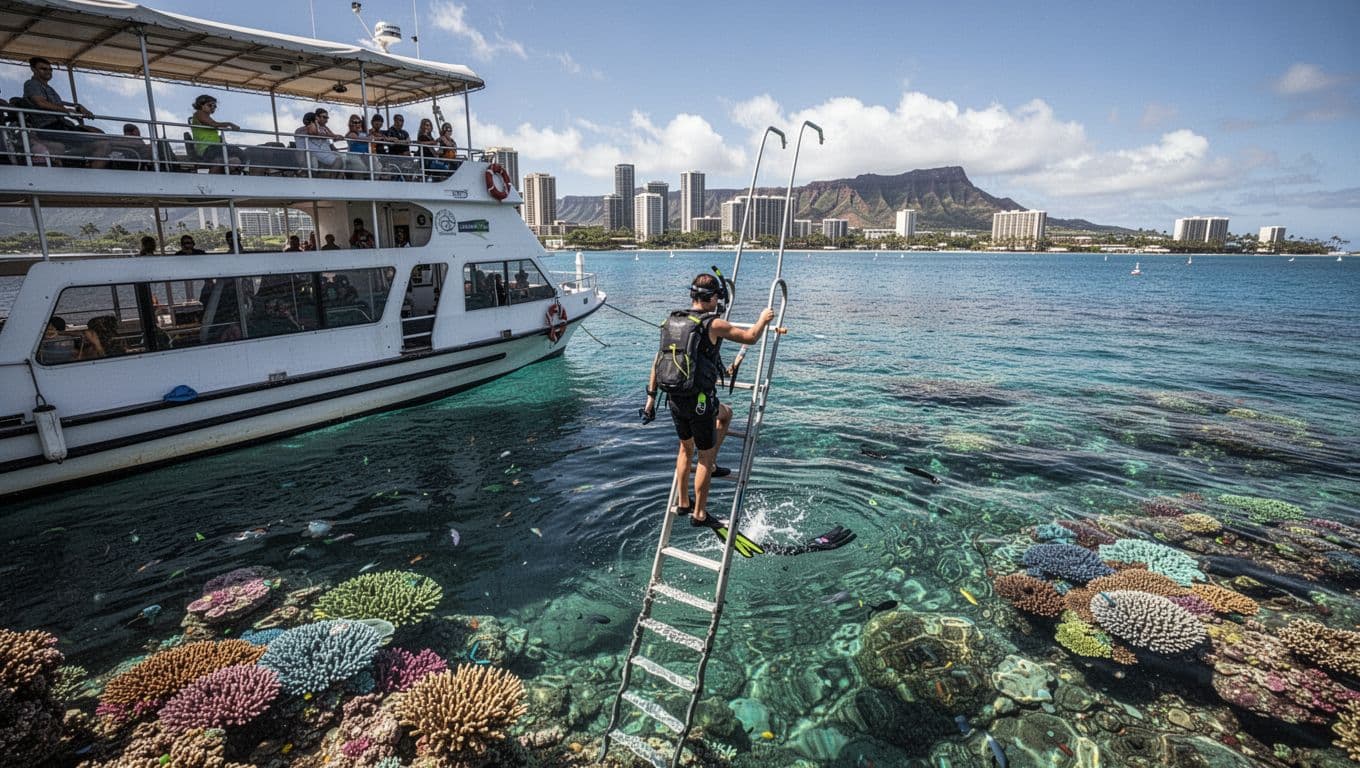
Not a shoreline spot but a favored on-deck vantage: photographers shoot from the boat's stern rail as snorkelers enter the water above the canyon, capturing the hull, ladder, and turquoise swell together. This vantage is only reached aboard a snorkeling tours on oahu tour that stops at Turtle Canyon offshore from Waikiki. Midmorning light on the water works best before haze builds.
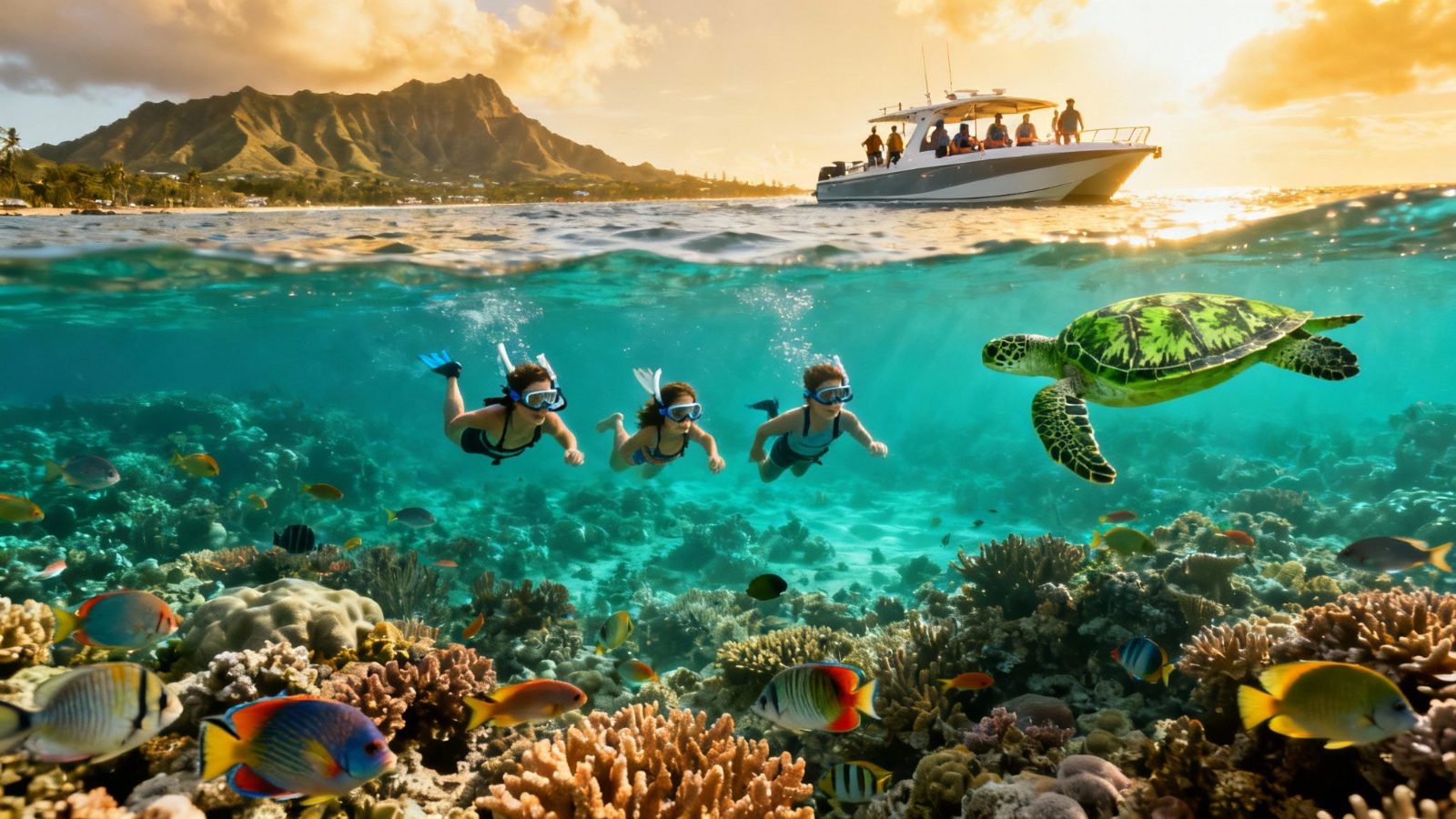
Family snorkeling tours on Oahu split into two very different experiences: shallow, calm-water wading off Magic Island Lagoon for beginners and young kids, versus boat-based Turtle Canyon trips that suit confident swimmers. Picking the right one matters more than the tour length, since both run in the 1.5-2 hour window.
Magic Island Lagoon's flat, shallow water suits kids as young as 5-6 who are comfortable with a mask and can stand up if needed. Turtle Canyon boat trips ask for real swimming ability since snorkelers are in open water off a boat, so save these for kids 8 and up who swim confidently without a float.
Kids who can't swim yet can still wade at Magic Island Lagoon with a life vest and stay in knee-to-chest depth water near the shore. On the boat tours, non-swimmers can usually stay aboard or hold onto a noodle near the boat, but they won't get the same close-up reef access as swimmers.
Turtle Canyon trips involve entering the water from a boat ladder and swimming in open ocean, so any child joining should be a steady, independent swimmer. If you're unsure, the lagoon option is the safer starting point before working up to a boat-based snorkeling tour on Oahu.
Plan arrival for the 07:00-09:00 window when the water is calmest, then budget the full 1.5-2 hour tour plus 30-45 minutes for gear fitting and rinsing off afterward. That leaves the rest of the morning free for lunch and a nap before afternoon winds pick up.
Magic Island Lagoon sits within Ala Moana Regional Park, which has public restrooms, outdoor showers and shaded grass areas for changing kids and drying off. Boat tours typically have an onboard restroom and freshwater rinse, but no dedicated baby-changing station, so bring a portable mat for infants.
Ask your operator about child-sized masks and fins before booking, since a poor seal on a mask is the most common reason young kids get frustrated and give up early. A quick practice session in shallow water at the lagoon helps kids get comfortable before attempting any boat-based excursion.
Most snorkeling tours on oahu depart from Kewalo Basin Harbor or the Ala Wai area, both a short drive or walk from casual Honolulu eateries, so there's no need to pack a full breakfast before an early boat call.
Counter-service spot right at Kewalo Basin serving coffee, breakfast burritos, and poke bowls; convenient for a quick bite before boarding, busiest right at boat check-in times
Plate lunches and loco moco near Ala Moana, popular with tour groups grabbing a hearty meal after a morning on the water, can get a wait around midday
No-frills poke counter near Kapahulu, a favorite post-snorkel stop for fresh ahi bowls, lines form fast so go right after your tour ends
Famous for malasadas, a sweet grab-and-go treat on the way back from Kewalo Basin, mornings and weekends draw the biggest crowds.
Everything you need to know for your journey
The beaches and waters used for snorkeling tours on Oahu are open 24 hours daily, though actual boat departures follow set morning and afternoon schedules set by each operator.
Public beach and ocean access is free at 0 USD; fees only apply to the guided boat excursion, equipment rental, or transportation, not to entering the water itself.
Arriving between 07:00 and 09:00 gives calmer water, better underwater visibility, and lighter crowds before winds and boat traffic build later in the day.
Boarding usually involves dock steps or a ladder, and entering the water often requires a ladder descent or backward roll, so guests should confirm boarding logistics with the specific operator in advance.
Glass containers, outside alcohol, spearfishing gear, coral collection tools, and non-reef-safe chemical sunscreens are among the items not allowed on snorkeling boats.
Yes, photography is welcome on deck, though most tours don't include an underwater camera by default — waterproof cases or GoPro rentals are common add-ons.
A swimsuit under light, quick-dry clothing works well, since most snorkeling tours on Oahu depart straight from the harbor with limited changing facilities.
Most half-day and full-day tours include snacks and water, though outside alcohol and glass containers are typically not permitted on board.
Driving is the most practical option, with harbors like Kewalo Basin, Haleiwa, and Ko Olina offering free or paid parking near the docks.
Many operators set a minimum age around 5-7 years old for open-ocean snorkeling, with life vests provided for younger swimmers.
Most operators allow free cancellation or rescheduling 24-48 hours before departure, with late cancellations generally non-refundable.
Diamond Head State Monument, Ala Moana Beach Park, and Haleiwa Town all pair well with a morning or afternoon snorkeling excursion.
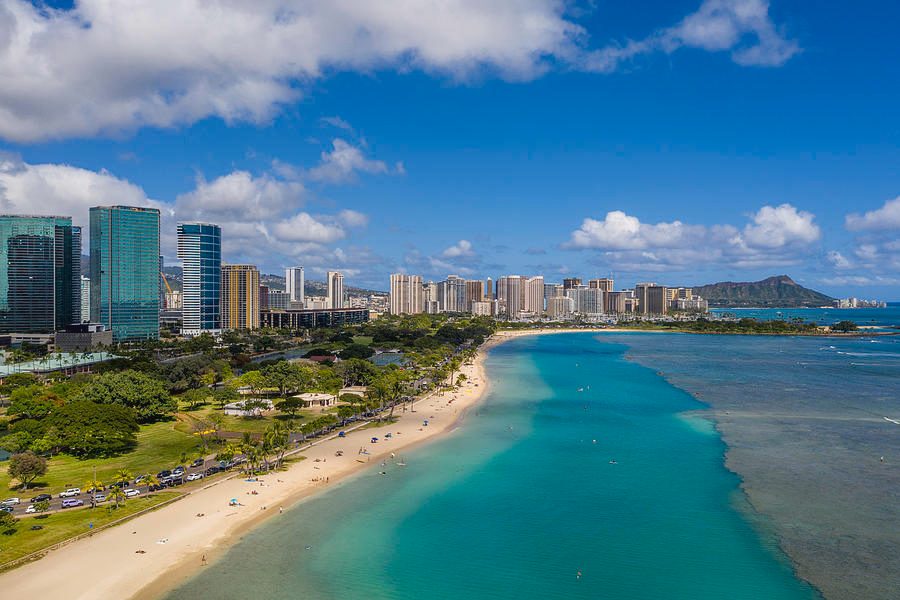
A wide, calm urban beach near Kewalo Basin popular for a swim before or after a boat departure.
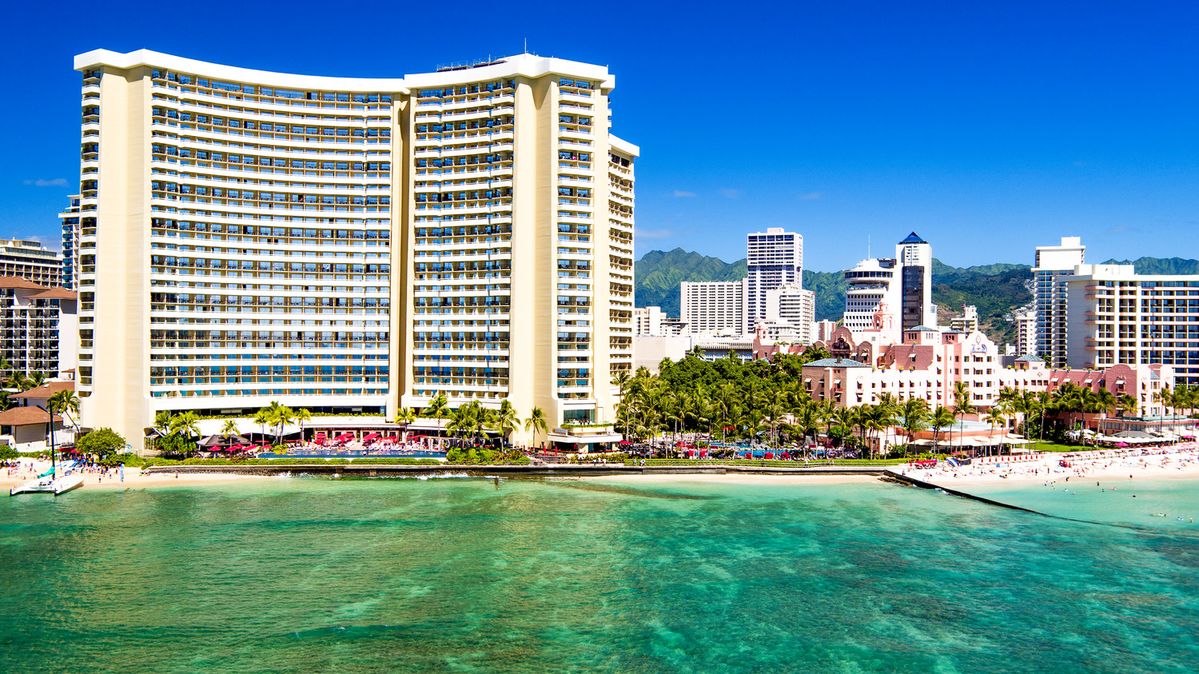
Dense concentration of hotels within reach of Kewalo Basin departures.
Join thousands of happy travelers who have discovered this incredible experience
Book Your Experience Now