

Quick answer
Free snorkeling on Oahu is available year-round at multiple public beaches including Hanauma Bay, Shark's Cove, and Electric Beach, with 24-hour access at most locations. Public beach access points have no entrance fees, though some sites like Hanauma Bay charge parking fees for non-residents. Arrive between 7:00 and 9:30 AM for the best visibility and fewer swimmers in the water.
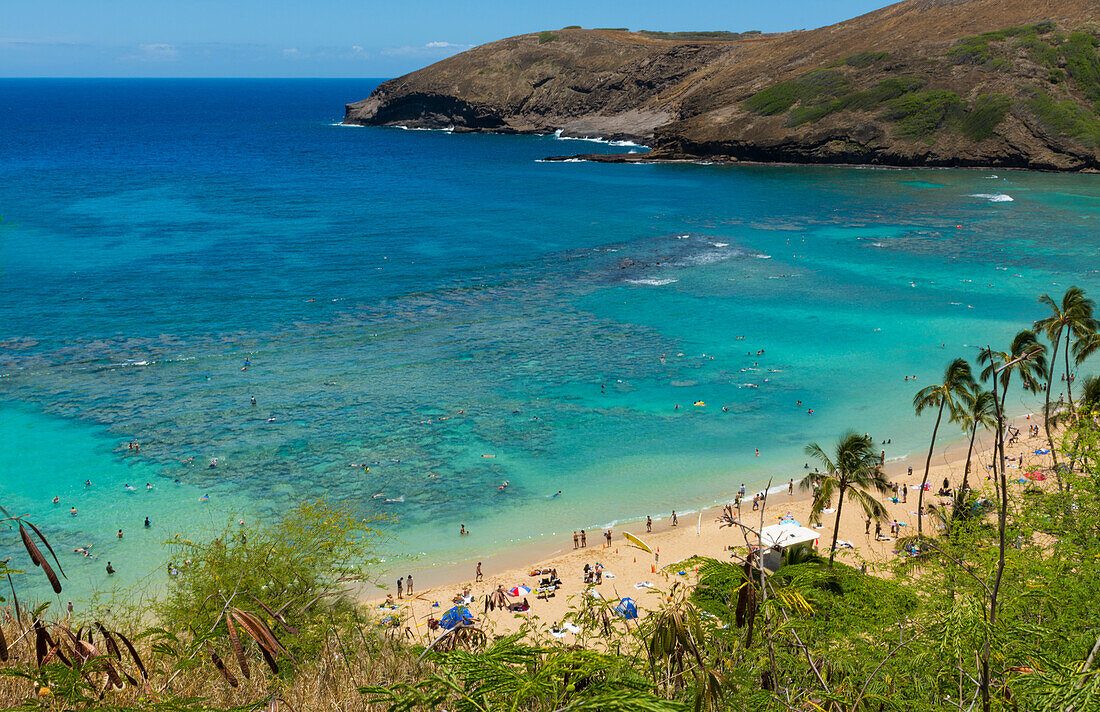
Oahu's volcanic coastline creates natural bays and lava-rock formations that shelter marine life within swimming distance of shore. Public beaches across the island offer reef access where parrotfish, surgeonfish, and green sea turtles feed in shallow water visible from the surface. The North Shore's Shark's Cove sits inside a volcanic tide pool protected from open-ocean swells during summer months. The rocky entry requires reef-safe footwear, but once past the boulders, the basin opens into channels where tropical fish congregate around coral heads in six to fifteen feet of water. Electric Beach on the west side draws species to the warm-water outflow from a coastal power plant—the thermal plume attracts pelagic fish including occasional dolphin pods and, in winter, spinner sharks. The site has no facilities and requires careful timing with the current. Hanauma Bay, a collapsed volcanic crater on the southeast coast, restricts daily visitor numbers and requires a mandatory conservation video before beach access. The bay's horseshoe shape creates a calm inner lagoon where beginning snorkelers can observe reef fish in waist-deep water. The outer reef, accessible by swimming through the center channel, drops to thirty feet and hosts larger species including octopus and moray eels. Water clarity depends on weather patterns—trade winds blow stronger after 10:00 AM and churn sediment in shallow zones. Winter swells from the north make sites like Shark's Cove dangerous and often close the bay entirely. Summer offers calmer conditions on the North Shore, while south-facing beaches like Hanauma Bay see flatter water in winter. Most snorkelers bring their own masks and fins, available at island sporting-goods stores and beach rental kiosks near major access points.
“Oahu's volcanic coastline creates natural bays and lava-rock formations that shelter marine life within swimming distance of shore.”
Getting to Free Snorkeling Spots on Oahu
The three named free snorkeling spots sit in different regions of Oahu, so the route depends on which one you're headed to: southeast (Hanauma Bay), North Shore (Shark's Cove), or Leeward coast (Electric Beach). A rental car is the most practical way to reach all three, though Hanauma Bay is also served by public bus from Waikiki.
H-1 to Route 72 (Hawaii Kalanianaole Highway) to Hanauma Bay
TheBus Route 22 to Hanauma Bay stop
H-1 to H-2 to Route 83 (Kamehameha Highway) to Shark's Cove, Pupukea
H-1 to Route 93 (Farrington Highway) to Kahe Point Beach Park (Electric Beach)
Direct to any of the three locations
Best Time for Free Snorkeling on Oahu
The single best window is 07:00 to 09:30, when trade winds are calmest and the water hasn't yet been stirred up by the day's crowds; layering that onto summer months adds a seasonal edge for the north shore spots.
Summer (May–September)
Moderate, heavier middayAir 80–88°F, water 77–80°F, calm surf
North shore spots like Shark's Cove are at their flattest and safest, making this the easiest season for beginners.
Winter (November–March)
Lighter at north shore, heavier southAir 75–82°F, water 74–77°F, big north surf
Large swells can make north shore entries hazardous or closed out, so south and west shores such as Electric Beach and Hanauma Bay hold clearer, calmer water instead.
Early morning (07:00–09:30)
Fewest people, especially before 08:30—
Wind stays low before it picks up midmorning, so visibility is at its best and the water hasn't been churned by fins or boat traffic.
Weekday mornings
Noticeably thinner than weekends—
Local traffic and out-of-town day-trippers both thin out on weekdays, leaving more open reef and easier parking near access points.
Midday and weekends (any season)
Peak crowds, especially Hanauma BayWarmer surface glare, choppier from wind
Afternoon trade winds build texture on the water and parking fills fast, so visibility and access both drop off compared with the early window.
Free Snorkeling on Oahu: Hours and Access
Public beaches on Oahu, including popular snorkeling locations, are accessible to the public 24 hours a day. These hours refer to general beach access, as these sites do not operate as managed facilities with formal opening or closing times.
| Monday | 00:00–23:59 | Public beach access |
|---|---|---|
| Tuesday | 00:00–23:59 | Public beach access |
| Wednesday | 00:00–23:59 | Public beach access |
| Thursday | 00:00–23:59 | Public beach access |
| Friday | 00:00–23:59 | Public beach access |
| Saturday | 00:00–23:59 | Public beach access |
| Sunday | 00:00–23:59 | Public beach access |
Rules and Etiquette for Free Snorkeling on Oahu
Oahu's free snorkeling spots are unguarded public beaches where your conduct protects fragile reef ecosystems and respects local norms. Follow reef-safe practices and swim within your ability.
Do
- Use reef-safe mineral sunscreen (zinc oxide or titanium dioxide)
- Keep fins and hands off coral—hover above, never stand or touch
- Swim parallel to shore and stay aware of currents without lifeguards
- Respect local customs: yield space, pack out all trash, leave nothing behind
- Check conditions before entering—waves and visibility vary by site and season
Don't
- Don't stand on or touch coral—it damages the reef and can cause injury
- Don't use chemical sunscreen (oxybenzone, octinoxate)—it harms coral health
- Don't swim alone at unguarded beaches or beyond your skill level
- Don't feed fish or disturb marine life, including touching turtles
- Don't leave gear, wrappers, or cigarette butts on the beach
Tips for Free Snorkeling on Oahu Beyond the Basics
A few habits separate first-time visitors from people who snorkel Oahu's free spots regularly without wasting a day on bad conditions or overpriced gear.
Check flags before you drive
Hawaii's Ocean Safety division (hawaiibeachsafety.com) posts daily flag colors and lifeguard advisories for Oahu beaches, updated each morning. A red or black flag at your planned spot means high surf or strong currents, so check it before leaving rather than after arriving to closed water.
Rent gear for multiple days
Multi-day snorkel gear rentals from shops away from the beach parking lots are typically cheaper per day than single-day rentals at stands near the sand. Booking a 3-5 day rental once covers several rotating visits without repeat rental fees.
Have a backup spot ready
Shark's Cove faces north shore swell and can turn rough or fully close out in winter months, while south-facing spots like Electric Beach stay calmer. Pick two spots on opposite shores before you leave so a closure at one doesn't end your day.
Ask lifeguards about visibility
On-duty lifeguards at staffed beaches know that day's underwater visibility from recent rain runoff or wind, information that isn't posted online. A quick question at the tower can save a trip if runoff has clouded the water.
Watch wind direction, not just waves
Trade winds can chop up surface water even when wave height looks low on forecasts. Mornings with light or offshore wind generally give clearer snorkeling than days with strong onshore trade winds, regardless of listed swell size.
Rotate spots by season
Summer swell patterns favor north shore spots like Shark's Cove, while winter swell favors south and west-facing beaches like Electric Beach. Matching the season to the shore orientation is more reliable than checking conditions the morning of.
Where to Go for Free Snorkeling on Oahu: Nearby Spots
Each of these three free spots anchors a different side of the island, so most visitors pick one per outing rather than combining all three in a day.
Hanauma Bay Nature Preserve
A protected volcanic crater bay with the calmest water of the three, well suited to first-time snorkelers or anyone wanting an easy, sheltered introduction.
Shark's Cove
A rocky cove with tide pools and richer reef structure, better suited to more confident swimmers and a natural stop if you're already spending the day on the North Shore.
Electric Beach (Kahe Point)
Warm water discharge from the nearby power plant draws fish close to shore, making it a distinct option if you're based on the west side rather than town or the North Shore.
Free Snorkeling on Oahu Checklist
Cover these bases before heading to any of Oahu's public snorkel beaches.
-
Check ocean safety reports online — Surf and current conditions change daily and affect visibility.
-
Pack or rent snorkel gear — Mask, snorkel, and fins make the experience safer and more efficient.
-
Bring reef-safe sunscreen — Chemical sunscreens damage coral; mineral-based formulas are required at some locations.
-
Wear water shoes or reef booties — Rocky entries and sharp coral are common at many access points.
-
Bring small bills for parking — Most beach lots charge a few dollars and operate on cash or meters.
-
Arrive between 7:00 and 9:30 AM — Water is calmer and visibility peaks before midday crowds.
Check availability
Common Questions About Free Snorkeling on Oahu
Everything you need to know about free snorkeling on oahu