
Quick answer
Snorkeling on Oahu North Shore is free and accessible daily at public beaches including Shark's Cove, Three Tables, and Pupukea Beach Park. Entry costs nothing, and the water is open 24 hours, though the best window is 7:00–10:00 AM when visibility peaks and wind remains light. Summer months (May through September) deliver the calmest conditions, while winter brings powerful swells that close most sites to swimmers.
The North Shore holds some of Oahu's clearest water, but it earns its reputation through geological accident rather than careful curation. Volcanic rock shelves extend offshore at Shark's Cove and Three Tables, creating tide pools and channels where reef fish, green sea turtles, and octopuses congregate in water shallow enough to observe without scuba gear. The same geography that creates these sheltered pockets also funnels winter swells into narrow gaps, transforming placid bays into surge zones within hours. Snorkeling on Oahu North Shore follows a strict seasonal calendar. Between May and September, trade winds blow offshore in the morning, leaving the surface glassy and visibility extending past 60 feet. Shark's Cove, the most visited site, sits inside a volcanic crater partially open to the ocean; during summer, the basin acts as a natural aquarium, with parrotfish and tang moving between coral heads in water that rarely exceeds eight feet. Pupukea Beach Park and Three Tables reef offer similar conditions, though Three Tables requires a longer swim from shore and rewards it with fewer crowds and more pelagic species. Winter erases this accessibility. North Pacific swells arrive between October and April, building sets that reach 15 to 25 feet on exposed coastlines. Shark's Cove, protected by its crater walls, remains diveable on some winter days, but the entry point—a lava rock shelf with no sand buffer—becomes treacherous under even moderate surge. Lifeguards close access when wave heights exceed safety thresholds, and the closures are enforced. Three Tables and Pupukea, lacking natural wind breaks, become undiveable for weeks at a time. The North Shore snorkeling guide begins with a morning ocean check. Conditions change within a single day: a site that opens calm at dawn may be closed by noon once wind and tide converge. Shark's Cove remains the most reliable entry point for beginners due to its protected basin and adjacent facilities, while Three Tables serves advanced snorkelers willing to navigate rock entries and open-water stretches. No fees, no reservations, no controlled access—North Shore snorkeling operates on the oldest transaction in coastal recreation, trading convenience for conditions that vary by the hour.
“The same volcanic shelves that create Oahu's clearest tide pools also funnel winter swells into surge zones, transforming accessible sites within a single morning.”
Best Time for Snorkeling on Oahu North Shore
The most reliable window is summer, May through September, when north swells drop out and the water along Shark's Cove, Three Tables, and Pupukea Beach Park turns flat and clear; pair any summer visit with the 07:00-10:00 arrival slot for the calmest water and best visibility before onshore wind builds.
Summer (May-Sep)
Moderate, busiest middayCalm surf, air near 80-85°F, water 78-80°F
This is the flat-water season on the North Shore, with small or nonexistent surf making Shark's Cove and Three Tables consistently swimmable most days.
Winter (Nov-Mar)
Lighter in water, heavy onshore for surf watchersLarge swells, air near 70-75°F, water 74-77°F
North Pacific swells regularly produce surf too rough and turbid for snorkeling, including during the Vans Triple Crown of Surfing event window in November and December.
Shoulder months (Apr, Oct)
Lighter crowds than peak summerTransitional, variable swell size
Conditions swing between calm and rough week to week, so checking a marine forecast the morning of matters more than the calendar.
Daily 07:00-10:00
Fewest people in the waterLightest wind, best visibility before trade winds build
Mornings before the wind picks up give the clearest water for spotting fish and reef detail, regardless of season.
Weekday mornings
Thinner crowds than weekends—
Weekday visits avoid the local weekend traffic at these public beach parks, leaving more open sand and calmer water access.
Verdict: Aim for a weekday morning between 07:00 and 10:00 in July or August, when flat summer surf and pre-wind conditions overlap for the clearest, calmest snorkeling.
Getting to Snorkeling Spots on Oahu North Shore
The snorkeling spots sit along Kamehameha Highway on Oahu's North Shore, roughly 30 miles from Honolulu, and a car is the only practical way to reach them.
H-2 north to Kamehameha Highway (Route 83) to Shark's Cove, Three Tables, or Pupukea Beach Park
Same route via H-2 and Kamehameha Highway
No direct or convenient public transit route serves these beach parks
Shark's Cove, Three Tables, and Pupukea Beach Park are within walking distance of each other along Kamehameha Highway
Where to Snorkel on Oahu North Shore: Shark's Cove, Three Tables and Pupukea
North Shore snorkeling centers on three named entry points along the same stretch of coast, each with distinct terrain and marine life. Shark's Cove, Three Tables and Pupukea Beach Park sit close together but reward different swimming styles.
Shark's Cove
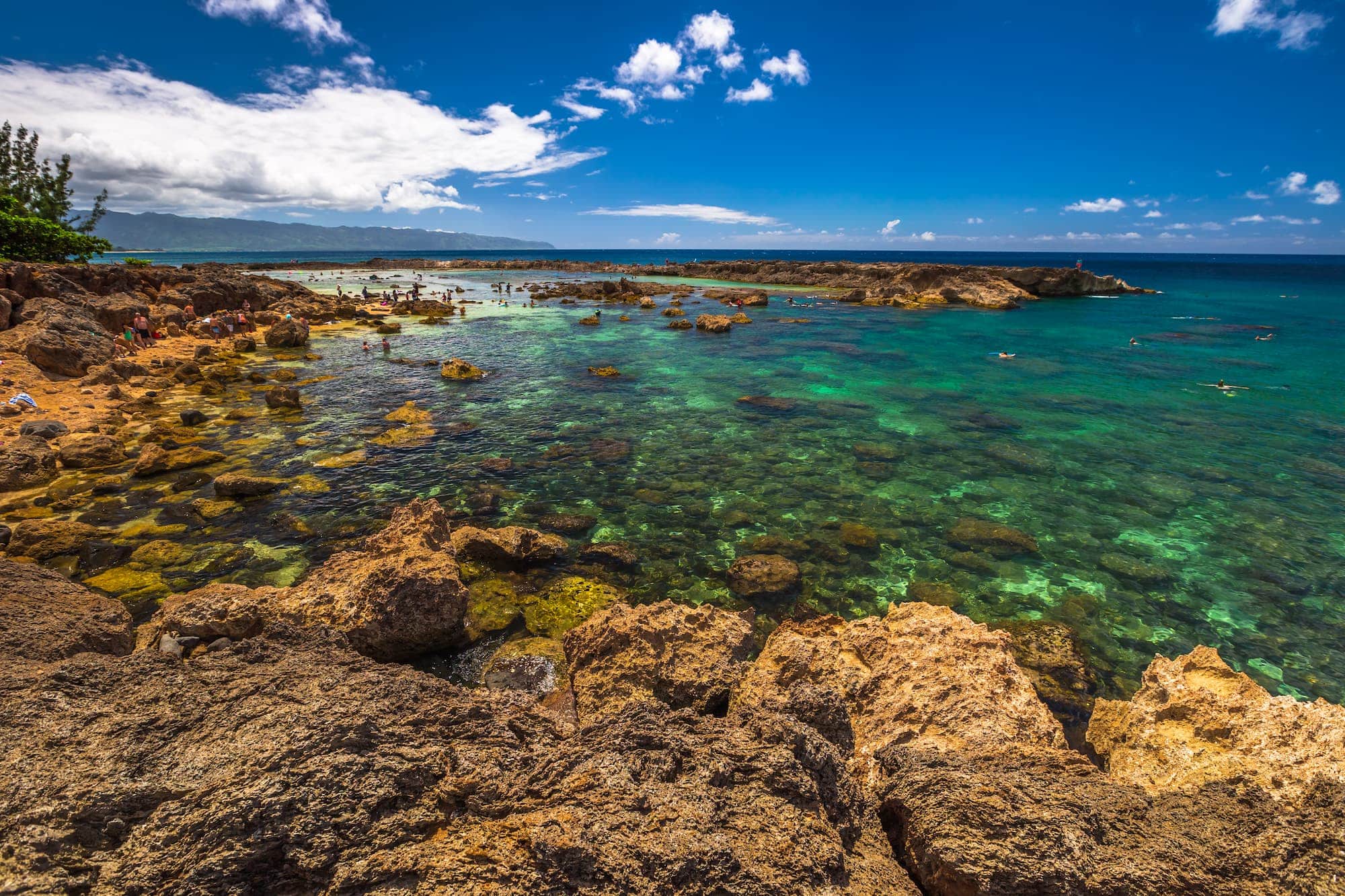
A lava-rock cove with tide pools, arches and small underwater caverns that hold reef fish, urchins and the occasional octopus.
Swim just past the rock line to reach the caverns.
Shark's Cove Tunnels
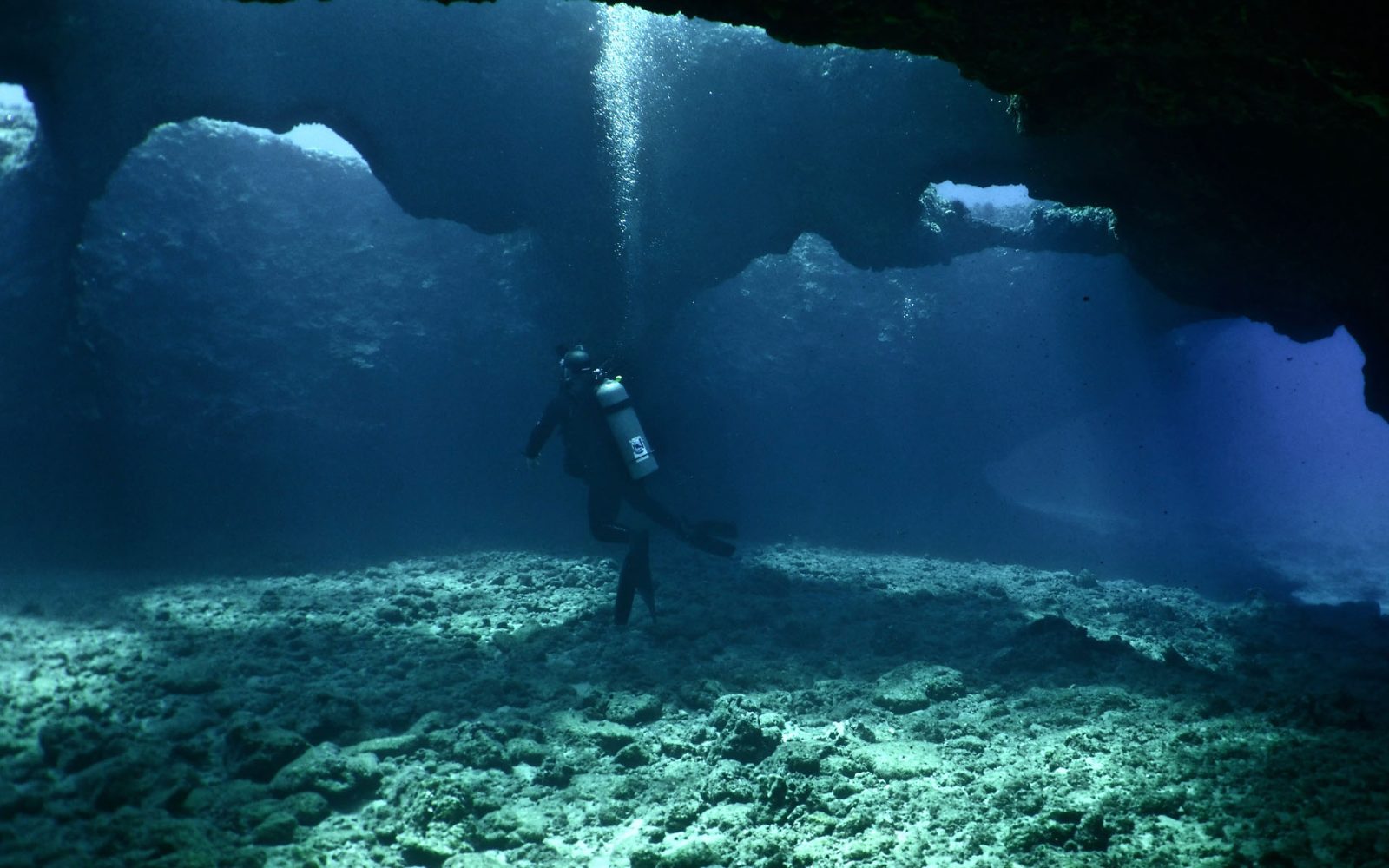
A network of submerged lava tubes and swim-through channels extending from the cove, popular with more confident snorkelers.
Follow the sandy channel out before entering the tunnels.
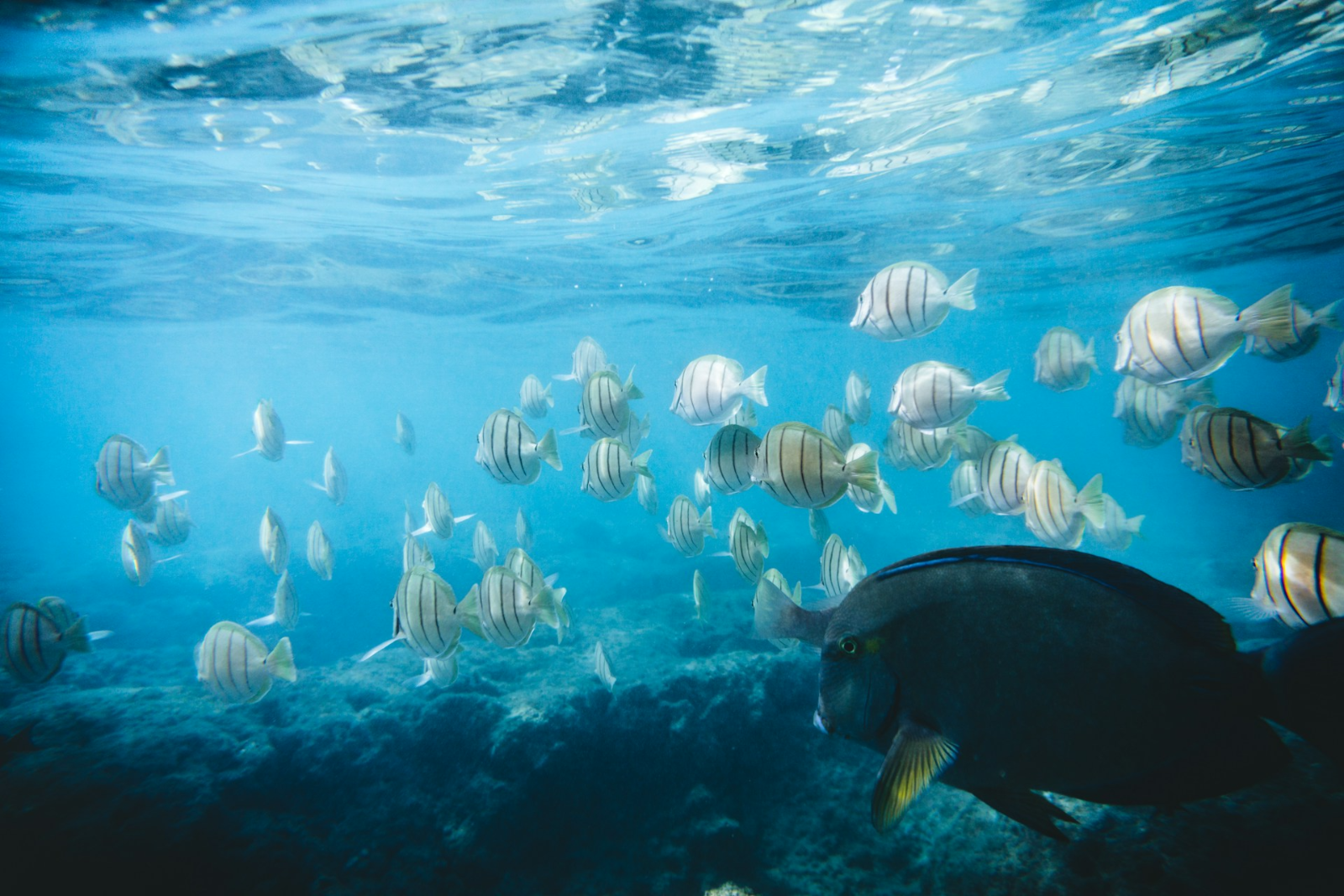
Three Tables
Named for the flat, table-like reef slabs that break the surface, with sandy channels between them holding parrotfish and small rays.
Enter between the visible tables at low swell.
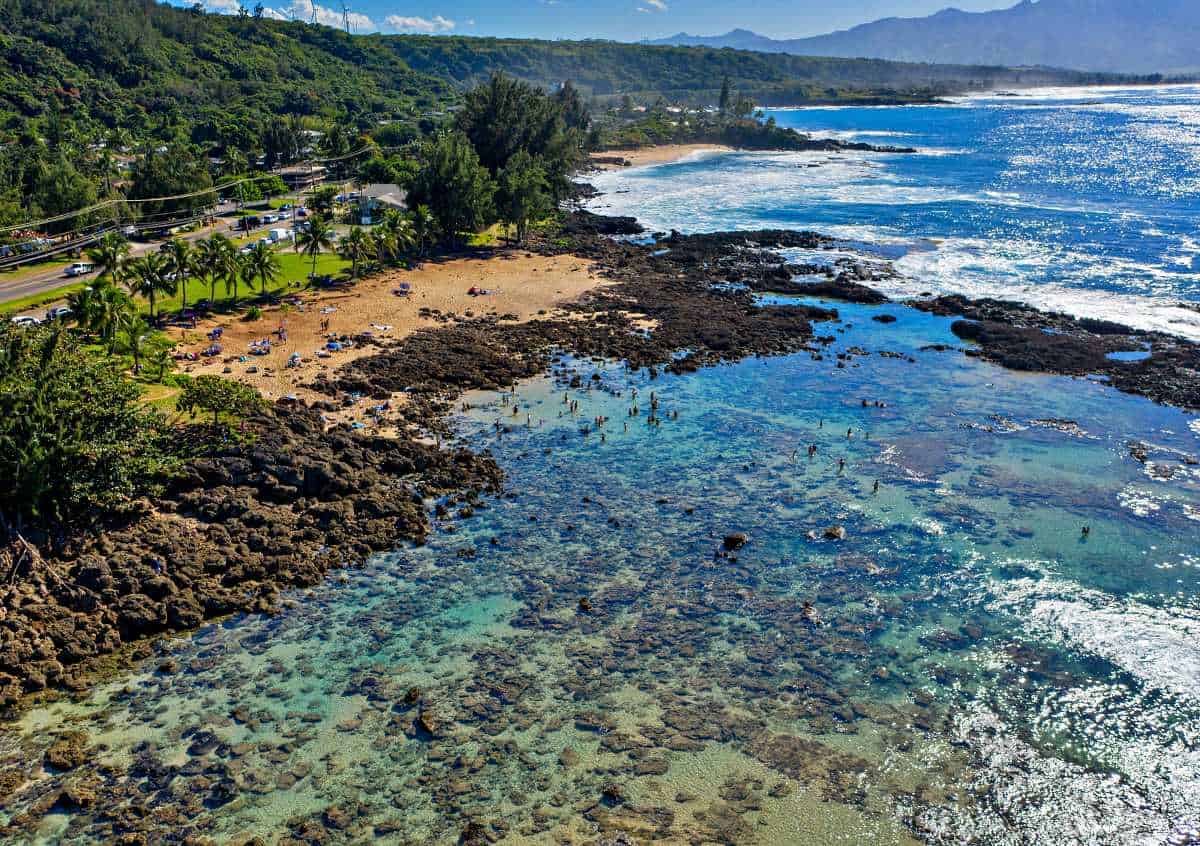
Pupukea Beach Park
The sandy stretch linking Shark's Cove and Three Tables, with shallower, calmer patches suited to slower swimming and beginners.
Stay in the sandy middle stretch, away from the rocky edges.
Old Quarry (Shark's Cove)
A deeper pocket at the outer edge of Shark's Cove where the lava shelf drops off, drawing larger reef fish.
Look for the drop-off just beyond the shallow tide pools.
Snorkeling on Oahu North Shore: Rules and Safety Etiquette
North Shore snorkeling demands respect for powerful ocean conditions and fragile reef ecosystems. Following these rules protects both you and the marine environment.
Do
- Check ocean conditions and heed lifeguard warnings before entering
- Snorkel with a buddy and stay within your skill level
- Keep a safe distance from coral and lava rock formations
- Watch for waves and never turn your back to the ocean
- Exit immediately if conditions deteriorate or you feel uncomfortable
- Observe marine life from a respectful distance without touching
Don't
- Don't touch, stand on, or kick coral with your fins
- Don't snorkel alone or venture beyond marked safe zones
- Don't ignore warning flags, closure signs, or lifeguard instructions
- Don't chase, feed, or harass sea turtles or other wildlife
- Don't enter the water during high surf or winter swells
- Don't wear sunscreen that harms coral—use reef-safe products only
Facts About Snorkeling on Oahu North Shore
Beyond wave counts and arrival times, the North Shore's snorkel sites hold a mix of geology, marine protection, and naming history worth knowing before you go.
Shark's Cove sits inside lava tube caverns
The cove formed from ancient lava flows that left behind underwater tubes, arches, and crevices, creating varied terrain for fish and invertebrates to shelter in.
Shark's Cove has no notable shark activity
Despite the name, shark sightings in the cove are rare; the name is widely attributed to local lore and the shape of nearby rock formations rather than any documented shark hazard.
Pupukea Marine Life Conservation District protects the area
Shark's Cove and Three Tables fall within this state-designated district under Hawaii's Department of Land and Natural Resources, which restricts fishing and the removal of marine life to preserve the reef ecosystem.
Green sea turtles, or honu, are commonly seen
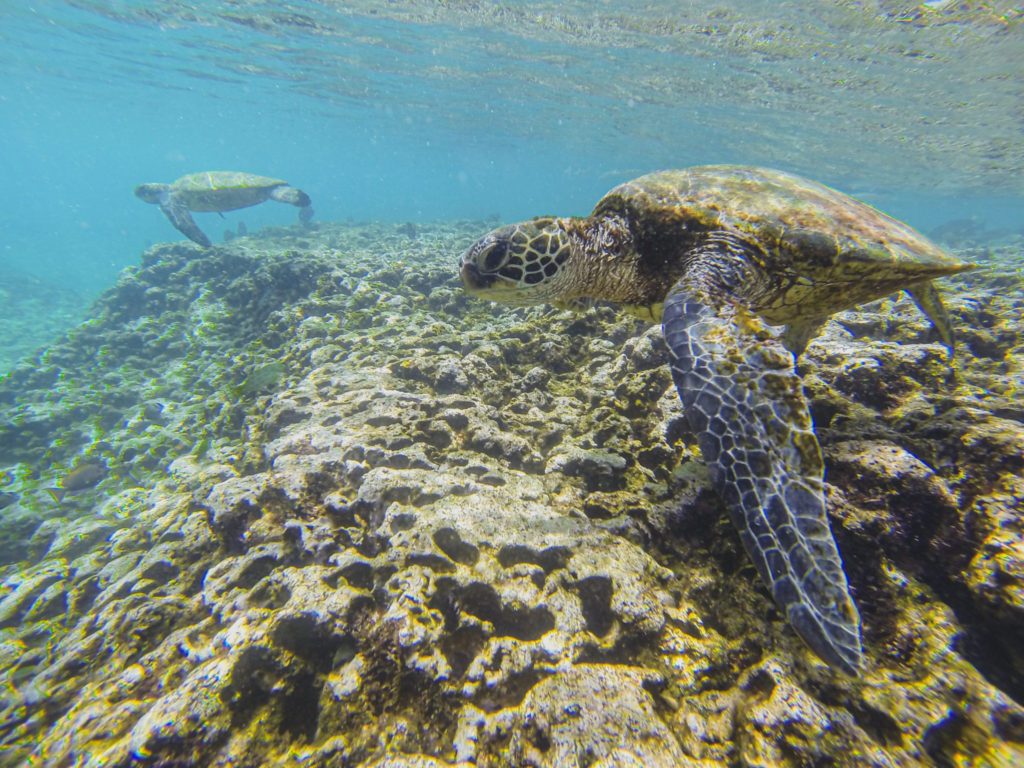
Hawaiian green sea turtles regularly forage on algae along the reef flats and rocky outcrops at Shark's Cove and Three Tables, and are protected under federal and state law.
Three Tables gets its name from flat reef slabs
The site is named for a set of broad, flat coral and rock formations visible near the surface, which break the water into table-like sections popular with snorkelers.
Reef fish diversity draws repeat snorkelers
Sightings commonly include parrotfish, tangs, wrasses, and the state fish, the humuhumunukunukuapuaa (reef triggerfish), among the rocky crevices and lava formations.
DLNR manages the beach parks along this coastline
The Department of Land and Natural Resources oversees Pupukea Beach Park, which encompasses both Shark's Cove and Three Tables as public conservation and recreation land.
Snorkeling on Oahu North Shore: What to Pack and Check Before You Go
North Shore snorkeling requires minimal gear but careful preparation — calm mornings offer the best conditions, and reef-safe products protect Hawaii's marine environment.
-
Check surf and wind forecast morning-of — North Shore swells can turn sites from calm to hazardous within hours.
-
Bring or rent mask, snorkel, and fins — Rental shops line Kamehameha Highway near Shark's Cove and Pupukea.
-
Pack reef-safe sunscreen (non-nano zinc or titanium) — Chemical sunscreens are banned in Hawaii to protect coral reefs.
-
Wear water shoes or reef booties — Lava rock entries at Shark's Cove and Three Tables are sharp and slippery.
-
Arrive between 7–10 AM — Visibility drops and wind picks up significantly after mid-morning.
-
Bring a towel and dry bag — No facilities at some sites; secure valuables in your vehicle.
Combining Snorkeling on Oahu North Shore With Nearby Sights
The same stretch of Kamehameha Highway that connects Shark's Cove, Three Tables, and Pupukea Beach Park also links a few other North Shore stops worth folding into the same day.
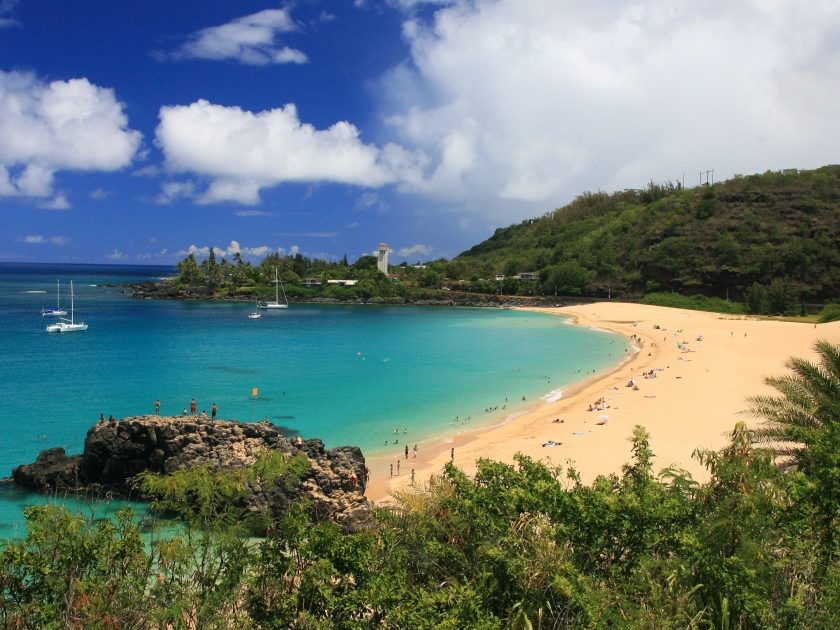
Waimea Bay
A wide sandy bay just south on the same highway, useful as a calmer backup swim spot once afternoon wind churns up the snorkel coves.
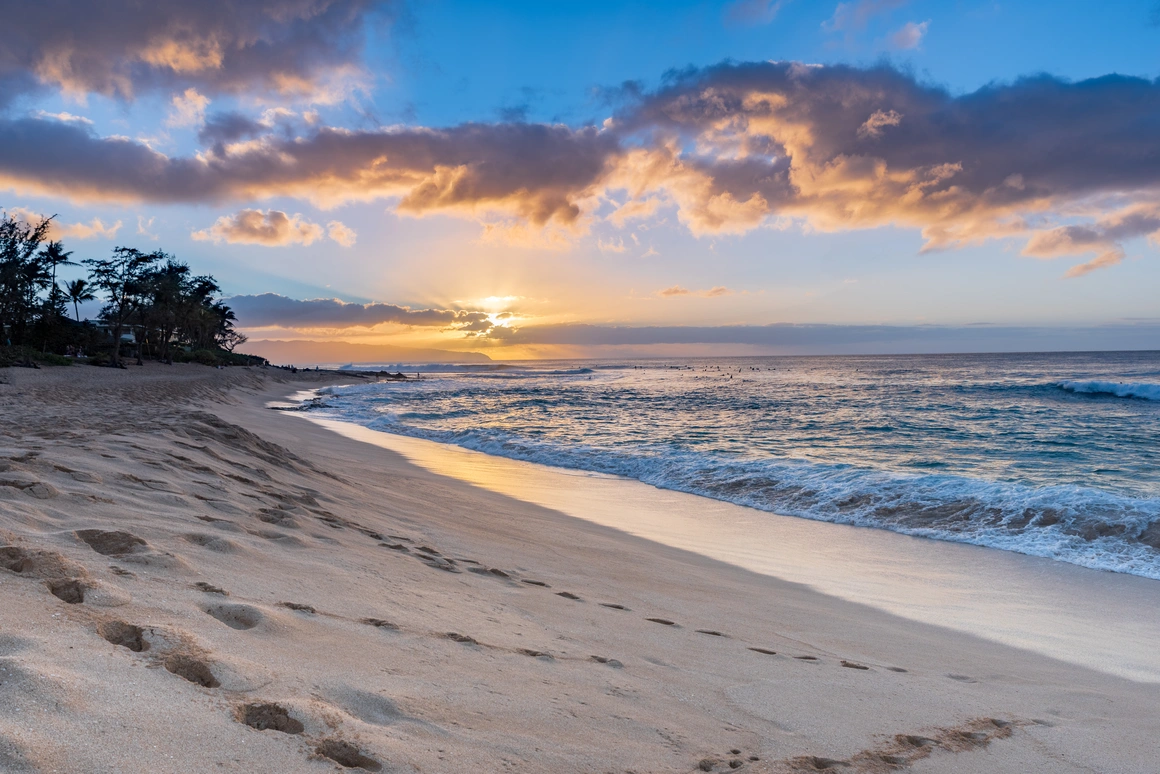
Sunset Beach
Known for big winter surf, this beach sits north along the coastal route and makes sense as a scenic stop after morning snorkeling ends.
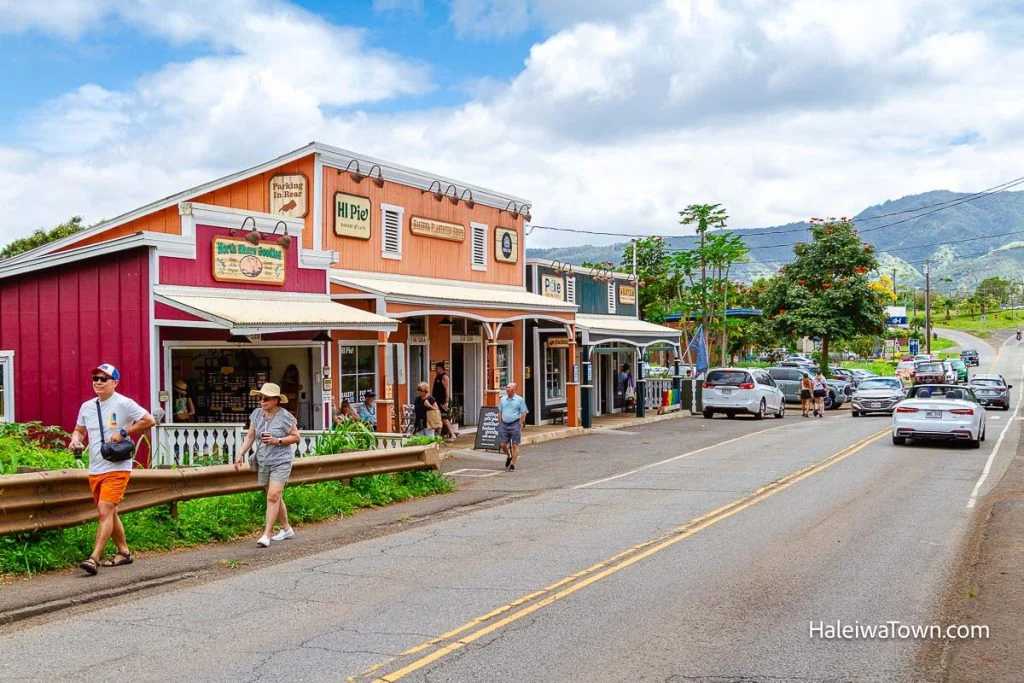
Haleiwa town
The old plantation-era town anchors the North Shore's south end, a natural stop for a break between the water and the drive back.
Check availability
Frequently Asked Questions About Snorkeling on Oahu North Shore
Everything you need to know about snorkeling on oahu north shore