2 hr
Waikiki Turtle Canyons Snorkel Cruise
- Entry ticket
- Mobile voucher
- Valid same day
- Free cancellation
Snorkeling on Oahu — Reef Access & Marine Sanctuary Tours
Volcanic craters meet coral gardens, green turtles glide past lava shelves
Compare fares, pick the fit — all bookings are mobile-voucher and eligible for free cancellation where shown.
2 hr
3 hr
1 hr 30 min
| Experience | Duration | Rating | Transfers | Guide | Small group | Free cancel. | Price | |
|---|---|---|---|---|---|---|---|---|
|
Standard Entry
Most popular
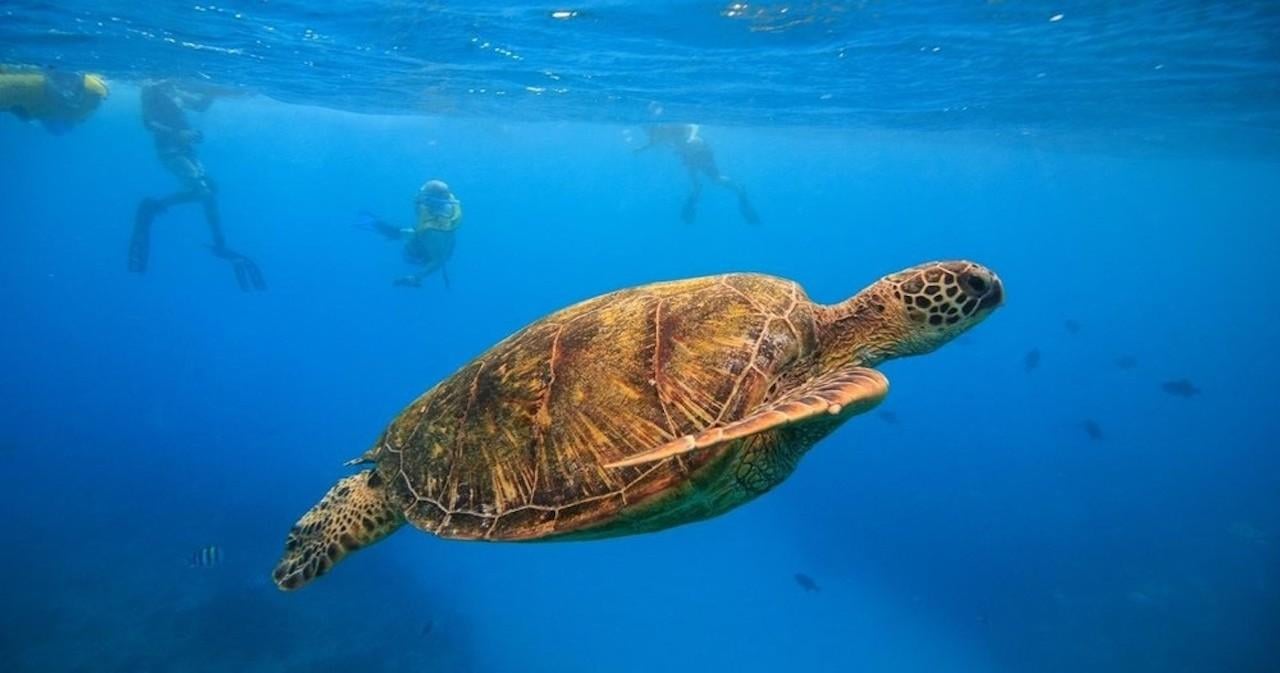
Waikiki Turtle Canyons Snorkel Cruise
|
2 hr | ★ 4.7 | — | — | ✓ | ✓ | €78 | Book → |
|
Standard Entry
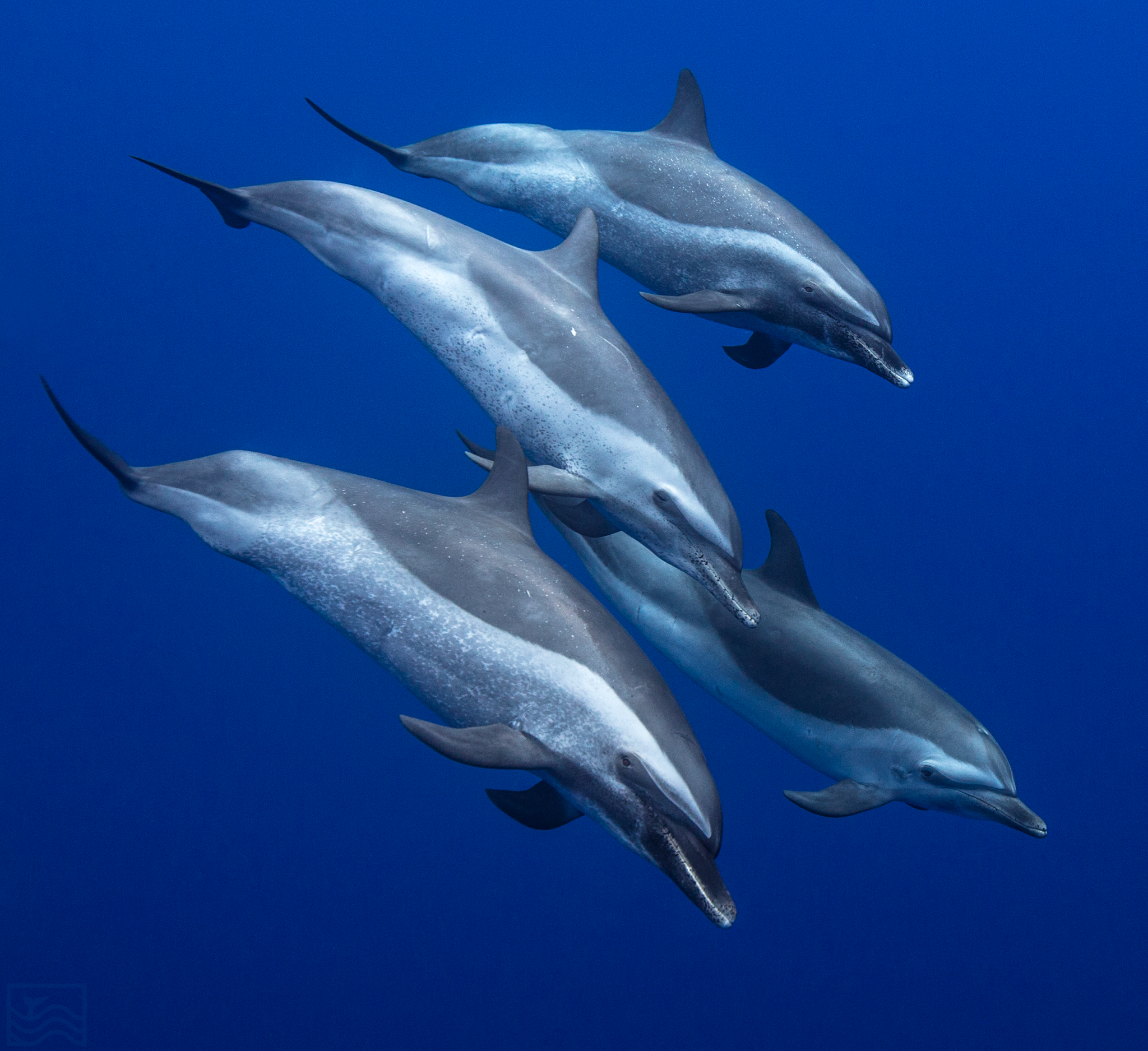
Waianae Dolphin & Turtle Snorkel Adventure
|
3 hr | ★ 4.8 | ✓ | ✓ | ✓ | ✓ | €170 | Book → |
|
Standard Entry
Waikiki Turtle Canyon Snorkeling Adventure
|
1 hr 30 min | ★ 4.8 | — | ✓ | ✓ | ✓ | €66 | Book → |
Worth it for coral reef access
The 25 USD conservation fee grants entry to one of Hawaii's most protected marine sanctuaries, where the shallow bay shelters over 400 species of tropical fish and living coral formations rare elsewhere on the island. Snorkeling on Oahu reaches its highest concentration of marine biodiversity here—parrotfish, butterflyfish, and green sea turtles navigate the inner reef within arm's reach of the surface. The fee funds active reef restoration and waste management that keeps visibility high and the ecosystem intact. Early arrivals between 06:45 and 08:00 encounter calmer water and fewer swimmers, maximizing the value of the entry window. For visitors seeking accessible encounters with Hawaii's underwater ecosystems without boat charters or certification requirements, the protected status and species density justify the cost. Casual beachgoers expecting a swimming spot may find better free alternatives along the island's north and east shores, where snorkeling on oahu tours often operate without entry barriers.
Bottom line: Pay the fee if you want Oahu's densest concentration of reef life in a single snorkel session.
They complement each other; most visitors who do both call Hanauma Bay the superior managed environment while preferring Shark's Cove for wild, independent exploration.
|
Top pick Hanauma Bay |
Shark's Cove | |
|---|---|---|
| Environment type | Protected marine life conservation district | Rugged natural volcanic rock tide pools |
| Skill level required | Beginner-friendly calm waters | Intermediate due to rocky entry |
| Accessibility | Paved paths and stairs | Rough terrain and slippery rocks |
| Seasonal reliability | High year-round consistency | Summer months only due to high surf |
| Reservation requirement | Mandatory entry slot booking | None |
| See tickets & prices |
Verdict: Choose Hanauma Bay for guided snorkeling on oahu tours with abundant marine life, or head to the North Shore for an independent snorkeling on oahu tour at Shark's Cove when conditions permit. Securing snorkeling on oahu tickets remains the primary logistical hurdle for the bay compared to the free-access North Shore reef.
Hand-picked experiences loved by thousands of travelers
2 hours
Free Cancellation
Discover sea turtles and tropical fish at Oahu's premier snorkeling spot with expert crew guidance
2 hours
Free Cancellation
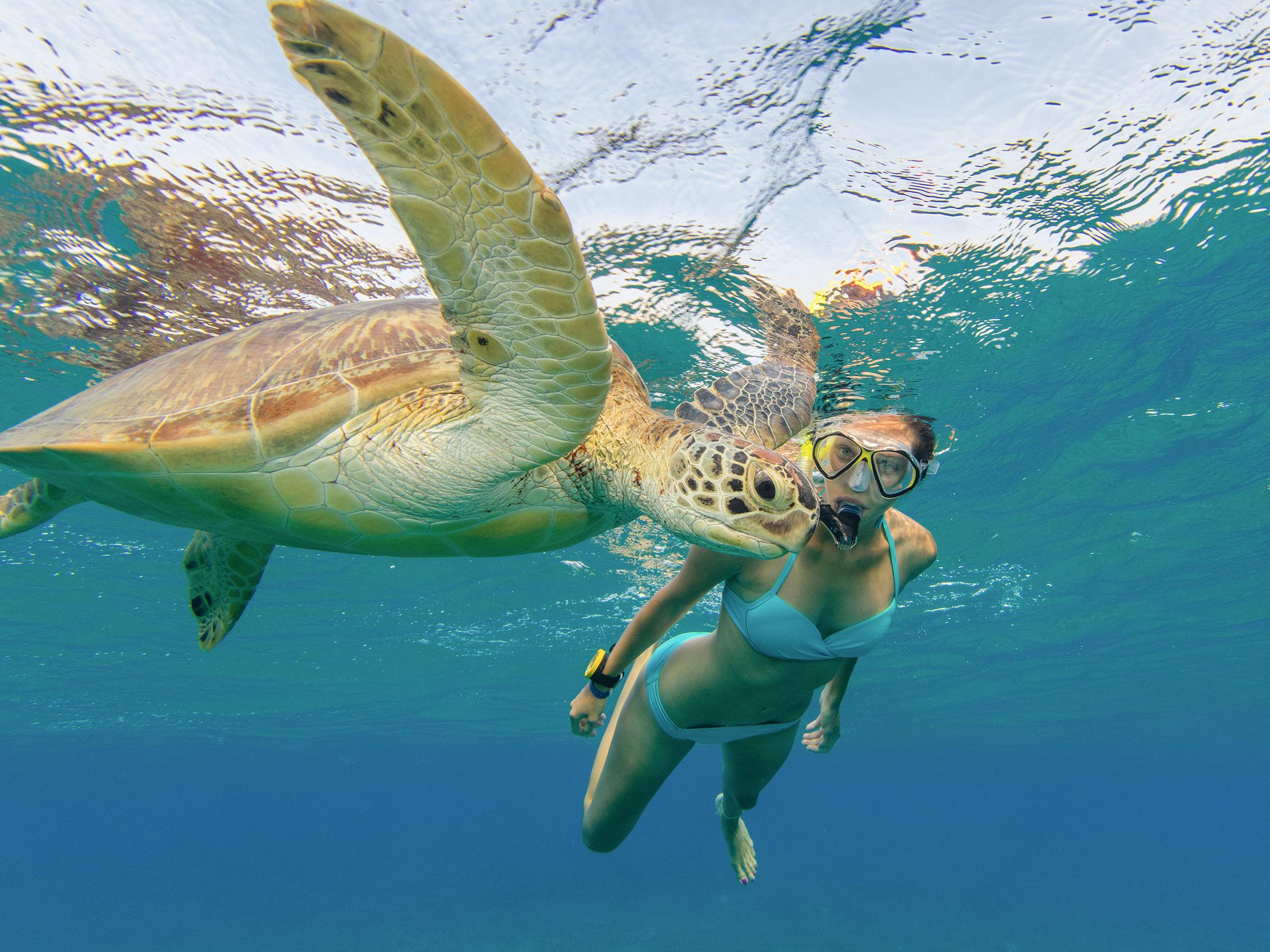
Sail a pink-sailed catamaran, snorkel with green sea turtles, and explore vibrant coral reefs off Waikiki's coast.
3 hours
Free Cancellation
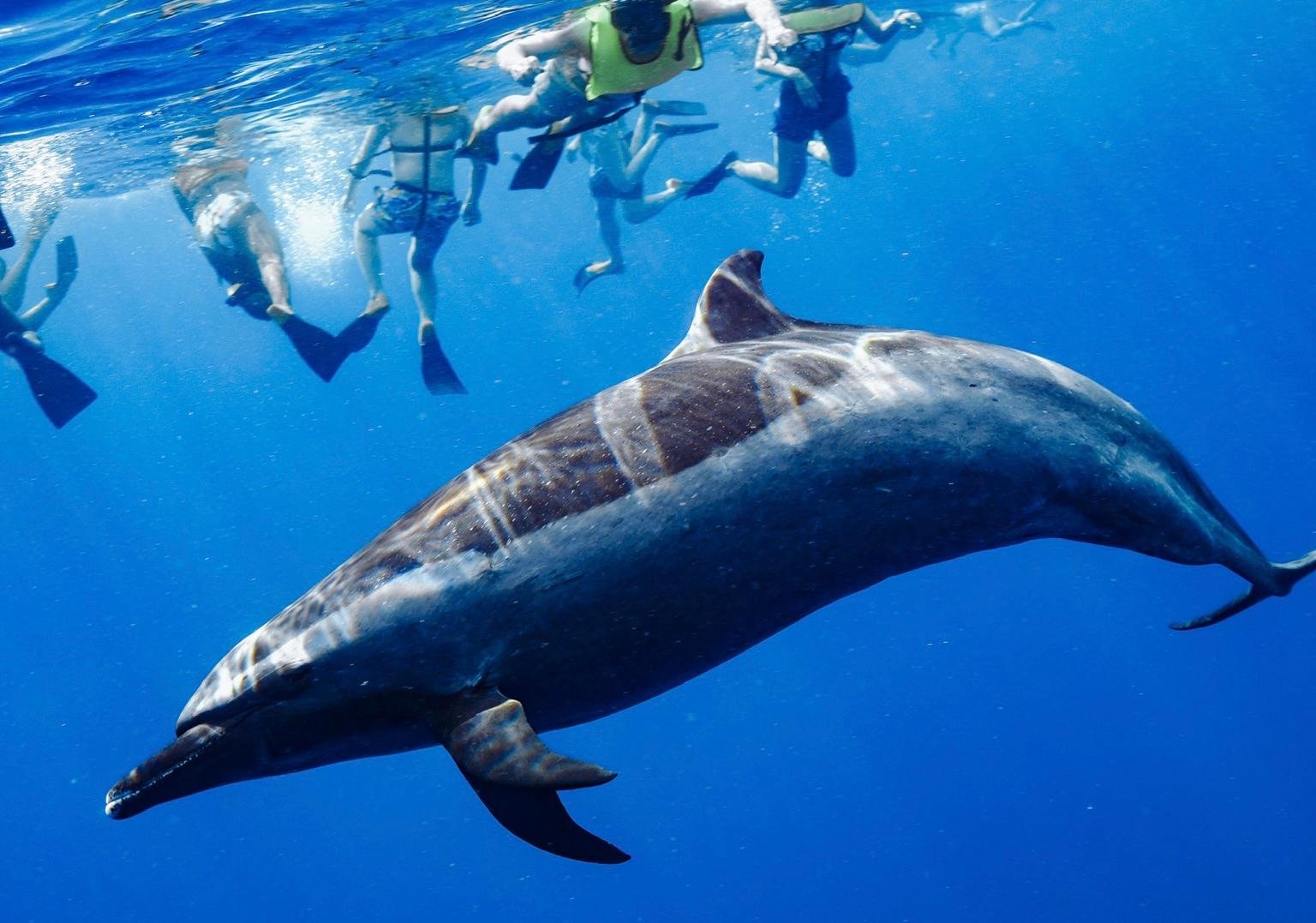
Three-hour coastal cruise with guaranteed dolphin sightings, turtle snorkeling, premium bar & island lunch
2 hours
Free Cancellation
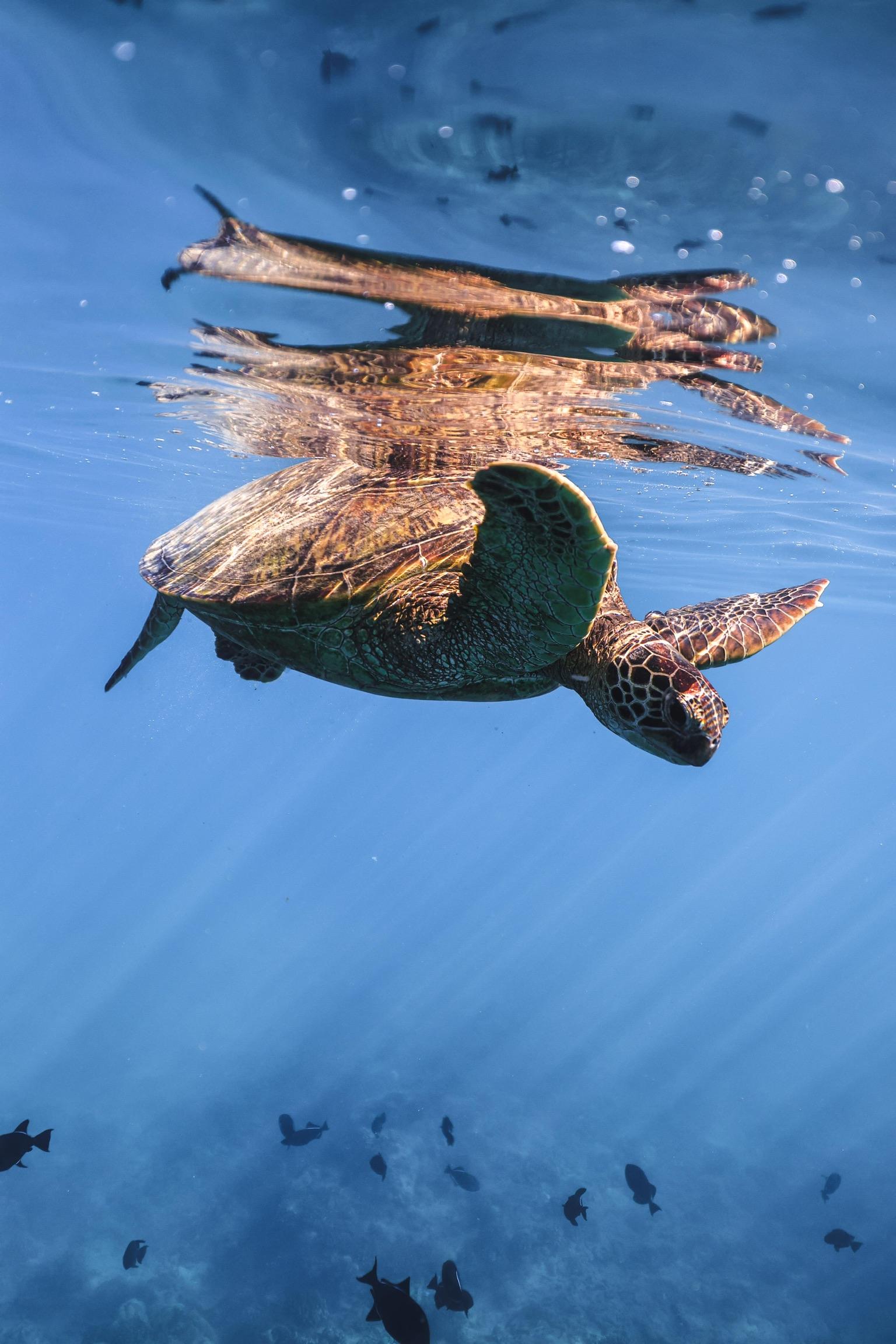
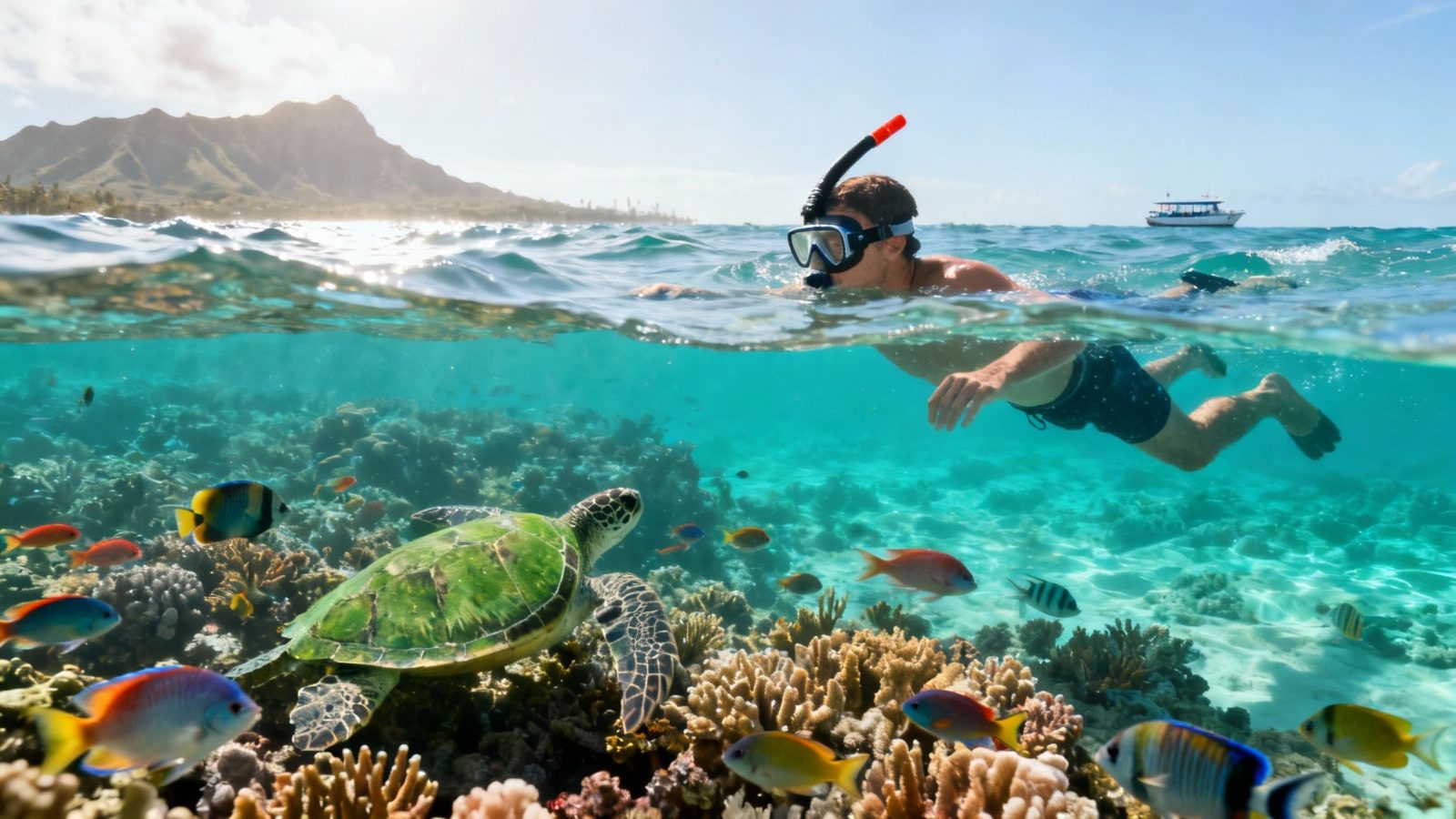
Swim alongside Hawaiian green sea turtles at their natural cleaning station in crystal-clear waters
3 hours
Free Cancellation
Three-hour ocean adventure combining wild dolphin sightings, reef snorkeling, water sports, and Hawaiian culture along Oahu's west shore
3.5 hours
Free Cancellation
Swim alongside wild dolphins, snorkel with sea turtles at Makaha Beach, and enjoy onboard water activities.
2 hours
Free Cancellation
Swim alongside Hawaiian green sea turtles and glide through the ocean on powered scooters at Oahu's premier snorkel site
8 hours
Free Cancellation
Discover Oahu's scenic east coast and legendary North Shore with activities, beach time, and local culture
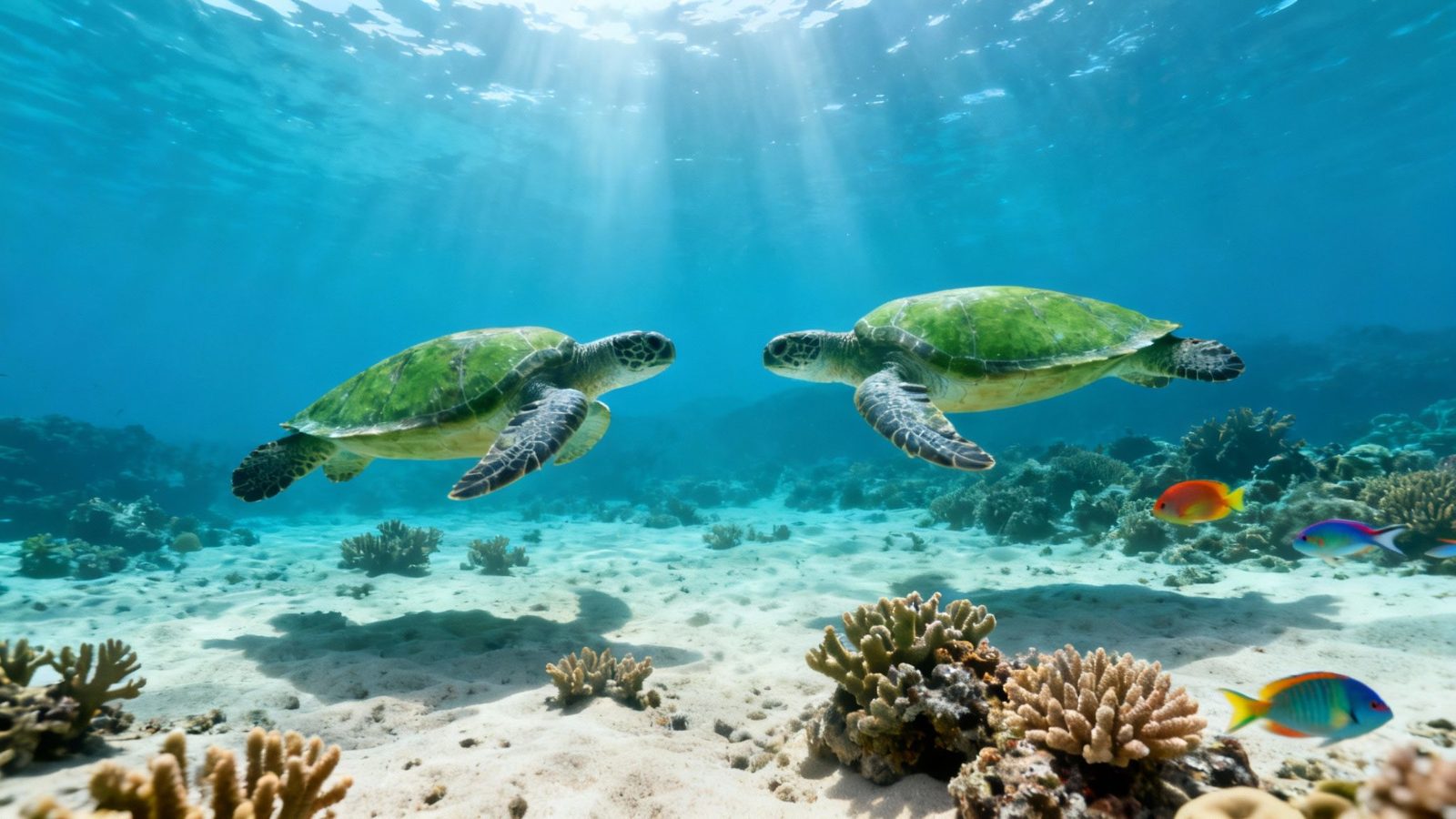
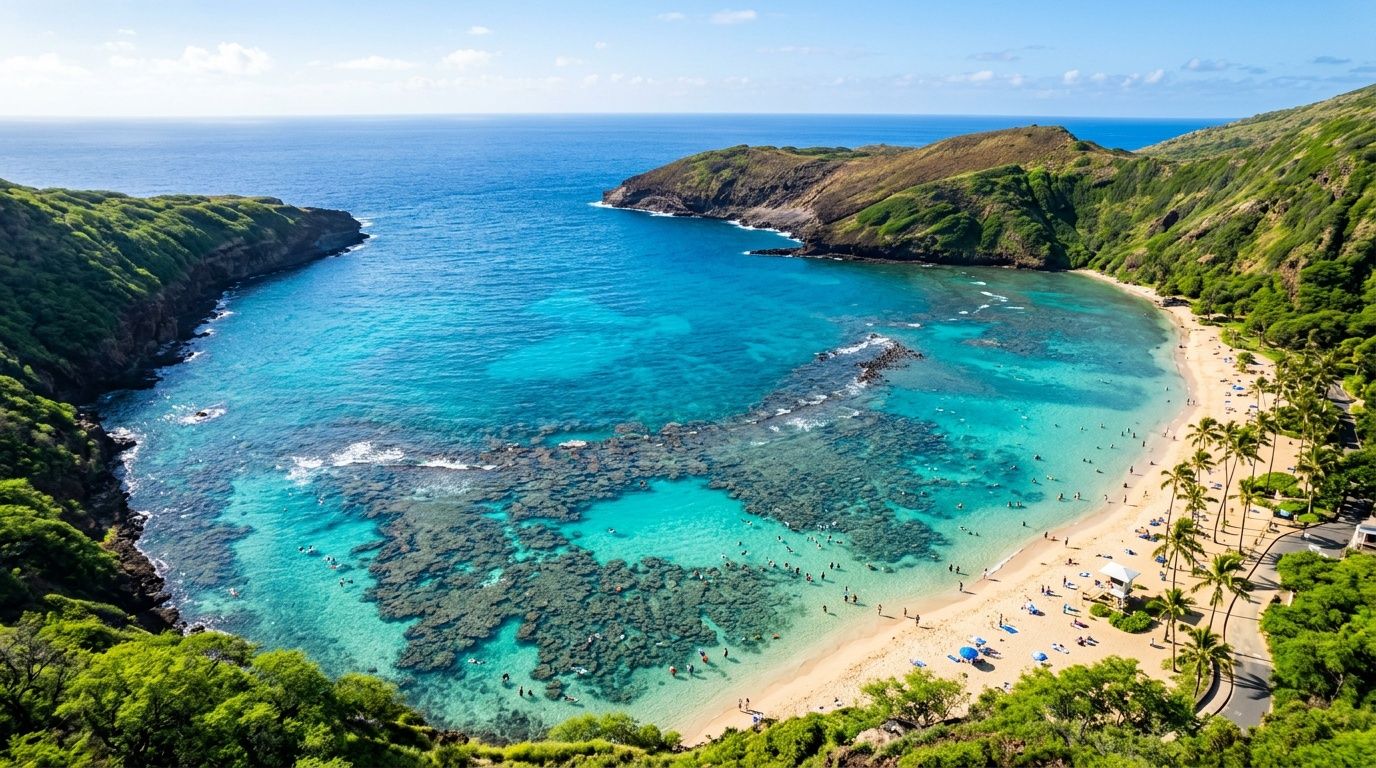
This shallow, sheltered area serves as the primary zone for beginners to observe vibrant tropical fish. The water remains calm, reaching depths of only about 3 to 7 feet.
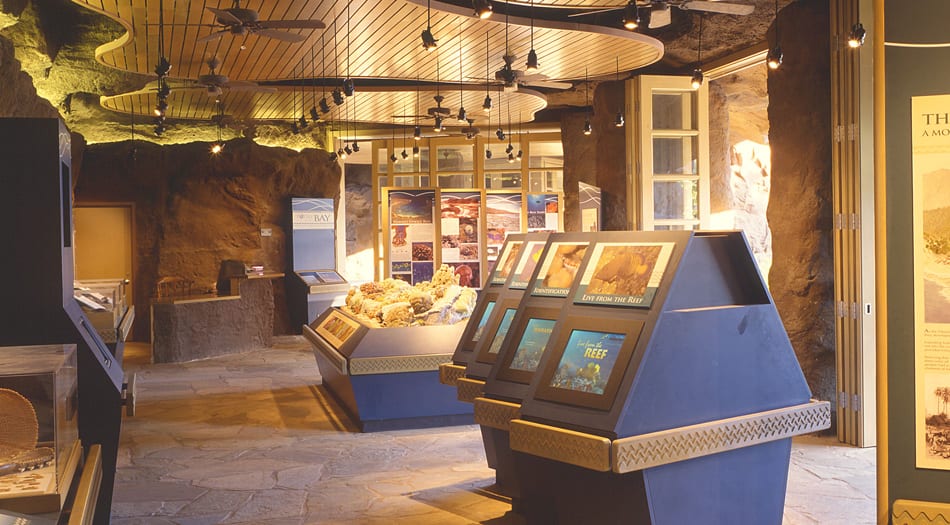
The center provides deep insights into the 400+ species of fish found in the local ecosystem. It is a mandatory stop for all visitors to understand reef preservation.
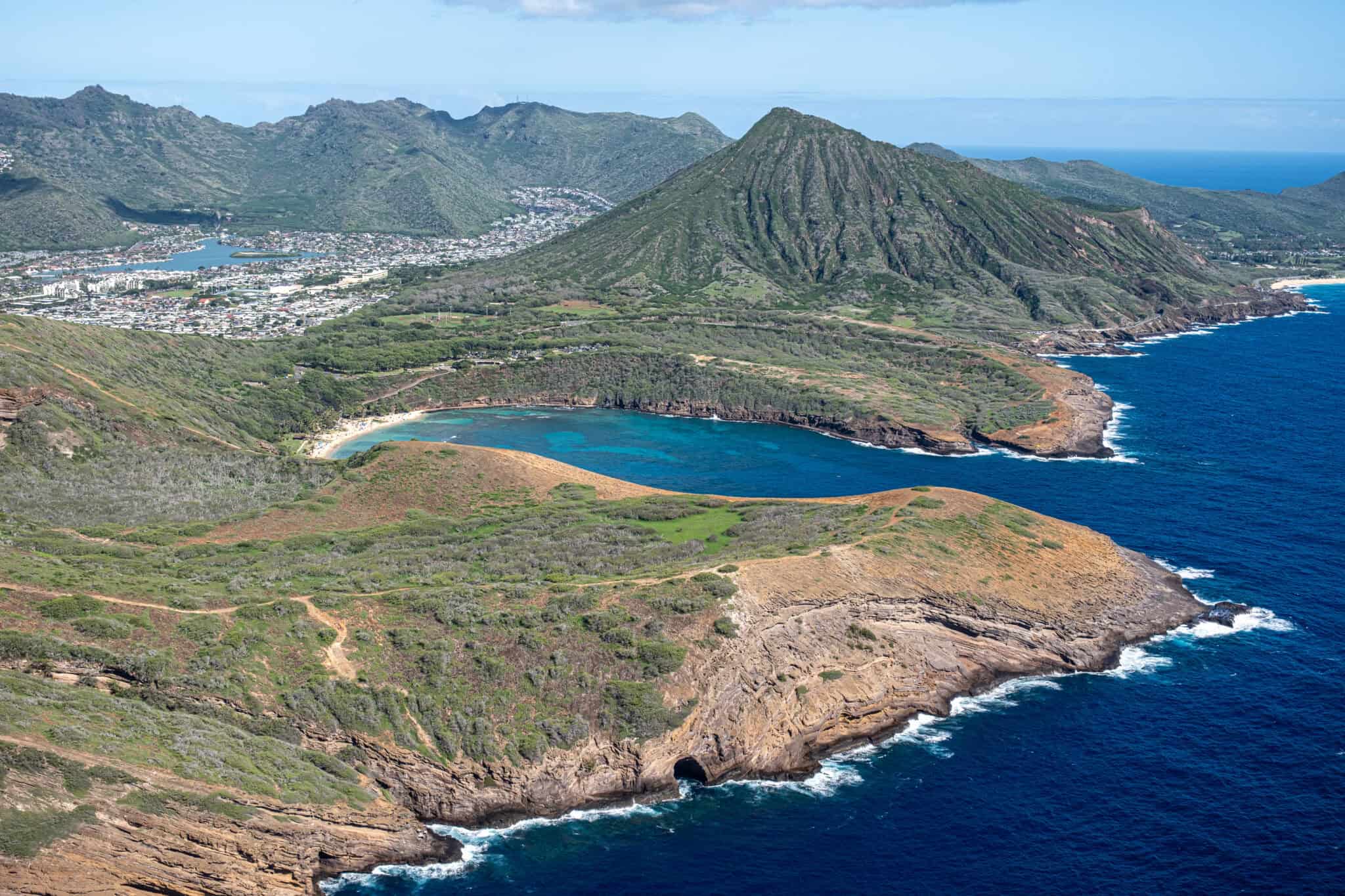
This geographical feature defines the unique horseshoe shape of the preserve, offering sweeping views of the coastline. The outer crater walls have been carved over centuries by Pacific wave action.
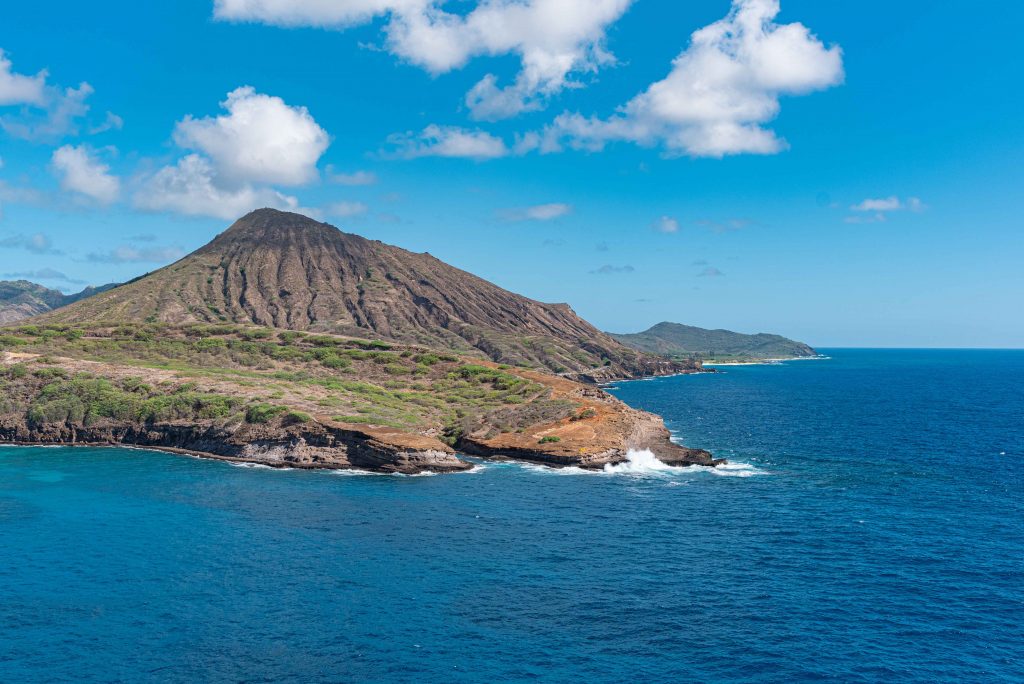
Located at the edge of the protected marine district, this landmark helps define the boundary of the sanctuary. It is a favorite spot for observing the dramatic volcanic rock formations.
You arrive at Hanauma Bay before 7 AM, joining the queue of early visitors waiting for the gate to open at 6:45.
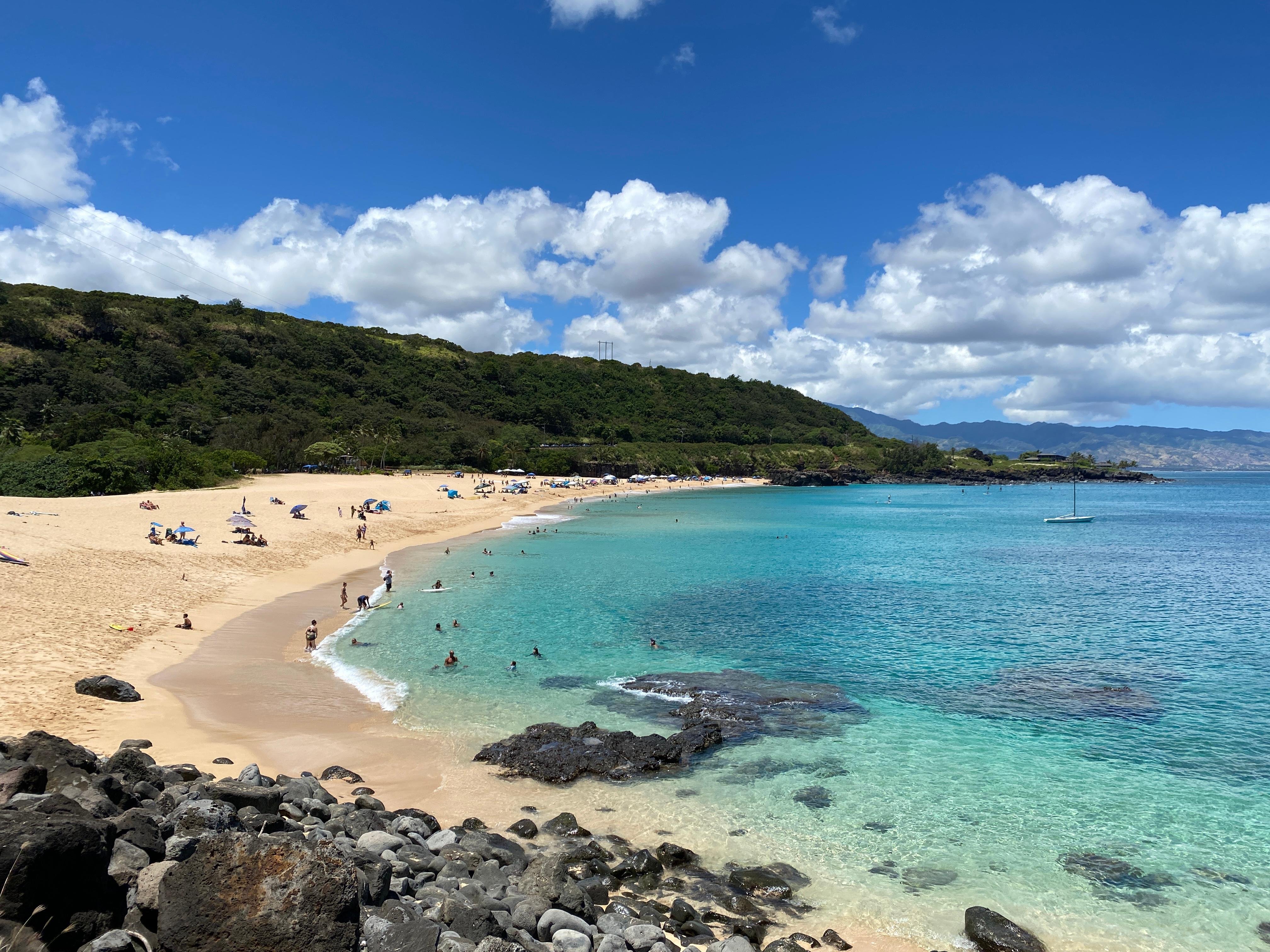
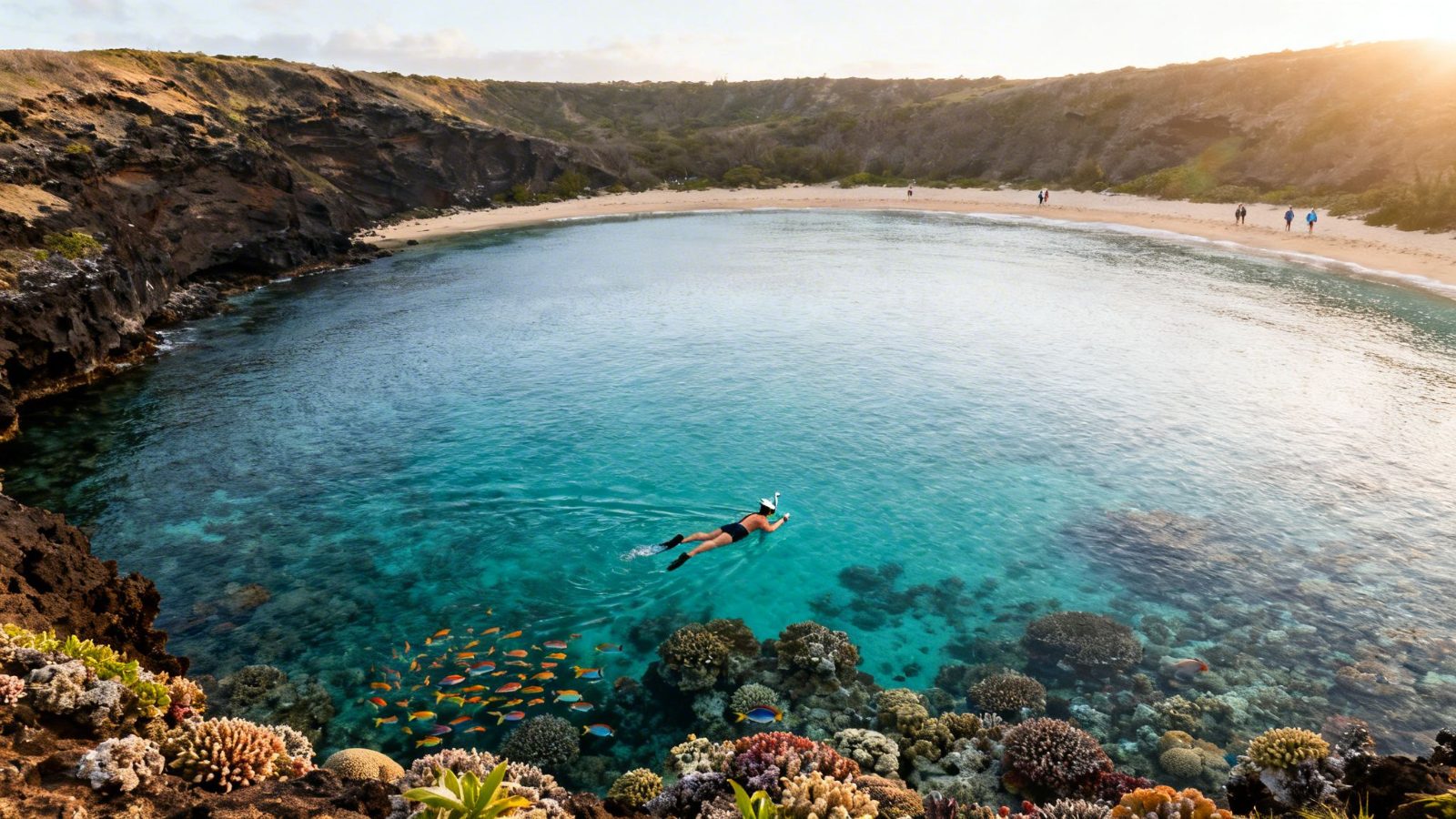
After paying the $25 conservation fee and watching the mandatory marine education video, you descend the paved trail to the crescent beach, where the shallow reef spreads 200 meters offshore in water so clear you can see the coral heads from the sand. You wade in near the left rocks, mask adjusted, and kick toward the outer reef shelf where the bottom drops from two meters to ten.
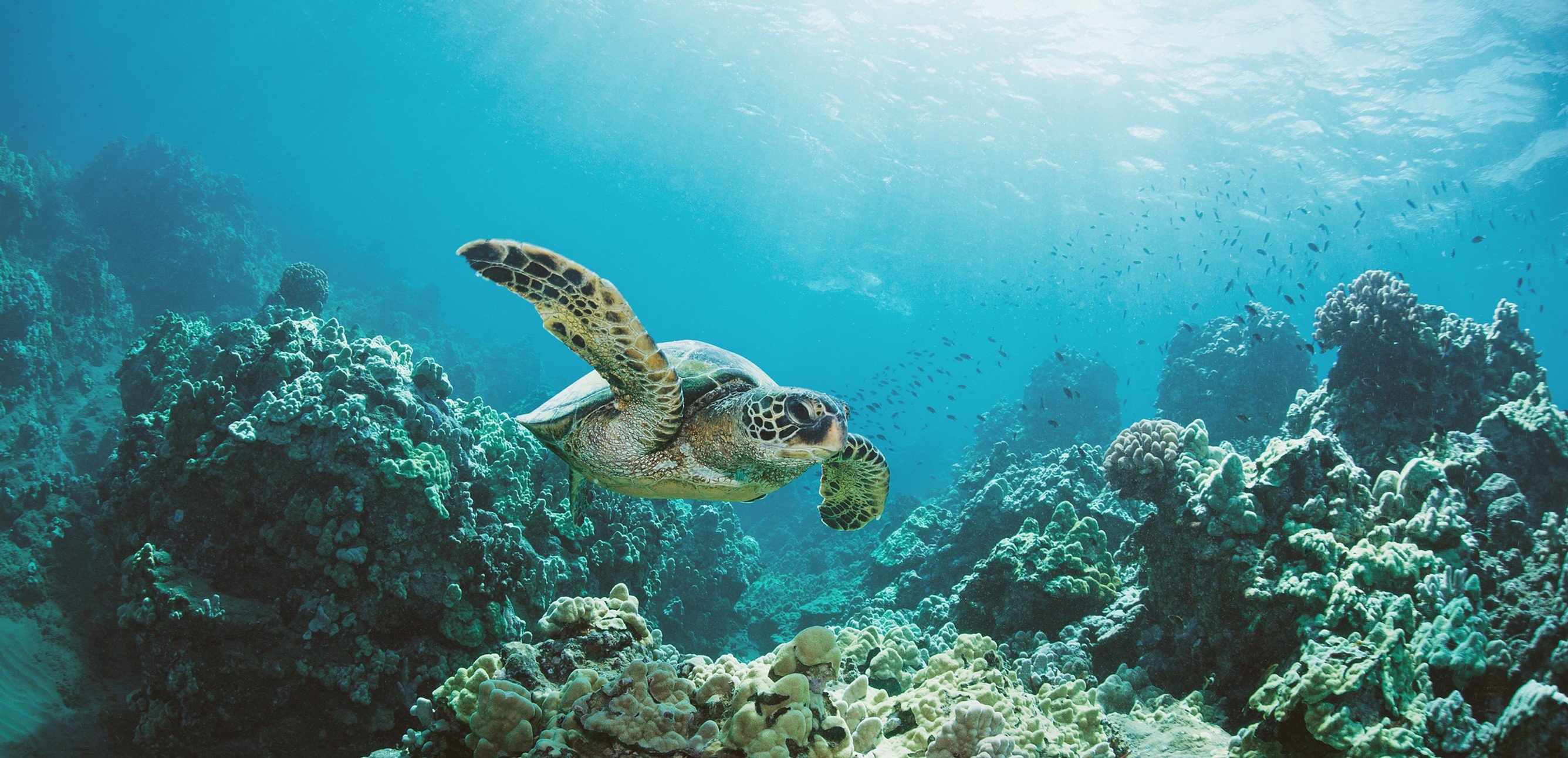
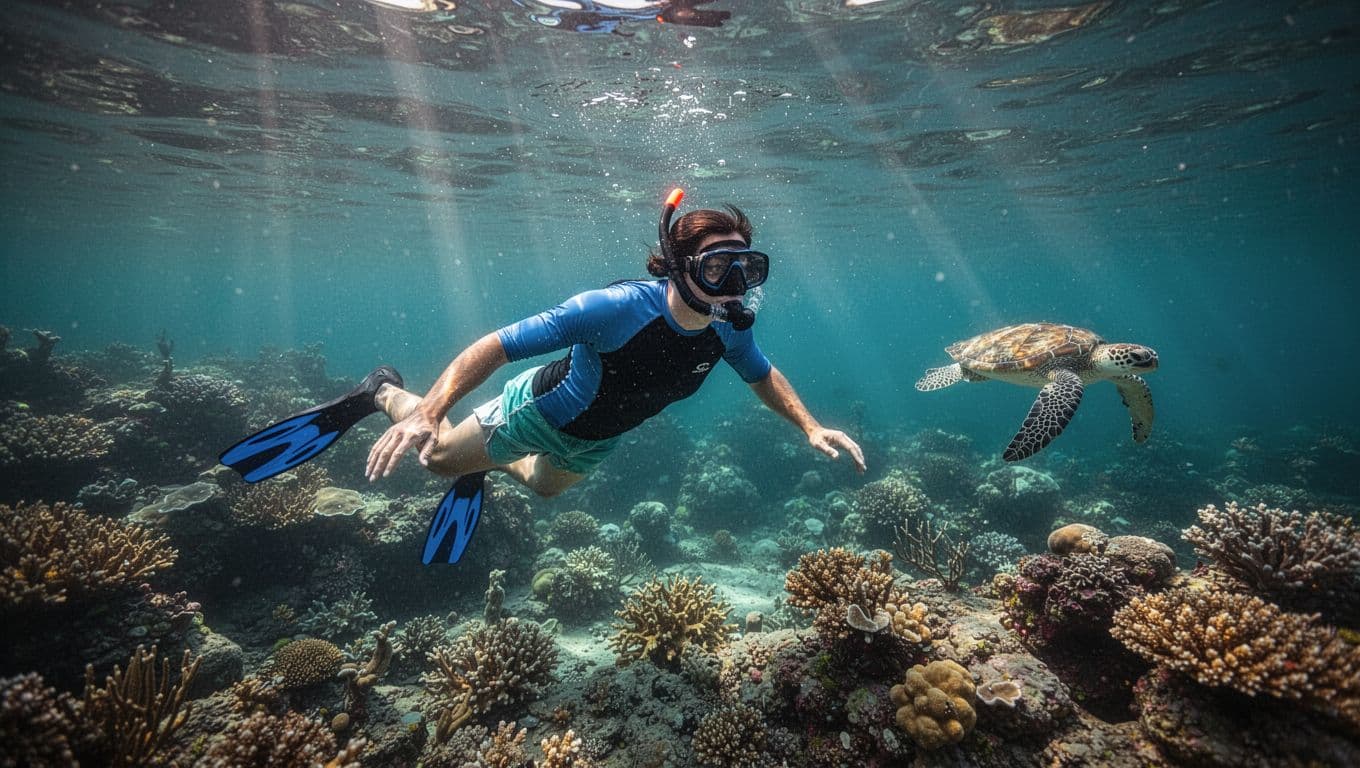
A school of yellow tangs moves past in synchronized turns, their bodies flashing as they pivot over brain coral. You spot a green turtle grazing on algae in a sandy pocket, its shell mottled with brown and gold. The turtle surfaces for air, exhales with a visible mist, and dives back to the reef without acknowledging your presence. Parrotfish crunch coral audibly, their beaks scraping calcium to reach the algae inside. You follow the reef's natural contour toward Witches Brew, a turbulent channel where waves surge through a keyhole in the outer wall. Sergeant majors defend territories near the rocks, darting at your mask when you drift too close. By mid-morning the bay fills with tour groups, but the outer shelves remain quiet, and you drift above the drop-off where the reef fades into open blue.
All the details about your upcoming adventure in one place
Snorkeling on Oahu offers access to protected bays, coral reefs, and calm shorelines where green sea turtles and tropical fish are regularly spotted. Popular snorkeling on Oahu tours depart from Hanauma Bay, Shark's Cove, and Electric Beach, each providing different underwater terrain and marine ecosystems. Most operators provide gear, instruction, and transportation to sites along the island's windward and leeward coasts.
Hanauma Bay was formed 32,000 years ago when a volcanic cone collapsed into the Pacific, leaving a curved basin that today shelters more than 400 species of reef fish.
The bay's protected status since 1967 transformed it into Oahu's most biodiverse marine sanctuary, where parrotfish graze on coral and green sea turtles rest in shallows visible from shore. Entry is limited to 3,000 visitors daily, and the bay closes Monday and Tuesday to allow reef recovery — a conservation model studied by marine parks worldwide.
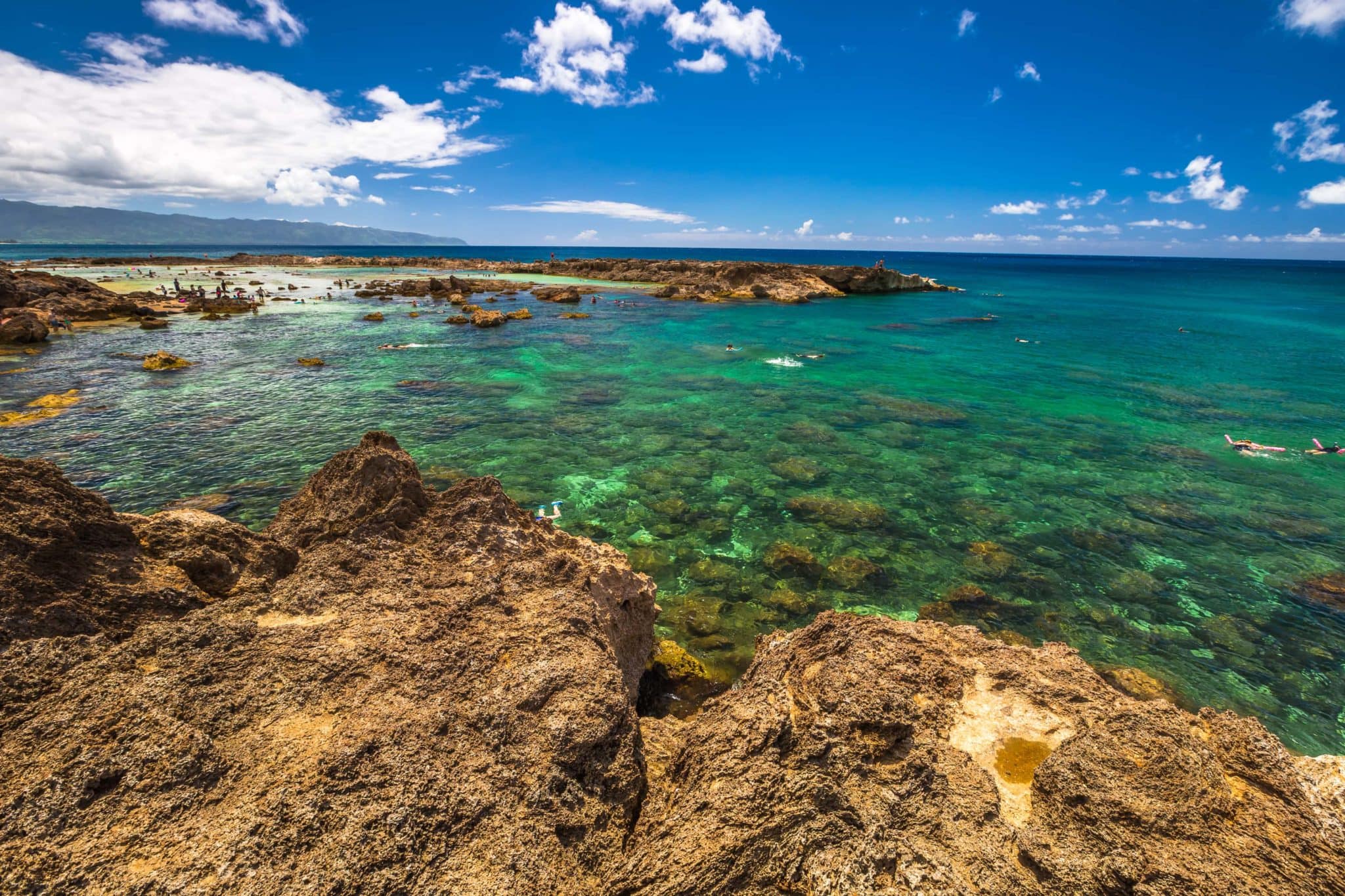
Snorkeling on Oahu extends far beyond Hanauma Bay. Shark's Cove on the North Shore offers summer access to lava tubes and arches where octopuses hide in crevices and eagle rays patrol the sand channels. Electric Beach near Kahe Point draws manta rays and spinner dolphins to warm-water outflows from a power plant, creating nutrient upwellings that concentrate pelagic species. Turtle Canyon off Waikiki's coast holds cleaning stations where green turtles surface every few minutes, unbothered by snorkelers hovering three meters above. Each site reflects Oahu's volcanic origins — black lava shelves drop into cobalt water, and submerged craters form natural amphitheaters where fish school in predictable patterns.
The island's reef health depends on strict protocols. Hanauma Bay requires all first-time visitors to watch a nine-minute marine education video before descending to the beach, and lifeguards enforce no-touch rules with posted fines. Sunscreen restrictions prohibit oxybenzone and octinoxate, chemicals proven to bleach coral polyps. Tour operators on the North Shore coordinate access windows to prevent site crowding, and several beaches close entirely during winter swells when wave action makes shallow reefs dangerous. These measures reflect decades of research by the University of Hawaii's Marine Biology Institute, which monitors coral coverage and fish populations quarterly.
Snorkeling tours on Oahu range from shore-access instruction at Hanauma Bay to catamaran charters that reach offshore reefs inaccessible by land. Visibility peaks in summer months, often exceeding 30 meters, though winter brings humpback whales that breach within sight of snorkelers at southern beaches. The state's aggressive lionfish removal program has protected native species, and moray eels now occupy territories once threatened by the invasive predators. Water temperature holds between 24 and 27 degrees Celsius year-round, warm enough that most visitors snorkel without wetsuits.

Hanauma Bay closes two days each week to allow reef recovery — a conservation model studied by marine parks worldwide.
Wear swimwear appropriate for a family-friendly marine preserve. A rash guard is highly recommended for sun protection while snorkeling on oahu.
Security is on-site to oversee the preserve; small personal bags are allowed but avoid large coolers. Storage lockers are available for rent to secure your belongings.
Photography is permitted throughout the park and underwater. Avoid using flash when near marine life to prevent startling the reef inhabitants.
Hanauma Bay is an excellent choice for family outings, with calm, shallow inner-reef waters ideal for younger swimmers. Children 12 and under receive free admission.
The facility includes ADA-compliant restrooms and showers. A tram is available to assist visitors between the upper level and the beach.
A snack bar is available at the upper level for light refreshments. Consumption of food and drink is restricted to designated areas to protect the delicate ecosystem.
Operating Hours
Wed–Sun 06:45–16:00
Address
100 Hanauma Bay Rd, Honolulu, HI 96825, USA
Arrival Advice
06:45–08:00 — Early arrival is necessary to secure parking and avoid selling out of daily entry slots.
Contact
+18087686861
Official Site
https://www.honolulu.gov/parks/hbay.html
All sales are final with no refunds or date changes. The 25 USD conservation fee is non-refundable once the booking is confirmed.
Recommended time
3-4 hours
Plan on 3-4 hours for a full snorkeling on oahu outing once you count the entry line, the mandatory safety video, gear rental, and actual time in the water at Hanauma Bay. Arriving inside the 06:45-08:00 window matters more than any other timing decision, since the parking lot and the day's entry slots have a real chance of selling out by mid-morning, especially on weekends. Add 30-45 minutes if you're renting gear on-site rather than bringing your own, and subtract time only if you're comfortable skipping the shallow reef flats and heading straight for deeper water. Skip-the-line entry isn't available here, so the queue reality is simple: whoever shows up earliest waits the least.
Crowd levels through the day
Hanauma Bay began its geological life approximately 32,000 years ago when a volcanic eruption broke through the Ko'olau crater wall, allowing seawater to flood the basin and create the curved bay recognized today. For centuries before Western contact, Native Hawaiians called the area "Hanauma," meaning "curved bay," and Hawaiian royalty claimed exclusive fishing rights within its protected waters. The reef ecosystem thrived under traditional kapu systems that regulated harvests and protected spawning seasons. By the mid-20th century, the city of Honolulu opened the bay to public access, and snorkeling on Oahu rapidly centered on this sheltered cove. Visitor numbers surged through the 1960s and 1970s as affordable air travel brought mainland tourists to the islands. By 1990, more than three million people annually walked across the coral, fed fish human food, and left behind sunscreen residue. Marine biologists documented collapsing fish populations, bleached coral heads, and a 30-percent decline in reef cover. The bay faced ecological collapse. In 1990, the city designated Hanauma Bay a Marine Life Conservation District and imposed strict regulations: no fishing, no touching coral, and mandatory educational videos for all visitors. Daily entry caps followed in 2002. The bay closed entirely from March to December 2020 during the pandemic, allowing scientists to measure recovery without human pressure. Surveys showed fish biomass increased 30 percent and coral recruitment doubled. When snorkeling on Oahu tours resumed in December 2021, the city instituted a reservation system, capped daily visitors at 720, and raised the conservation fee to fund reef restoration. Today, Hanauma Bay stands as a model for marine protected area management, balancing access with preservation through enforceable limits and visitor education.
Volcanic eruption breaches Ko'olau crater wall, creating the curved bay that seawater floods to form Hanauma.
Hawaiian royalty reserves the bay for exclusive fishing under kapu systems that protect spawning cycles.
City opens the bay to unrestricted public access, drawing over 10,000 daily visitors during peak summer months.
Hanauma Bay receives Marine Life Conservation District status, banning all fishing and requiring educational programs for guests.
Daily visitor caps take effect after studies document severe coral damage and fish population declines exceeding 30 percent.
Nine-month pandemic closure allows reef recovery, with fish biomass increasing 30 percent during the absence of human activity.
Online reservation system launches, limiting daily entries to 720 and raising the conservation fee to fund active restoration.
Planning a trip for snorkeling on oahu with children requires careful coordination due to the steep terrain and the protected nature of the marine life preserve. Understanding the physical layout helps parents manage expectations while ensuring a smooth experience for the whole family.
The path down to the beach is steep, and while paved, it can be physically demanding for parents with young children; consider a lightweight carrier instead of a stroller.
Restrooms and changing stations are located at the top of the hill near the entrance, so plan for frequent trips before heading down to the water for your snorkeling on oahu tour.
There is limited natural shade on the sand, so bring a dedicated sun tent or umbrella and ensure you carry plenty of water, as no food or drink service is available on the beach level.
This protected bay is ideal for children comfortable in the water, though the reef requires strong swimming skills and constant supervision, especially when participating in organized snorkeling on oahu tours.
Given the entry process and the walk back up, allow for a half-day visit to prevent over-exhaustion, making sure to secure your snorkeling on oahu tickets well in advance.
Life vests are highly recommended for children even if they are strong swimmers, as currents within the marine preserve can shift unexpectedly.
Real experiences from real travelers
We spent three hours exploring Hanauma Bay's protected marine sanctuary. The underwater visibility exceeded thirty feet, allowing us to observe green sea turtles grazing on limu. Rental gear was decent quality and the entry briefing covered reef etiquette thoroughly.
Snorkeling on Oahu's north shore offered tide pool exploration before entering deeper channels. We encountered schools of yellow tang and spotted an octopus camouflaged against lava rock. The summer calm made navigation between rock formations straightforward.
The warm water outflow attracts pelagic species year-round. We observed eagle rays, spinner dolphins, and dense baitfish clouds within twenty minutes. Current near the pipes requires confident swimming but rewards with exceptional marine diversity.
This Pupukea site provided easy entry from the sand and immediate reef access. Coral formations create natural channels teeming with butterflyfish and wrasse. Water clarity was moderate during our morning session, improving as tide shifted.
Snorkeling on Oahu's windward coast gave us calm morning water and powder-sand entry. While reef coverage was sparser than bay sites, we appreciated the uncrowded environment and proximity to the Mokulua Islands. Gentle conditions suited all skill levels.
The bay transforms completely in calm season. We entered from the north side and followed the rocky point, encountering parrotfish, triggerfish, and a resting whitetip reef shark. Winter swells make this impossible, but summer access is remarkable.
Snorkeling on Oahu tours often skip this west-side spot, but the geothermal vents create a unique ecosystem. We saw manta rays on two separate dives and the water temperature shift was noticeable. Requires careful entry over slippery rocks.
This Waikiki location provided immediate ocean access from our hotel. Reef health was moderate with steady fish activity including humuhumunukunukuapua'a and raccoon butterflyfish. Not pristine wilderness, but functional for quick morning snorkeling on Oahu without driving.
We compared Oahu reef snorkeling with Big Island sites and found each island offers distinct experiences. Oahu's volcanic formations and protected bays create excellent conditions, particularly at north shore locations during summer months when ocean surface remains glassy.
The marine life education center nearby enhanced our understanding of what we observed underwater. Snorkeling on Oahu tickets to Hanauma Bay sold out, so we explored this free alternative and encountered healthy coral coverage with minimal crowding. Morning entry before wind picks up is essential.
Everything you need to know for your journey
Hanauma Bay Nature Preserve is open Wednesday through Sunday from 06:45–16:00.
The entrance fee is 25 USD (conservation fee, per person (free for children 12 and under and HI residents)).
Yes, the preserve is closed on Mondays and Tuesdays as well as Christmas Day and New Year's Day.
Reservations must be made online via the official Honolulu Parks and Recreation website.
Yes, you are encouraged to bring your own snorkel gear, though rentals are available on-site.
Yes, the inner reef offers calm, shallow waters perfect for beginners and children.
Early arrival is necessary to secure parking and avoid selling out of daily entry slots, ideally between 06:45–08:00.
A snack bar is located at the upper level of the Hanauma Bay Nature Preserve.
Prohibited items include large coolers, fishing gear, inflatables, and non-reef-safe chemical sunscreens.
Join thousands of happy travelers who have discovered this incredible experience
Book Your Experience Now